

Importers: ACD System Imposed and Customs Not Yet Ready to Implement It
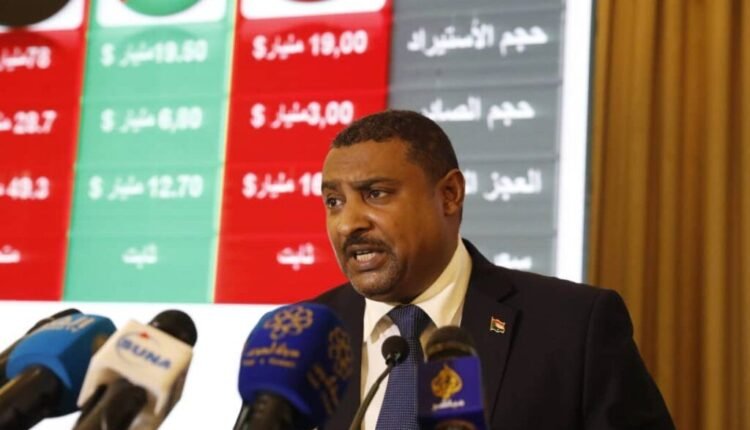
The Sudanese government’s decision to implement the pre-disclosure system for shipments, which began in January for both the import and export sectors, has sparked widespread controversy in economic circles.
The decision has ignited a crisis between importers and the government, which believes the decision has economic benefits in terms of customs revenue and combating smuggling.
Importers, however, argue that the system in its current form is unsuitable for the country’s present circumstances and will not achieve the state’s desired goals.
On the contrary, they believe it will produce the opposite, with the benefits accruing only to the implementing company.
We posed several questions about the system and the conditions of its implementation to the head of the National Chamber of Importers, Al-Sadiq Jalal Al-Din:
Interview by Nazik Shamam
=How do you see the import process after the war?
It is difficult to accurately track import volumes after the war, but we at the Chamber are currently preparing study paper to address this issue in comparison with the years preceding the war. In 2022, imports saw their largest growth, reaching an estimated $11 billion, while exports amounted to $4.5 billion. This resulted in the largest trade deficit since 2012, following the secession of South Sudan, which reached approximately $6.5 billion. Certainly, both exports and imports contracted during the war years, and we are working to obtain precise figures to understand this.
=What were the most prominent goods imported during that period?
There is much talk about imports being primarily luxury or, as some call them, provocative goods. However, this is incorrect. The most prominent imported goods are the five basic commodities: wheat and flour, gasoline, diesel, sugar, and medicine. Following these are machinery, equipment, and transportation vehicles, which constitute the largest share of imports.
=What about the war year of 2023?
This year, unfortunately, there is no reliable and accurate data from all sources. However, an analysis of the import process reveals weakness due to the decline in citizens’ purchasing power, the devaluation of the Sudanese pound, and the displacement of citizens. The available import data from the post-war period is for 2024, showing a decline in imports from $11 billion to $4.9 billion, while exports reached $3.1 billion. Consequently, the trade deficit was recorded at $1.8 billion, marking the lowest year for imports and the smallest trade deficit since South Sudan’s secession.
=As the National Chamber of Imports, do you have any coordination with the Statistics Departments of the relevant authorities?
Statistics are generally available, and the Customs Authority provides them upon request. Furthermore, the Central Bank of Sudan issues publications and reports on foreign trade, which are also readily available.
=Does the Chamber maintain its own statistics?
We do not maintain our own statistics. We are not a specialized body in this area. We are simply an organizational body responsible for defending the rights of our members, issuing membership certificates, and managing membership within its specialized branches.
– The state is not serious about combating the leasing of commercial registrations.
=There is a well-known phenomenon called the leasing of commercial registrations. Do you have any penalties for members who lease registrations?
There is no penalty for the phenomenon of leasing registrations, and unfortunately, the state is not serious about combating this phenomenon. The state itself contributes to the growth of this phenomenon because it complicates foreign trade. The issue is not limited to imports; it extends to exports as well. The paperwork for exporters is the same as the leasing of registrations for importers, and the same paperwork is used to lease the registrations.
=Why do you assert that the state is not serious about combating the leasing of registrations?
Because it has not criminalized the leasing of registrations. There is no law that criminalizes the leasing of registrations; even the Importers and Exporters Registry Law of 2008 does not criminalize it.
=So, can we say that the state benefits from the leasing of registrations if the owner is compliant with tax payments?
That is not correct. On the contrary, the state is completely harmed because those who lease registrations are able to evade taxes in one way or another, and there are influential organized criminal groups that sponsor and protect those who lease registrations.
=There’s a gap in the relationship between you and the government, and there are underlying accusations between the two sides. What’s the reason?
As the National Chamber of Importers, we represent the largest sector of all, a visible sector that the government can easily deal with. Our problem with the government is that it makes decisions it deems sound and correct regarding the regulation of imports, without consulting us or taking our opinion into account. We are excluded from the decision-making process; decisions are imposed on us, and the sector complies. However, when implemented, importers are surprised to find that the decisions cause them significant complications, problems, and difficulties, making it impossible for them to conduct imports smoothly and easily. This contradicts the requirements of the World Trade Organization, which calls for facilitation and enforcement. The current process lacks both facilitation and enforcement. The government surrounds it with numerous difficulties, obstacles, and complexities, which has increased informal imports, corruption, and the abuses associated with the import process.
=But the government accuses you of pursuing easy profits without any benefit to the country.
Profit margins are subject to competition; the greater the competition, the lower the profits. Therefore, we advocate for facilitating the import process, as this enables all importers to bring in goods and increases competition, leading to abundance and ultimately lower prices. Currently, no one operating in the Sudanese market is making high profits; in fact, there are sometimes losses because others are importing the same goods and selling them at lower prices. Free competition resolves this issue. Furthermore, how can the state claim it isn’t benefiting when we pay taxes, customs duties, zakat, and other levies? We comply and pay what the state imposes on us, and the assessments are often exaggerated.
=Perhaps the state believes you are not fulfilling your full role in development projects and social responsibility?
We are fulfilling our role in social responsibility.Through our institutions or as individuals, and if you don’t believe in it, you won’t do it. It doesn’t have to be through the state, but the question is, where does our money go, the money we pay to the state in taxes, customs duties, levies, and other fees? Doesn’t the state contribute a portion of it to social responsibility and development?
= One of the accusations leveled against you is that you are causing the continuous decline of the Sudanese pound.?
This is a flawed view. Everyone, even experts, sees the trade deficit as the main reason for the pound’s devaluation. While a trade deficit does mean increased demand for hard currency, there are other factors that increase this demand, and we believe these are the most influential on the exchange rate.
Under the current circumstances, the dollar should not exceed 2000-2500 Sudanese pounds in the worst-case scenario.
=Are there more factors than imports?
Yes, more so, especially if we look at the factors affecting the exchange rate, including economic and technical factors. If we focus on supply and demand factors, including the trade deficit, we find that remittances from expatriates are always much higher than the size of the trade deficit. For example, remittances from expatriates before the war in 2022, according to estimates, were more than $8 billion. Also, speculation is the most significant demand factor affecting the exchange rate, and speculation is unfortunately linked to the economic policy of the state, especially regarding bank financing, in addition to the government’s demand for hard currencies. We consistently misdiagnose the decline in the value of the Sudanese pound. To illustrate the limited impact of the trade deficit on the pound’s depreciation, consider that in 2022, the year preceding the war, which saw the largest trade deficit since South Sudan’s secession (US$6.7 billion), the exchange rate experienced the lowest depreciation of the Sudanese pound, at approximately 30% throughout the year. However, in 2024, the year with the smallest trade deficit (US$1.8 billion since secession), the pound depreciated against the dollar by an unprecedented 130%.
=The pressing question remains: Is there truly a trade deficit? I believe the situation surrounding gold production and exports provides the answer.??
Another question arises: Why has the dollar remained stable over the last four months, despite the significant increase in the trade deficit during the final months of 2025?
The answer is that national institutions have worked to curb currency speculation and control supply and demand mechanisms, despite the war and the government’s borrowing from the banking system. Therefore, it can be said that if the exchange rate is managed correctly, the dollar, under any of the current circumstances, should not exceed 2000-2500 pounds, even in the worst-case scenario.
=There have been several decisions regarding imports recently, including the “Our Homeland” platform. Do you believe this platform will facilitate or complicate the import process?
We have consistently received complaints since the launch of the platform. For example, one factory owner complained that they had pre-approved invoices. When they submitted these invoices to banks, the banks required them to upload them through the platform. Upon contacting the Ministry, they were told the process would take seven days, potentially incurring storage fees despite having complied with all requirements and obtained the necessary approvals. Importers also complained about document backlogs and long queues. We contacted the Minister of Trade, who responded positively, unlike some other officials. While the Minister is cooperative, she is unable to change the current situation. The platform suffers from technical and logistical problems. It is fundamentally based on the initial invoice approval process, which is pointless and impossible to implement under the Ministry’s current methods. This system was approved by the former Minister of Trade, Madani Abbas Madani, and we objected to it at the time. Currently, the platform is not functioning as a true electronic platform because documents are being handed to employees who then upload them. This contradicts the purpose of a digital platform, which allows importers to upload their documents from anywhere using a computer or even their mobile phone.
= For instance, a factory owner complained that they had pre-approved invoices. Does this mean the platform is useless in principle, or is it simply not being adequately implemented?
Our reservation concerns the current operational methods, not the principle itself. We support the establishment of a national platform that functions as a single, efficient window, with agreed-upon objectives and procedures to ensure its effectiveness. We support this initiative and are willing to contribute to its creation and even hosting costs.
Numerous complaints have been received regarding the “Our Homeland” platform application, which is not a fully integrated electronic platform.
=There is also a decision from the Bank of Sudan requiring customs invoices to be submitted within one month of the IM form’s issuance. What are your thoughts on this decision?
To begin, we acknowledge that the decisions issued by the Bank of Sudan to raise the ceiling for interbank transfers to 3 million Sudanese pounds, and to set fees for the Siraj system, clearing, and financing policies, are important and necessary for regulating banking operations across all economic sectors and breaking the monopoly of a single bank. However, the Bank of Sudan’s decision regarding customs and import certificates is an old one, issued in a 2022 circular and also in Circular 8/2025. This circular mandates that importers submit customs and import certificates within one month of obtaining Form IM. They now want to apply this retroactively to verify whether these certificates were actually submitted. As the National Chamber of Importers, we reviewed this circular and found it flawed because it requires the client to submit the customs certificate, which is the property of the customs authority and cannot be circulated or accessed by any other entity. As importers, we cannot obtain it. What we receive is the customs release and the import certificate, which is the only document proving the importer’s ownership of the goods. How can they then submit it to the bank? Therefore, we contacted the Governor of the Bank of Sudan and requested that the circular be amended to require the client to submit a copy of the customs declaration. Or a copy of the import certificate within the specified period. Also, Circular 8/2025 requires customs to sign Form IM via the online system.
We requested that the Governor, given the existing electronic link between Customs and the Bank of Sudan, exempt importers from this requirement due to the ease of obtaining the necessary documents electronically from Customs.
=Has the Governor of the Central Bank responded to your request?
It has not yet responded, but we are in contact with her and she will reply in the coming period after reviewing the request.
=The decision regarding advance declaration of shipments (ACD) has sparked controversy between you and the government. What are your reasons for objecting to this decision?
The same objections we raised previously regarding top-down government decisions: the decision was issued without consulting or even notifying us in advance. We object to the decision, and we remain so even after it has come into effect. We have questions, reasons, demands, and conditions that we submitted to officials in official letters. We also submitted a memorandum to the Prime Minister, which was made public because our sector demands to know what has been done regarding this decision. Did we oppose the decision or not? The Prime Minister referred the memorandum to the Minister of Trade and Industry for a response and decision on December 14th, but there has been no response yet. Our main question and objection to the decision is that we want to know the identity of the company. Since this company is foreign, the question becomes: who will guarantee the security and safety of our information? Also, what about the fees the company charges in its system? These fees are very high for the services it will provide. We ask how these fees were imposed, is there any law supporting them, and how and on what basis were they calculated? These are just the visible fees; there are hidden fees, especially since the platform is in English and the procedure consists of 16 steps. 23 pages. Which importer can fill out this form? This means they are forced to deal with intermediary companies that will handle this task on their behalf, paying them exorbitant fees that all go to foreign companies and those behind them, ultimately costing the citizen dearly.
=How much are these fees?
Available on the platform, for example, it charges $150 per 40-foot container and 80 cents per ton for petroleum or dry goods. This program will cost importers exorbitant sums, reaching tens of millions of dollars. The program is essentially a well-known international system called ECTN, which stands for Electronic Pre-Tracking. It is a requirement of the WTO, WCO (World Trade Organization), and the World Customs Organization. While it undoubtedly has benefits and advantages, we believe that Sudan currently faces challenges and complexities related to its internet infrastructure. Furthermore, the customs authority itself is not yet ready to implement this system, either technically or administratively. We also have issues related to the ongoing war, which impacts the scope of implementation. Currently, there are customs stations outside the authority of the customs service and areas not under state control through which enormous quantities of goods enter without customs duties. This affects the fairness of compliance, customs collection, and the comprehensiveness of the system. In addition, the import process itself operates under exceptional circumstances due to an economic embargo. Therefore, it is certain that the system will contribute to an increase in informal imports.
– There is a hidden hand behind the company that will implement the system.
=Does this mean your objection to the decision stems from the company itself?
The company that will implement this decision is a British company. According to our confirmed information, this company is financially and technically incapable of setting up a system for a small business or a newspaper kiosk, let alone a comprehensive system of this scale. This company appears to be acting as a front for another company or entity hiding behind it. How can we, in a country like Sudan, under war and economic sanctions, impose a company whose nationality the government cannot disclose, nor how it was contracted, or even how it was known, given that it is a company with no qualifications or experience? We submitted a letter to the Minister of Finance with legitimate questions and demands. As the entity that will be subject to this decision, we want to know the details and be assured that Sudanese trade information is not in the hands of a foreign entity. So far, he has not responded to us.
=Do you believe this system has no positive aspects for the national economy?
In its current form, it will have negative and disastrous consequences for the economy.
=Is the objection to the system itself, or to its implementation in Sudan, considering that this system is a global one implemented in many countries?
We object to the method, circumstances, and timing of its implementation. The pre-shipment tracking system is a globally recognized system and one of the requirements of the World Trade Organization. Regardless of our distance from global trade issues in Sudan, it’s more appropriate to address the underlying issues before crowning someone in tattered clothes. The government believes it needs customs revenue, and this is the primary objective. This system is fundamentally a security system, introduced after the September 11 attacks in America in 2001. One of our objections is that we don’t want import information available to a foreign company. We need to implement this system after the infrastructure problems are resolved and the war ends to ensure comprehensive and equitable collection through a government platform.
=Would you accept this system if a Sudanese company were to handle it instead of a foreign one?
We don’t want the system to be run by a foreign company or a Sudanese private sector company. We want a national government platform under the auspices of Customs and the Ministry of Finance, and supervised by the Ministry of Communications and Digital Transformation. This platform would implement a pre-tracking system for shipments and simultaneously serve as a unified window encompassing all relevant entities. For example, Egypt has a national platform and a government window under the Egyptian Customs and Ministry of Finance, and Saudi Arabia has a system called “Fasah.”
It’s important to note here that this system was implemented in Libya in 2023, but was suspended by the Libyan government due to its impact on national security. It was replaced with a national government system, which is what we want. Libya is a conflict zone similar to Sudan, and Nigeria has also abolished this system.
=This means you don’t reject the decision itself, but rather the mechanisms that implement the decision?
No, we reject the decision entirely because it is contingent on the foreign company’s regulations. Unfortunately, it’s a technically unsound decision, issued by the Ministry of Finance, and we will work to oppose it.
However, if the system is implemented through a national government platform, we support it. In our memorandum to the Prime Minister, we requested that the decision be implemented as it is in Egypt and Saudi Arabia, through national government platforms and a unified window that is responsible for accessing import information and is trusted by us.
-The system will not achieve any economic benefits, and what the government is announcing is merely a marketing ploy.
= But the government needs this system to control revenues, expand the tax base, and combat smuggling.???
This talk is merely marketing for the system, but it won’t achieve these goals; in fact, it will achieve the exact opposite. We have no connection to smuggling, and this is the same issue they’re using to justify importers laundering money because we oppose this decision. Smuggling is a separate matter. No importer is involved in smuggling; smugglers operate through unofficial channels. This program won’t generate customs revenue, and we’ll only see the impact on customs revenue six months or a year after implementation. There won’t be significant customs revenue; instead, we’ll be paying millions of dollars to a foreign company, which will benefit the company and those behind it, while the citizen will suffer because what we pay will be passed on to the public.
= You submitted three memoranda to the Prime Minister, the Minister of Finance, and the Minister of Communications. Have any of these entities responded?
We submitted the letter to the Cabinet on December 4th, and ten days later, they replied that the letter had been forwarded to the Minister of Trade, requesting a response and a decision. To date, there has been no response. We also haven’t received a response from the Minister of Finance or the Minister of Communications.
= Doesn’t the lack of response from these entities reflect that the Chamber is weak and has no standing with the government?
The Chamber is truly weak if it doesn’t react to the decision. On the contrary, we believe the memorandum submitted to the Prime Minister was comprehensive and sufficient, and at the very least, it should have received a response. However, the memorandum was ignored. We must be genuine partners in any decision concerning imports. This disregard and inability to respond demonstrates that the decision was not made correctly. Even now, some entities are unaware of the decision.
= Since the implementation of the pre-shipment declaration decision, have you received any complaints from your staff regarding it?
So far, we haven’t received any complaints or positive feedback. It’s certain that there will be complications and financial burdens that will only lead to empty promises.
= What is your next step if this decision proceeds? Do you have a Plan B?
We will take action and arrange meetings with ministers and officials to discuss the matter, unless they refuse to meet with us. We will then appeal to the importers’ public opinion and will spare no effort in opposing the decision.
Shortlink: https://sudanhorizon.com/?p=10366