

How the UNSC Reshaped the Image of the War… and What the Prime Minister’s Initiative Signals at a Moment Approaching Decision”
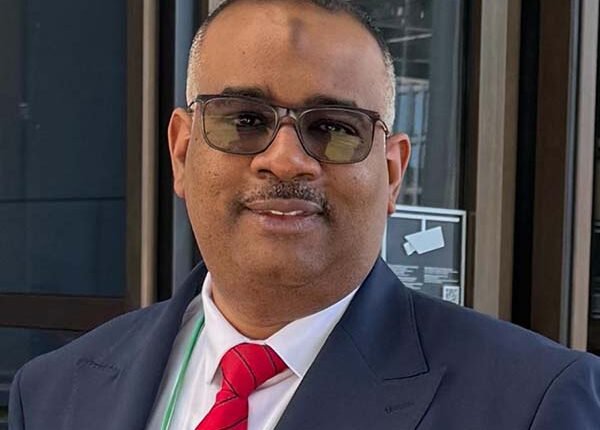
Mohannad Awad Mahmoud
The UN Security Council’s most recent session on Sudan marked a qualitative shift in the way the war file is being addressed. The old language of equivocation was largely absent, replaced by a discourse more closely tied to realities on the ground and balances of power. It became clear that the world is beginning to treat the war as a confrontation approaching its endgame, rather than as an open-ended conflict without a horizon. The session gained further momentum with the participation of Prime Minister Kamil Idris, who presented an integrated vision for a ceasefire, while the statements of major and regional powers revealed a re-drawing of the war’s image within the international mind.
The United States representative once again pushed for an immediate humanitarian truce without preconditions. This proposal, despite its humanitarian veneer, carries a deeply significant political meaning: it keeps the militia within the equation as a fully fledged political actor. Negotiating an unconditional truce implies tacit recognition of the militia as a political entity equivalent to the state in its “right to participate”. Unconditional truces are the means by which armed groups acquire political representation and move from being forces of fait accompli to becoming “temporary components” in transitional processes. This lies at the heart of the American approach: freezing lines of control before the battlefield situation changes decisively.
Britain, through its representative, reverted to a discourse aimed at reclaiming its historical role in the Darfur file. Since the early 2000s, London had been the leading international driver of decisions related to the region, the strongest voice behind the deployment of UNAMID, and a key shaper of the “crisis narrative” within the Security Council. In recent years, however, this role had receded in favour of the United States. Thus, when the British representative spoke of the militia’s declining ability to administer areas under its control and of the widening scope of chaos in Darfur, he was in effect repositioning Britain as a principal actor in a file that had long formed part of its political influence within the Council.
France’s statement drew attention to the wider regional dimension of the war. Paris views the flow of mercenaries through Darfur into Libya and onward to Chad and Niger as a direct threat to security in the Sahel, where France has been engaged in one of its longest-running campaigns against armed groups. Successive coups in Sahelian states have already significantly eroded French influence, and any new wave of mercenaries from Sudan would reshuffle the region’s security landscape. Hence the French warning carried a clear message: there can be no stability in the Sahel without stability in Darfur.
Russia, for its part, presented a vision centred on rejecting the “politicisation of the humanitarian situation” and emphasising a locally driven solution. Beneath this rhetoric, however, lie precise strategic calculations. Moscow views the Red Sea as one of the most critical trade and energy corridors and seeks to establish logistical and maritime presence to ensure freedom of movement in the face of Western pressure. From this perspective, the stability of the state—not any armed entity—is the only option that provides Russia with an environment conducive to strengthening its commercial and maritime footprint in the region. Accordingly, Moscow’s tone leaned towards support for the state, albeit without explicit declaration.
Within the Arab framework, Egypt’s statement, delivered by its Permanent Representative, was the most direct and firm. Cairo stressed that preserving the state and its unity is a fundamental condition for regional stability, and that any attempt to place the militia on an equal footing with state institutions constitutes a threat to Egyptian national security.
Towards the end of the session, Prime Minister Kamil Idris delivered an address outlining a clear ceasefire proposal. The plan is based on the militia’s withdrawal from cities and key sites it occupies, its regrouping in camps under international and regional monitoring, and the initiation of a gradual disarmament process prior to any political track. Idris emphasised that the plan is “locally crafted”, a direct message that the state seeks to offer solutions rather than receive them from outside. In essence, this initiative is not a truce in the traditional sense; it is a redefinition of peace itself—a peace that begins with reducing the militia’s military power, so that any subsequent political process becomes one of reintegrating individuals rather than partnering with an armed entity.
In this context, the Prime Minister’s statement was fully aligned with the vision repeatedly articulated by the Armed Forces through General Abdel Fattah al-Burhan, which makes any truce conditional upon the militia’s withdrawal from cities, the assembly of its forces in monitored camps, and the commencement of disarmament before entering any political arrangements. The only difference lies in presentation: Idris framed this vision in diplomatic language tailored to the Security Council, drawing on his long experience within UN institutions, and translating the military equation articulated by the Armed Forces into a political formulation suitable for international forums. In this sense, his initiative was not a departure from the state’s line, but a re-presentation of the same vision in a diplomatic قالب appropriate to the Council’s setting.
Based on the course of the session, the prospects for the Prime Minister’s initiative succeeding in the short term appear very limited—not because of any flaw in its substance, but because its conditions rest on disarmament, which the militia rejects, and because certain major powers continue to push for an unconditional truce that contradicts the locally defined approach to resolution. The more realistic prospect is that the initiative will evolve into a reference document from which future discussions may resume, pending clearer developments on the ground.
As for the expected scenarios following the session, they fall into three main trajectories:
First scenario: escalating pressure towards an unconditional humanitarian truce.
The United States seeks to pre-empt any decisive shift in the battlefield by temporarily freezing frontlines and opening the door to a political process led by the Quartet, with attempts to incorporate the militia into the political equation.
Second scenario: growing international recognition that the war is entering its final stages.
The frequent use by many states of terms such as “post-conflict phase” and “the day after” reflects a sense that the battlefield is imposing a new reality, and that the world has begun to think about the nature of authority after the fighting stops, pathways to reconstruction, and security-sector arrangements.
Third scenario: consolidation of the Egyptian–Saudi role as the most stable regional framework.
The alignment between Cairo and Riyadh forms the backbone of any sustainable solution. Both reject equating the state with the militia and insist that Sudan’s stability is a prerequisite for the stability of the Red Sea and East Africa. As other regional umbrellas weaken, global reliance on the Arab axis increases—not merely as a mediator, but as a guarantor of resolution.
In conclusion, the session recast the war before the international community not as a conflict between two parties, but as a struggle over the future of the state itself: will it be governed by constitutional legitimacy or by the logic of armed groups? While the Prime Minister presented an advanced framework redefining the conditions of peace, its translation on the ground will remain contingent on battlefield dynamics, the orientations of major powers, and the state’s capacity to impose its terms on both the logic of war and the logic of negotiation simultaneously.
Shortlink: https://sudanhorizon.com/?p=9846