

How Some American Influencers View the Events in Darfur: “A New Conflict in an Old Battlefield”
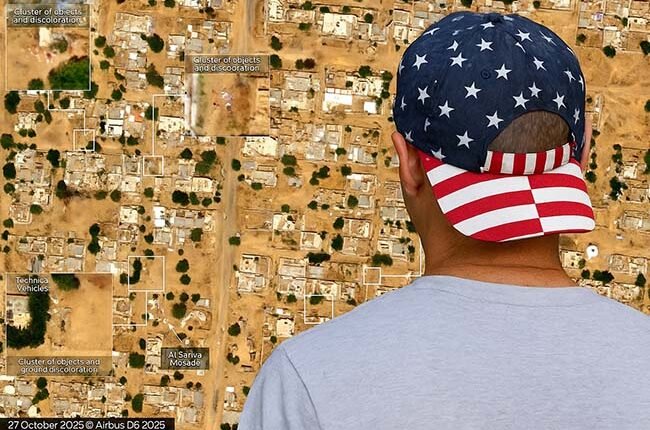
Sudanhorizon– Mohamed Osman Adam
Declan Walsh, the Pulitzer Prize-winning journalist for his coverage of the war in Sudan, wrote an article in The New York Times on Monday focusing on the situation in Darfur, particularly in El Fasher.
While Walsh is an influential media figure, The New York Times wields considerable influence over American elites and politicians. Its reporting can be considered an indicator of the views of those who hold the reins of power, beyond the elected political figures.
Walsh began by saying that since the fall of El Fasher in Sudan to a paramilitary force last week, documented images and eyewitness accounts have pointed to a series of massacres in Darfur, which sums up the overall picture for the American observer.
He then elaborated, saying that civilians are being shot as they tried to flee the city, and videos showed paramilitaries summarily executing civilians. Those who managed to escape to a town 65 kilometers away have recounted harrowing stories of terror, hunger, and death.
He notes that two decades ago, the word “Darfur” became synonymous with unchecked atrocities in a distant land. Today, that scene is being repeated. A wave of killings is sweeping through one of the region’s largest cities. The same ethnic rivalries appear to be fueling the chaos.
The paramilitary forces unleashing their terror are descended from the Janjaweed, a predominantly Arab militia that was widespread two decades ago. The first time Darfur descended into chaos, there was at least some Western pressure. This time, there is little celebrity activism or political attention, and impunity for repeated abuses has prevailed.
The author then draws a comparison between the past and present:
The fighters now ravaging Darfur are better armed, organized, and funded than ever before. They are backed by one of the region’s richest countries, the United Arab Emirates, which is also a close partner of the United States. (The UAE has denied supporting either side in the conflict.)
Previously, the fighters mainly rode horses and camels; today, they drive armored vehicles and pickup trucks. Previously, they burned villages; now, they fire heavy artillery and fly sophisticated drones.
In the first war, paramilitary militias fought alongside the Sudanese army. Now, the paramilitary group known as the Rapid Support Forces is fighting the national army in a conflict that has torn Sudan apart and, in many ways, created the world’s worst humanitarian crisis.
The civil war between the Sudanese army and the Rapid Support Forces (RSF) erupted in April 2023, partly due to the political ambitions of the group’s commander, Lieutenant General Mohamed Hamdan Dagalo.
Dagalo declared a parallel government in South Darfur, but it received no support or recognition and was rejected outright by the UN Security Council, the African Union, and the Arab League. Hemedti’s forces committed atrocities that the UN classified as war crimes, while the Biden administration described them as genocide, often targeting members of the Zaghawa tribe. A UN report also states that sexual violence is widespread.
Until the beginning of this week, El Fasher was the only city in Darfur not under the control of the RSF militia. A group of Sudanese soldiers and allied Darfur rebel forces clung to a camp near the airport, their last stronghold in the region.
As the RSF tightened its siege, the militia built a high earthen berm encircling the city, trapping approximately a quarter of a million people inside. Civilians who tried to smuggle food or medicine across the berm were beaten or killed. The population began to starve. At the last functioning hospital in the city, doctors resorted to feeding malnourished children animal feed—umbaz.
“Everyone knew what would happen when El Fasher fell—that in addition to the horrors of the unjust siege, the Rapid Support Forces would commit massacres,” said Michele Gavin, a senior fellow for Africa studies at the Council on Foreign Relations.
Limited Outrage:
Twenty years ago, prominent activists like George Clooney made Darfur a national cause. The crisis there became a foreign policy priority for President George W. Bush and a point of contention with China, which had oil investments in Sudan.
While the latest atrocities have drawn strong condemnation, it has been largely confined to political circles—the UN Security Council, some members of the US Congress, and a handful of politicians elsewhere.
President Trump’s special advisor on Africa is trying to broker a ceasefire. But so far, there have been few signs of success, partly because the participants include diplomats from the UAE, Egypt, and Saudi Arabia—the very same Arab powers fueling the conflict.
Despite US accusations of genocide, Gavin said few officials have been willing to publicly criticize the UAE’s role in exacerbating the conflict. “The UAE is arming and supporting a genocidal force,” she added. “But there is a complete refusal to acknowledge it.”
Shortlink: https://sudanhorizon.com/?p=8442