

Head of the NCP’s Shura Council to Sudanhorizon: No Need for a Legislative Council Before the Fate of the Battle Is Decided
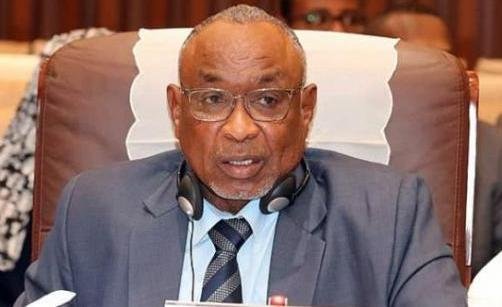
Cairo – Sudanhorizon – Sabah Mousa
Mohamed Osman Yousif Kibir, Head of the Shura Council of the National Congress Party, has affirmed that any step likely to affect the course of the war in Sudan “is not required at this stage”, stressing that the priority of both the state and society must now be confined to decisively concluding what he described as the War of Dignity.
In exclusive remarks to Sudanhorizon, Kibir—former Vice-President of the Republic and former Governor of North Darfur—said that forming a legislative council at this time would provoke controversy and division, particularly because its members would be appointed, a process that could trigger public objections and negatively affect social cohesion.
He added that popular support constitutes a “powerful weapon” in the hands of the state, and that any move that might weaken that cohesion would not serve the public interest. While acknowledging that the absence of a legislative council since 2019—despite its provision in the Constitutional Document—represents a significant oversight gap, he argued that the harm resulting from its absence is less severe than the consequences of establishing one under current wartime conditions.
“The overall national interest requires postponing it until after the war ends,” he said. “The executive branch may commit lapses in the absence of oversight, but those lapses would be less damaging than forming such a council now.”
He emphasised that his position was based on the “collective interest of the country”, not on partisan or personal considerations, warning that Sudan remains under existential threat—one that could derail all political processes, including the proposed council itself.
Kibir further argued that the post-war phase should be a short transitional period not exceeding eighteen months, aimed at stabilising conditions, restoring services, and preparing normal life for citizens. He noted that current political disagreements over the formation of the council demonstrate its limited viability at present.
“If the purpose is merely to accommodate individuals, then it has no value. If the purpose is to perform a role, it will not be able to do so as required,” he said, describing the proposal as a premature leap that could further fragment society at a time when the country can ill afford additional division.
He also called for restructuring state institutions and clearly defining competencies, suggesting that the current size of the Sovereign Council is unnecessary. He proposed reducing it to a President and two Deputies, alongside a Council of Ministers and clearly delineated regional authorities, in order to establish a more coherent hierarchy of power and greater administrative discipline under the present circumstances.
“There is a need for stronger coordination and integration among state institutions,” he noted, referring to what he described as an undeclared conflict of authorities.
Regarding the continuation or cessation of the war, Kibir maintained that the final decision must rest with the Sudanese people, through a mechanism capable of gauging public opinion in coordination with the armed forces, while preserving popular backing for the army.
He stated that any negotiations must be based on supporting the army’s conditions: the withdrawal of the Rapid Support Forces militia from cities, the surrender of its weapons, and the assembly of its members in camps outside urban areas. He argued that the militia’s actions against the Sudanese population justify these demands.
“It is illogical to ask the army, which protects citizens, to withdraw from cities and leave them exposed,” he said.
Kibir denied that the National Congress Party had issued any official position rejecting a ceasefire if approved by the army, clarifying that such statements circulating in public discourse represent personal views.
“I have not witnessed such an opinion at any level of the party,” he said, adding that if an official decision were adopted, the party would abide by what is determined by the Sudanese people and their armed forces.
Shortlink: https://sudanhorizon.com/?p=11257