

From Documentation to Condemnation… How the ICC Report Paves the Way for Designating the RSF a Terrorist Organization
Cairo – Sudanhorizon– Sabah Moussa
A new international legal condemnation of the Rapid Support Forces militia and the characterization of its actions as mass war crimes and crimes against humanity in Darfur; what the International Criminal Court announced yesterday in its semi-annual report to the Security Council may establish a new phase in which violations move from the realm of security lapses to specific criminal responsibility for a single, known party.
ICC Briefing
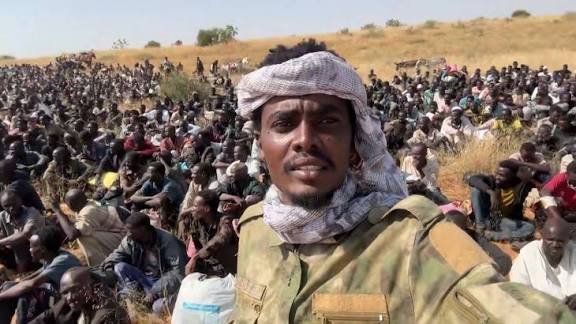
In a formal briefing to the Security Council on Monday, the Deputy Prosecutor of the International Criminal Court, Nazhat Shamim Khan, confirmed that the Office of the Prosecutor considers war crimes and crimes against humanity to have been committed in Darfur, particularly in El Fasher during the Rapid Support Forces’ takeover last October. This conclusion is based on evidence gathered from photographs, videos, and field investigations.
She noted that the violations in El Fasher included torture, executions, rape, and arbitrary detention systematically targeting specific civilian groups. She also stated that there were instances of celebrations of executions and desecration of corpses by some Rapid Support Forces members, in addition to the use of sexual violence as a weapon of war.
She explained that the acts of violence were not isolated incidents but rather demonstrate a pattern of organized crimes recurring from one city to another in Darfur, reflecting the profound dangers facing civilians in the region.
She urged the Sudanese authorities and the international community to work diligently towards accountability, emphasizing that investigations will continue to gather further evidence and the possibility of subsequent legal action at the highest levels.
A Turning Point
The International Criminal Court’s announcement yesterday was not merely a passing moral condemnation, but a legal and political turning point in the course of the war in Sudan. The prosecution’s accusations that the Rapid Support Forces (RSF) committed war crimes and crimes against humanity, and the existence of mass graves in El Geneina and El Fasher, not only revive the memory of the Darfur genocide but also establish a new phase.
The seriousness of this announcement lies in its revelation of a systematic pattern of violence based on ethnic targeting and ethnic cleansing, within a conflict that is no longer confined to military confrontation but has transformed into a war against civilians, where crimes are committed under the very eyes of the international community. As evidence accumulates and graves are exhumed, the most important and fundamental question arises: Does this development mark the beginning of a genuine path to accountability, or is it simply another entry in the long-standing record of impunity, not only in Darfur but throughout Sudan? And is it the beginning of designating the RSF as a terrorist organization?
The World’s Silence
For his part, Justice Minister Dr. Abdullah Darf explained that the Sudanese government has been alerting the international community since April 2023 to the systematic crimes committed by the Rapid Support Forces militia throughout Sudan.
Darf told Sudanhorizon that the militia committed these crimes in a consistent pattern in Gezirah State and its various villages, and then extended these crimes to El Geneina. He added that they were burying young people alive, and that this militia continued these crimes due to the international community’s silence. He also noted that the militia maintained its siege of El Fasher for more than 550 days, and that the Security Council was unable to implement its resolution to lift the siege on the city.
The world remained silent
He continued: “All this evidence against the militia, corroborated by a number of international reports, has been sent to the international community.”
He specifically mentioned the report of the UN Security Council’s Panel of Experts and reports monitored by international organizations. He stated that there were clear facts and crimes, but the deterrent message was not received, and the militia continued its various and systematic crimes.
He added that the report contained issues known to the entire world and all the people of Sudan, but the delay in taking a clear decision to designate the militia as a terrorist organization and the failure to send clear messages to all those who supported and contributed to the suffering of the Sudanese people, were significant.
He expressed his hope that the Security Council would take this message seriously by designating the Rapid Support Forces as a terrorist militia. He said that the shortest path to stopping these heinous crimes is for the countries supporting the militia—foremost among them the government of Abu Dhabi—to cease their support.
The conditions are met
Darf confirmed that all the conditions and legal descriptions required to classify the Rapid Support Forces as a terrorist organization have been met, and that only the will of the international community remains.
He explained that the report was a result of a referral from the Security Council and pertains only to Darfur. He said that the report contained a set of data suitable for submission to the International Criminal Court, of which Sudan is not a member, but the court can issue arrest warrants for the militia’s leaders and bring them to trial.
He indicated that Sudan cooperates with all human rights mechanisms in the world and exchanges information with them to ensure the harmonization of human rights principles.
He said: “We cooperate at the level of the Human Rights Council and its country council, and there is an agreement concluded with this council. We also cooperate with the appointed human rights expert.”
He pointed to the recent visit of the High Commissioner for Human Rights, Volker Türk, to the Sudan, saying that this visit was a message of solidarity with the Sudanese people in light of the horrific violations committed by the militia. He added that it came after these violations reached a brutal stage in El Fasher. He praised Türk’s statements at the Human Rights Council session when he affirmed that it was a proxy war for resources, stressing that this was the correct description of the war in Sudan.
He said: We sent this commendation to the High Commissioner, referring to the High Commissioner’s visit to Ad-Dabba and his listening to the testimonies of displaced people there. He said that these testimonies would be a strong incentive for him to submit his report, expecting him to present a strong report on this matter. He directed a message to the international community to be decisive in the measures that must be taken against the militia and to designate it as a terrorist organization. He said: We work in Sudan on human rights and the protection of civilians, and we seek cooperation with the international community to protect citizens.
Partial Report
For his part, Sudanese expert in international law, Dr. Mohamed Zain, confirmed that the report issued by the International Criminal Court is legal, good, acceptable, and helpful.
In support of all parties wishing to resort to other international judicial institutions. Zain told Sudanhorizon that the purpose of this report is to fulfill the Court’s obligations under Resolution 1593 issued in 2005, which referred the Darfur file and the war crimes at that time to the Security Council.
He explained that the importance of this report is that it complements the efforts made by the ICC within the framework of its obligations, including the trial of Ali Kushayb and his conviction to 20-year prison.
He pointed out that the report is still within Darfur, and referred to what the ICC Deputy Prosecutor, Nazhat Khan, said about Darfur being subjected to mass torture. He said that she is still talking about Darfur and the fall of El Fasher, and linked its fall to the crimes committed there, such as those committed in El Geneina in 2023, and that this crime is being repeated from one city to another and this situation will continue until this conflict and the feeling of impunity that fuels it stop.
He added that this indicates that she is still talking about war crimes and crimes against humanity in Darfur, and has not yet stepped out of the Darfur framework. He considered this report to be partial in terms of the mandate, and that this makes it important to ask the question: To what extent can the mandate under Resolution 1593 be extended to the level of all of Sudan? Given that war crimes have been committed in various Sudanese states, including Khartoum, Gezirah, Sinnar, Kordofan, and other areeas?
He added that Khan also pointed to the obstacles the Prosecutor’s Office faced in accessing relevant witnesses and ensuring safe access to the crime scene.
He noted that she attributed the issue to funding problems for the court, but that they were trying to overcome these difficulties after obtaining the court’s approval. He summarized the process by mentioning satellite imagery and other information and data, adding that this information confirmed the widespread bloodshed in El Fasher.
He also mentioned that she discussed the sanctions imposed by the United States on ICC officials and the arrest warrants. He pointed out that the briefing to the Security Council was conducted online, not in person, and that this meant other countries criticized the US refusal to grant a visa to Nuzhat, especially since the Prosecutor’s Office had previously issued arrest warrants for Netanyahu and others.
He stated that international political interests had thus conflicted with the higher interest of preventing criminals from escaping justice. He considered the report to fulfill the court’s obligations regarding Darfur, but stressed the need for significant effort from the Sudanese government to develop its mechanisms for documenting war crimes, crimes against humanity, and genocide committed outside Darfur, as this is crucial.
He noted that the report was based on interviews with victims and witnesses, and that experts in information technology and satellite imagery were consulted, all of which constitutes sufficient evidence to assist in the investigation.
As Sudanese government, in its cases before the ICC or other judicial institutions, said that the evidence in this report also helps us as lawyers for war victims. We filed a lawsuit against the UAE, specifically Mohammed bin Zayed, Mohammed Kaka, Hemedti, and others, in January 2024 before the Office of the Prosecutor. He added that this complaint prompted him to speak about crimes committed outside Darfur and to gather information.
The Office of the Prosecutor has not yet resolved the matter regarding the information it received concerning war crimes in other Sudanese states. He continued that, according to Article 15 of the Rome Statute, the Prosecutor has the right to open this file, but this remains contingent on the Sudanese government’s willingness to cooperate with the ICC regarding crimes committed outside Darfur.
Legal Issue
Zain explained that designating the Rapid Support Forces (RSF) as a terrorist organization is more of a legal issue than a political one. He said, “in Sudan, there is currently no law classifying the RSF as a terrorist organization. There is an existing anti-terrorism law that deals with the militia as individuals.”
He added, “There should be a specific law for this.” He believes the report contributes to the possibility of designating the militia as a terrorist organization, but this requires filing lawsuits in Europe against the militia and the UAE.
He said, “If even one European country issues a condemnation against the militia and its crimes, it could be designated as a terrorist group.” He added, “The evidence is the flight of displaced people from El Fasher, fearing the militia’s crimes, and their arrival in states controlled by the army.”
He pointed out that the US Congress and the European Parliament had previously discussed the issue of designating the militia as a terrorist organization, emphasizing that the UAE’s intervention is blocking all of this. He said, “If this were to happen, the UAE would be a sponsor of international terrorism”
Shortlink: https://sudanhorizon.com/?p=10591