

Farewell, Saif Al-Din Mohamed Ahmed
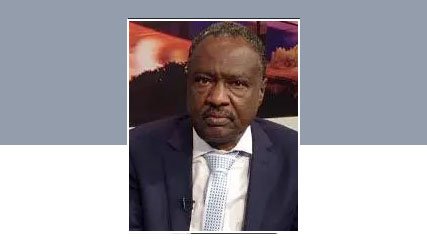
By Rashid Abdel Rahim
Among the bright young minds of that time—those who left important marks on Sudan’s modern history—was Dr Saif Al-Din Mohamed Ahmed, whose passing two days ago was deeply painful to many.
He was part of a group of young professionals who worked in fields of great national importance, such as peace and development. Among them were the late Engineer Musa Sayed Ahmed and Professor Musa Ali Suleiman, along with others.
Dr. Saif graduated from the School of Mathematical Sciences at the University of Khartoum and later studied politics and strategy in the United States.
He served as Director of the Strategic Studies Centre, through which he contributed significantly by bringing together several key dimensions of statecraft, including foreign relations, development, peace, and strategy.
He selected distinguished figures who made notable contributions in these areas, including Lt. Gen. Al-Sir Abu Ahmed, one of the most prominent heads of Sudan’s Military Intelligence, and Ambassador Major General Ali Nimeiri, for whom the Centre published a reference work titled “Intelligence in Islam.”
Dr. Saif also established a Political Analysis Department within the Centre. It operated with a scientific methodology and through structured dialogue, seminars, and academic discussions.
He assembled a team of specialists, many of whom had studied in influential countries. Each researcher focused on a particular country and was provided with strategic information drawn from both open and confidential sources. Members of the department were even sent abroad to follow major developments in the countries assigned to them. They would return with valuable insights presented through reports, seminars, lectures, and discussions.
I myself was assigned to study Israel, although none of us had previously studied or visited it. Since many of us had studied in Egypt, as I had, Dr. Saif arranged for me to attend lectures and research events, including a seminar on Israel at the Diplomatic Institute of the Egyptian Ministry of Foreign Affairs, where I participated alongside Sudanese diplomat Ambassador Suleiman Abdel Tawab.
Among the diplomats and ambassadors who worked at the Centre was Ambassador and poet Khalid Fath Al-Rahman.
Dr. Saif also organised visits for me to research institutes and study centres in Jordan and Lebanon, in addition to Egypt.
Through its Political Analysis Department, the Centre produced rich and detailed reports for the Presidency and relevant ministries. These reports were highly valued by the state’s leadership, which even requested that the Centre prepare daily analytical reports on ongoing events. The Presidency would often wait for and urgently request these reports.
Dr. Saif also initiated major development and agricultural projects. Among them was a proposal to monitor and develop a canal extending from west of Omdurman to Al-Dabba in Northern State, potentially creating one of the largest deltas suitable for wheat cultivation. A team of university professors and engineers from the Army Corps of Engineers worked on the project. However, it was eventually halted due to disagreements between university academics, irrigation and agricultural technicians, and the armed forces.
Dr. Saif also succeeded in determining the route of the Kenana and Rahad irrigation canals, extending from south of Khartoum through west Omdurman to the Northern State. He commissioned a specialised team that carried out clear aerial imaging of the canal routes.
The Centre also worked to modernise government operations by introducing computer technology to many state institutions—at a time when this field was still new. Dr. Saif successfully established an important digital information centre and trained personnel from various institutions.
Because of him, I had the opportunity to enter an important field when Engineer Musa Sayed Ahmed asked me to join the Supreme Council for Peace. Dr. Saif approved the transfer, and the late Musa believed the Council’s media work required someone capable of providing political and strategic media analysis, not just conventional journalism.
Dr. Saif was a creative and thoughtful mind—a quiet man who excelled in work and leadership. He never tired of working long hours, often spending entire days and nights absorbed in his papers at his desk.
May God have mercy on him. He was an exceptional figure whose life and contributions deserve to be known by the youth and scholars of Sudan.
Shortlink: https://sudanhorizon.com/?p=12023