

Engineering Balance: Who Fills the Void When the Political Centre Is Absent?
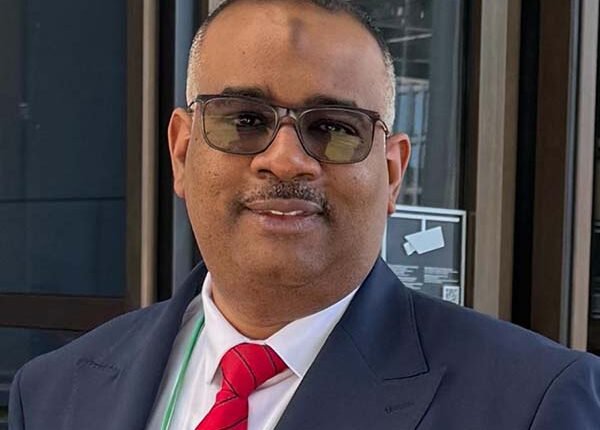
Mohannad Awad Mahmoud
(The Sudanese scene is being reshaped through a practical distribution of roles between state institutions and political forces in the absence of a unifying civilian leadership.)
Sudan is passing through a sensitive phase in which roles within the state are being reconfigured, under complex conditions shaped by the trajectory that followed what is referred to as the December Revolution, and the accompanying imbalances in managing the transitional period, alongside the absence of political consensus. This has contributed to deepening fragility, which was later exacerbated by the outbreak of war.
In this context, the role of General Abdel Fattah al-Burhan has become more prominent than ever before. In the absence of a strong civilian political centre, the primary burden of managing balances within the state has effectively fallen upon him—whether in security matters, political affairs, or external relations.
This situation can be understood through a clear equation:
Al-Burhan seeks an army that fights alongside him, civilians who manage political engagement both internally and externally, and Islamists from whom he can benefit without becoming drawn into sharp political polarisation.
However, this equation did not emerge in a vacuum. Rather, it is the result of the absence of a civilian entity capable of uniting political forces and organising the political landscape. This is where the position of the Kamil Idris government becomes evident, having been formed essentially as a service-oriented administration aimed at improving livelihoods and addressing the effects of war, rather than as a fully-fledged political government leading a comprehensive transitional phase.
Yet, reality has demonstrated that service delivery cannot be separated from the political climate. It is not possible to improve the economy or manage the state efficiently within an unstable environment. Due to the government’s limited influence in this sphere, its ability to carry out its tasks has been affected, even though this was not its primary mandate.
The result has been the emergence of a vacuum in the management of political activity. This vacuum did not persist for long; rather, international and regional actors gradually began to fill it. Entities such as the European Union, the African Union, the United Nations, and IGAD—alongside more limited roles for organisations such as the Arab League, in addition to specialised mediation bodies such as Pro Mediation—have begun organising meetings, proposing platforms, and inviting political actors to engage in discussions on Sudan’s future.
Here, the nature of the scene has shifted: the question is no longer merely who participates, but who determines who participates—clearly reflecting the impact of the absence of a national centre leading the political process from within.
Within this context, a practical distribution of roles has taken shape inside the state: the military focuses on maintaining security, stability, and overall balance; civilian forces operate within the political sphere domestically and internationally through various platforms; while other actors remain influential on the ground and within society. These include certain armed movements—particularly those aligned with alliances such as the Democratic Bloc—alongside other forces outside these frameworks, traditional leadership structures, and political entities with social reach. These actors influence ground-level balances without necessarily occupying the political forefront or participating in the platforms through which dialogue is conducted.
Despite their limited visibility, these forces exert decisive influence on the ground. Any political arrangements that fail to incorporate them meaningfully are likely to face significant implementation challenges—particularly if they emerge from external platforms or from limited agreements among select political actors.
Therefore, any stable pathway cannot be built on partial representation; it requires broader inclusion that reflects reality as it is, and takes into account the actual balance of power and influence within society.
In conclusion, what is unfolding today represents an attempt to preserve a delicate balance under complex conditions. However, this balance will remain temporary unless it evolves into a more organised and inclusive political process—one that originates internally, brings together diverse forces, clearly defines the priorities of the current phase, and utilises external support as a complementary factor rather than a substitute for national will.
State stability does not rest solely on maintaining security, but also on organising politics. This can only be achieved through an inclusive national dialogue that accommodates all actors and ensures genuine participation for all influential forces—thereby enhancing the prospects for successful future arrangements and transforming them from agreements on paper into a workable reality.
Shortlink: https://sudanhorizon.com/?p=12255