

Disagreement with Dr Al-Wathiq Kameir (2): Selective Institutionalism in the Committee for Preparing the Sudanese Dialogue
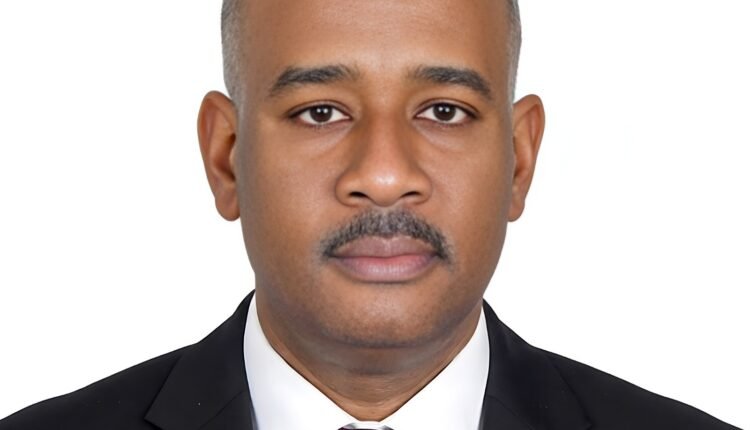
Muhannad Awad Mahmoud
In the first part of this article, I discussed Dr Al-Wathiq Kameir’s personal attack on me in response to an article I published on Sudanhorizon website entitled ‘Sumoud and Dialogue Inside Sudan: Who Has the Right to Choose on Behalf of the Sudanese?’, and its English version, published in Sudan Horizon. The article expressed my personal opinion on Sumoud’s position regarding dialogue. I did not write it on behalf of the Committee, nor did I present it as the Committee’s position.
I have always appreciated Dr Al-Wathiq’s emphasis on institutionalism and professionalism, and believed that his commitment to these principles would help the Committee organise its work. However, my experience has led me to ask a fundamental question: do we apply institutional principles as universal rules governing everyone, or are they invoked selectively when the aim is to hold Muhannad Siddiq to account?
At times, adherence to procedural details has reached the point of obstructing the work itself. For example, it took approximately two weeks to agree on the Committee’s name because Dr Al-Wathiq insisted on calling it the Sudanese-to-Sudanese Dialogue Committee. This was a literal translation that the other members objected to. The disagreement was not about the need to choose an appropriate name, but rather his insistence on a formulation that had not won their acceptance, thereby prolonging a discussion that could have been settled much more quickly. Institutionalism does not mean drowning the work in minutiae; it means reaching clear decisions through reasonable procedures.
This selectivity became particularly evident in two incidents involving my communications with external organisations and individuals.
After Aisha Al-Burair mentioned that there were disagreements within the Quintet Mechanism and that it would not be coming to Sudan, I contacted an American researcher to clarify the matter. He told me that he knew nothing about any such disagreements. To correct the information Aisha had provided, I shared my conversation with him in the Committee’s WhatsApp group and then confirmed that the Quintet would arrive as scheduled.
The researcher’s number was saved on my phone under the name ‘T SD DESK USA’. This is my personal method of saving numbers and remembering people; it has no connection with the Committee or any official capacity. Nevertheless, Al-Wathiq contacted him and asked whether he had moved to work at the US State Department. He then questioned him at length about how he knew Muhannad and how long he had known me.
The researcher told me that he had explained to Al-Wathiq that he was simply a researcher, that he had known me for years, and that he was concerned the incident might affect the Committee’s work. He also wished us well. He further told me that Al-Wathiq had asked him not to deal with me. I have retained his messages, and still have them as I write this article.
If Al-Wathiq had any questions about my conduct, the proper course would have been to contact me directly. Sharing information and discussions from within the Committee with a foreign researcher, and then asking him not to deal with one of its members, raises serious questions about compliance with the code of conduct we had agreed upon, particularly its provisions on the confidentiality of documents and deliberations. This was not merely a breach of professional conduct; it was a stab in the back.
In another incident, I contacted an organisation using my personal email address, which carries my name, signature and business affiliation. At the time, the Committee did not have an officially approved institutional email address that I could use, and the organisation’s representatives knew me in my capacity as a businessman. Despite this, Dr Al-Wathiq demanded that I be investigated for using my personal email.
If external communications require specific rules, the Committee should put them in writing, clarify its official channels and circulate them to all members. Demanding an investigation into me for communicating with an external organisation, when no clear institutional channels were available for me to use, does not address the underlying problem. Instead, it turns the absence of proper institutional arrangements into an accusation against a particular member.
More importantly, demands for investigations have been repeated in connection with incidents involving me, while other institutional questions have remained unanswered. To the best of my knowledge, members have not been given a clear plan from the Political Office on how to engage with political forces and parties, nor have they received regular reports on its contacts and meetings, or minutes that would let members know what was discussed and what decisions were taken. We also do not know what progress has been made in communicating with Sumoud, what reservations it has expressed, or what the next steps for engaging with it might be. Where is the institutionalism in all this? And why is there no equivalent demand for an investigation into the absence of plans and reports?
As for Aisha Al-Burair, my concerns go beyond the incident involving the Quintet Mechanism. She repeatedly spoke of the breadth of her knowledge of the international community and the strength of her connections abroad, going so far as to claim that she was the one who had brought the British to the table. Yet the Committee’s external relations network was not built through her efforts. Dr Mohammed Al-Munir Safi al-Din and I established it, and we took responsibility for developing and pursuing that line of work.
Aisha attended a meeting with the ambassadors of European countries in Cairo alongside us. However, as I recall, her contribution was confined to discussing her personal experience of living outside Sudan, her studies at the American University, and the fact that her daughter was living in similar circumstances. My assessment was that her intervention was entirely unrelated to the subject of the meeting. What relevance did these personal experiences have to the issues of war, internally displaced people and refugees, the rising cost of living in Sudan, or the efforts to create a conducive environment for political dialogue? These were among the issues on which the ambassadors had given us their time to hear our explanations. One would have expected a Committee member who spoke of her experience and international connections to focus on the meeting’s agenda, the Committee’s messages and the needs of the Sudanese people.
The Committee elected Aisha as its rapporteur. However, I was not aware of any collective decision approving her appointment as Vice-Chair, nor of any election to that position. We subsequently came across documents in which she was described as Vice-Chair, without our knowing that the Committee had discussed or approved this designation. If such a decision was taken, it should be presented to the members and recorded in the minutes. If no such decision was taken, then including the title in official documents appears to be an attempt to impose a fait accompli. In my view, presenting an international network of contacts as a source of influence, and then appearing in Committee documents under a title for which no decision known to the members has been issued, raises serious questions about procedural violations and attempts to exercise influence outside institutional frameworks.
Her current professional status also requires clarification. I have personally heard her introduce herself as an international staff member of the United Nations, and she has repeated this description in front of others. According to the information available to me, she was previously a locally recruited employee of the United Nations Development Programme (UNDP). She subsequently left the Programme and joined the office of the then Prime Minister, Abdalla Hamdok, as an adviser. News reports of official meetings in 2021 described her as an adviser on international cooperation.
The distinction here is important: previous employment with a UN agency does not mean that someone continues to work for it, and locally recruited staff status is not the same as international staff status. If she has left the United Nations, why does she continue to present herself to others as an international UN employee? If she claims to be a current employee while knowing that she is no longer employed there, this amounts to claiming an official employment status that should not be ignored. I leave the legal characterisation of such conduct to the competent authorities.
Aisha’s avoidance of appearing on camera is not an assumption based on hearsay; I have witnessed it myself at Committee events. I have also witnessed her asking for a photograph taken of her to be removed. I am not suggesting that this behaviour alone proves a conflict of interest. Still, it does raise a legitimate question: why does she avoid appearing on camera and request that photographs be deleted? Does she hold another professional position or have other interests that require her to avoid media exposure? The Committee and its members should disclose their CVs, current employers, relevant affiliations and interests. Institutionalism requires Committee members to know who they are working with, while the use of public money requires citizens to know how the Committee’s funds are being spent.
On the financial side, we, the Committee members, have no clear picture of its budget, expenditure items or the authority responsible for approving spending. Nor do we know whether the Committee has a dedicated financial account, whether it is subject to independent auditing, or what arrangements exist for contracts, salaries and incentives. The public position is that Committee members serve voluntarily, while information is circulating that some of them receive money or benefits from the state. I am not presenting this information as established fact. Rather, I am saying that the failure to publish records, decisions, and invoices leaves the door open to such questions. When expenditure comes from public funds, paid for by citizens through their taxes, disclosure is an obligation, not a favour.
Serious questions also arise concerning Professor Othman Mirghani Abdallah’s accommodation and travel expenses. According to the information available to me, he stayed for approximately two months at the Salam Hotel before moving to the Royal Palm serviced apartments. Aisha Al-Burair told me that these apartments are owned by her maternal cousin. Committee members are therefore entitled to know the basis on which this accommodation was selected, the value of the contract, and whether the family relationship was disclosed when the decision was made.
I have also been informed that Professor Othman has been provided with return air tickets between Britain and Sudan on more than three occasions since the Committee began its work. These are expenditures from public funds, and their details should be made public. How much did the accommodation and tickets cost? Who authorised the expenditure? And what criteria were used to select the accommodation and cover his travel expenses?
Professor Othman has lived in Britain since the 1970s and worked for the London-based newspaper Asharq Al-Awsat before retiring. Consequently, he did not live in Sudan through some of the defining moments of our recent history, from the 1985 uprising to the December 2018 Revolution and its aftermath. Nor did he experience the shortages of fuel and cooking gas, power cuts, and ultimately the horrors of war endured by the Sudanese people. Yet thousands of dollars of taxpayers’ money have been spent bringing him in to help address the country’s crises.
This raises a question that cannot be brushed aside: in a country of 42 million Sudanese, is there not a wise and experienced person capable of helping resolve its problems without burdening citizens with the cost of bringing in an expert from abroad? What specific expertise made it essential to bring Professor Othman in, and how was his contribution assessed against the alternatives available among Sudanese experts?
As for his long residence in Britain and his British citizenship, these are personal matters and should not, in themselves, be used as grounds for judging his patriotism or loyalty. However, citizens have every right to ask about the criteria for selecting participants, the expertise required, and any relevant affiliations that should be disclosed when public money is being spent. The question is not about his patriotism; it is about the justification for the expenditure, the authority that approved it, and the public benefit it was intended to achieve.
Another matter connected with public expenditure concerns reports that Professor Nabil Adeeb travelled to Port Sudan to attend a case relating to him, and that his travel tickets were allegedly paid for with public funds. The question here is straightforward: did the Committee or the state cover the cost of travel connected with a case involving him personally? If so, who authorised the expenditure, on what grounds, and where are the supporting documents? The records should be published so that the matter can be resolved.
This is where selective institutionalism becomes clear: repeated demands that I be investigated and held accountable for communications that could easily have been explained, alongside an absence of accountability and disclosure on matters relating to plans, reports, official positions, interests, budgets, accommodation and travel. Institutionalism cannot be defended by selecting certain incidents for scrutiny while leaving others unexamined. Nor can the Committee expect the parties involved to trust it unless it begins by applying transparency and accountability to itself and all its members by the same standards.
These are not minor administrative details. They are questions of equality, transparency and the use of public funds. If the Committee wishes to convince the Sudanese people that it is working towards fair and inclusive dialogue, it must answer these questions with documents and figures, rather than respond to every question with silence while invoking institutionalism only to hold those who raise them to account.
I will continue in the third part, in which I shall discuss the incidents on which I have based my assessment of the different currents within the Committee. Institutionalism that is applied to one member and waived for another is not institutionalism; it is selectivity. Public money is not protected by slogans, but by records, audits and accountability.
Shortlink: https://sudanhorizon.com/?p=20626