

Diplomatic Mission in UK: Sudan Faces Systematic Aggression
London – Sudanhorizon
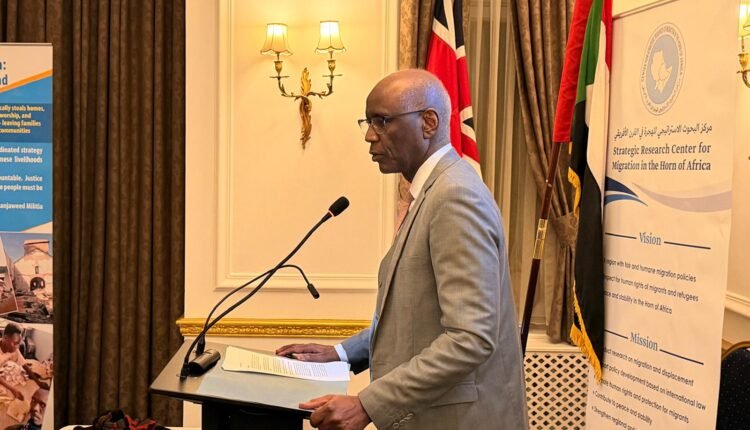
The head of the Sudanese diplomatic mission in London, Ambassador Babiker Al-Siddiq Mohammed Al-Amin, has stated that the war waged against the Sudan is not a political conflict or a power struggle, but rather a systematic aggression carried out by a rebel militia against the Sudanese state, its institutions, and the Sudanese people, in flagrant violation of international law and international humanitarian law.
The ambassador explained, during a briefing organized by the Center for Strategic Research on Migration in the Horn of Africa, in cooperation with the United Nations Association – Westminster, in London, on “Developments in Sudan and the Government’s Peace Initiative,” that the war has been accompanied by grave violations, including mass killings, ethnic cleansing, widespread attacks on civilians, as well as the destruction of infrastructure and looting of public and private property.
The ambassador has noted that the government, despite the enormity of the challenges and the complexity of the situation, remains committed to the peace . He outlined the peace initiative presented by the Prime Minister to the UN Security Council, emphasizing that it stems from a comprehensive national vision aimed at ending the war, preserving the sovereignty and unity of the country, protecting civilians, restoring security and stability, and preventing the collapse of regional and international peace and security.
This, he stressed, is based on principles that include a comprehensive ceasefire; ending the rebellion and extending the state’s full authority over its territory; addressing the humanitarian situation and ensuring that aid reaches those who need it without politicization or exploitation; launching a comprehensive Sudanese-Sudanese political process after the security situation stabilizes; and holding those responsible for crimes and violations accountable and ensuring that there is no impunity.
Siddiq stressed that achieving sustainable peace could not be accomplished by equating legitimate state institutions with rebel militias or by imposing external solutions that disregard the national will. Rather, it requires supporting state institutions, respecting Sudan’s sovereignty, and preventing foreign interventions that contribute to prolonging the war and complicating the crisis.
For his part, David Wardrop, President of the United Nations Association – Westminster, stressed the importance of listening to the Sudanese government’s fact-based account and called on the international community, particularly the United Nations, to play a more effective role in protecting civilians, ensuring respect for international humanitarian law, and holding perpetrators accountable and preventing impunity.
Warddrop warned of the serious repercussions of the ongoing humanitarian crisis in Sudan at both the regional and international levels, especially in the areas of migration, security, and stability. He explained that the world is witnessing a noticeable decline in the role of the United Nations and emphasized the need to re-empower it to fulfill its mandated role in maintaining international peace and security.
The briefing included interventions from several strategic experts who emphasized the importance of uncovering the truth about what is happening in Sudan, supporting efforts to end the war, alleviating human suffering, and achieving a just and sustainable peace led by the Sudanese themselves.
Shortlink: https://sudanhorizon.com/?p=10800