

Democracy: Our April Political Illusion
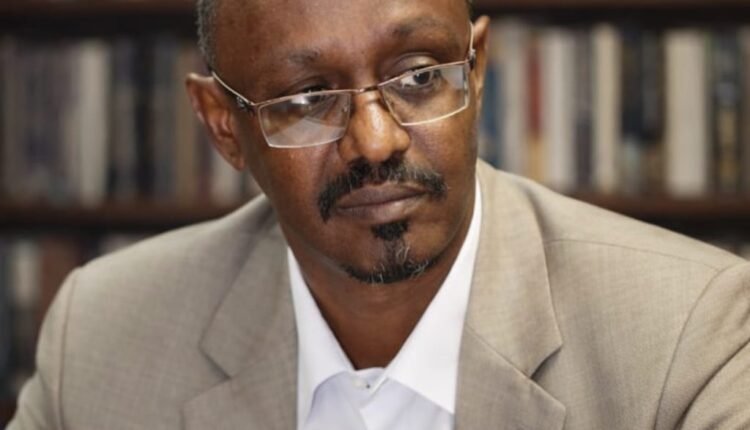
Mohamed Abdelrahim Jawish
In November 1953, Sudan held its first legislative elections as part of the British colonial arrangements for independence. Ironically, at the time, Spain and Portugal—Britain’s neighbours in Europe—were under military dictatorships. By 1954, the most prominent cultural event was the film April Fool, starring Ismail Yassin, while Sudan and Egypt were then a single state. As fate would have it, the Sudanese people later sought democracy in April 1985 and April 2019, after the rule of Field Marshals Jaafar and Omar (16 and 30 years, respectively). Then came the greatest April deception in April 2023, when Mohamed Hamdan and his associates declared war in the name of democracy, under the sponsorship of a state ruled by a hereditary family.
The fundamental question that our elites and political parties have failed to address is this: why has democracy eluded us to the extent that it has become an April illusion embedded in our political history? Why has no serious effort been made to entrench it, even though this is among the most basic priorities of political work in any liberal democratic system? The most that some of our parties have done is to sign a “Charter for the Defence of Democracy” after the first April in 1985—a charter that collapsed the moment military marches were broadcast on the morning of Friday, 30 June 1989.
Sudan became an independent state with a liberal democratic system on 1 January 1956, with an elected parliament. Yet this system did not endure for even three years, as the army took power in November 1958. Setting aside the political debates over the causes of that coup, it is evident that the democratic system was a fragile structure for several reasons. The central state itself was newly formed, and our experience with political parties began under colonial rule after the fall of the Mahdist state in 1898. More precisely, our democratic system was merely a replication of the coloniser’s. It seems we have grown accustomed to easy solutions, expecting democracy to endure without recognising that, in the West, democratic practice has become deeply rooted in social culture over centuries. The first democracy was established in Athens in the fifth century BC, and it gradually evolved into institutions, traditions, and educational practices embedded within society.
Moreover, liberal democracy was not present in our immediate regional environment; most neighbouring countries were either monarchies or had only recently emerged into military rule. Thus, we internalised the idea that democracy was the solution, and we have pursued it for seventy years for just two reasons: the legacy of the colonial system, and the absence of a pre-colonial monarchical system of our own.
A closer examination of our political parties—their intellectual foundations, institutional structures, and internal practices—reveals that it would have been extraordinary, even illogical, for democracy to have succeeded and stabilised over the past seventy years. The two major parties that assumed power at independence were tied to families leading religious sects, sharing little with the principles of liberal democracy beyond the pursuit of power. Leftist parties, neither in their ideological roots nor in the practices of their predecessors in countries where they held power, were aligned with liberal democracy. As for the Islamists, they emerged as a rising force of freedom after October 1964 and as a promising political force in the 1986 elections—until the final day of June 1989, when they too resorted to a coup, joining the others. The question remains: where are the viable seeds of democracy within our parties that we might plant to make our plains flourish?
Democracy is founded upon rights and duties, freedom of choice, strict adherence to justice, the rule of law, transparency, and the rejection of foreign interference in domestic affairs. For democracy to endure, these principles must not exist only in constitutions and laws; they must be embedded in our upbringing, daily practices, and societal culture.
A young Iraqi migrant in Canada once shared a story during a workshop on elections. He went to collect his daughter from nursery and found the children lined up to leave. His daughter was checking behind her classmates to ensure each had all their belongings before exiting. When he asked her what she was doing, she replied that it was her responsibility as the class leader—she had been elected by her peers.
By contrast, when democracy is mentioned in our context, what comes to mind is merely voting. While important, this is only a small part of the democratic system. The consolidation, deepening, and development of democracy must be a continuous process involving all members of society, working in harmony and responsibility to build the nation, utilise its resources, and benefit from differing viewpoints in enriching ideas and solutions.
Did you know that Europe, which embarked on the path of democracy over 2,500 years ago, still prioritises its consolidation? The European Commission states: “It has made defending democracy and strengthening the rule of law a priority. Measures have been put in place to protect and reinforce democracy, counter foreign interference, combat disinformation and corruption, and safeguard media freedom and pluralism, as well as the safety of journalists.” Have you noticed that Europe still fiercely protects its democracy from foreign interference? By contrast, democracy in our context often serves as a gateway to such interference. Those who recall the 1986 elections will remember how the Ba’ath Party spent lavishly from Iraqi oil funds, in addition to providing scholarships for its cadres. This followed similar support given earlier to the Communist Party by Eastern Bloc countries. As for the April 2019 democracy, it might be easier to ask what Sudanese role existed within it; in essence, its leadership seemed to emerge from embassies, which were visibly present in the sit-in area as though they were part of the political leadership. Among the most notable interventions was the reported drafting by the British ambassador of a request to the United Nations to place Sudan under Chapter VI, to be signed by the Prime Minister without the knowledge of the public or the Sovereign Council. There were also reports of UNDP job postings for the Prime Minister’s office, later withdrawn after public backlash, allegations of salaries being paid to ministers, and the involvement of ambassadors from the so-called “Quad” in sponsoring the framework agreement.
Democratic systems do not tolerate foreign interference. A recent example is the resignation of Michael Flynn, the US National Security Adviser during Donald Trump’s first term, less than a month after his appointment in January 2017, following revelations of his contacts with the Russian ambassador prior to assuming office.
Disorder has been one of the shortcomings in our practice of democracy, particularly during April uprisings, making people less inclined to regret its collapse. As the late Sharif Zain al-Abidin al-Hindi once remarked in the Constituent Assembly towards the end of April 1985 democracy, it could simply “be swept away”. Those who lived in Khartoum before and after April 2019 will recall how life became difficult during the blocking of roads, the destruction of street infrastructure, the removal of signs and lighting, and the burning of tyres—all in the name of democracy. Many citizens’ interests were disrupted; some patients could not reach hospitals, and some lost their lives.
Our dismay was compounded when one politician—whom we had regarded as a voice of reason—shocked us by praising such actions.
The path to democracy is long, and we must take it seriously if we truly desire it. Sustainability will only come through sustained effort and genuine conviction. Otherwise, democracy will remain our recurring April illusion.
Perhaps it is time for someone among us to undertake a deep analysis of our prolonged failure to sustain democracy and to outline a clear path forward. Unless the entrenchment of democracy becomes a central pillar of our political thought, party activity, educational curricula, cultural programmes, and social life, we should not delude ourselves into thinking it will.
A final observation: the transitional period after 1964 lasted six months; after 1985, twelve months; yet our current transitional period has now reached seventy-two months—and continues.
Shortlink: https://sudanhorizon.com/?p=12664