

Dedicating Victory on the Anniversary of Victory
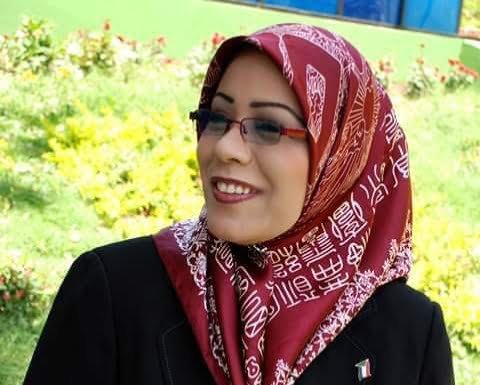
Dr. Enas Mohamed Ahmed
On Monday, January 26, 2026, the siege of the strategic city of Dilling in South Kordofan State was broken after fierce battles waged by our armed forces and their supporting forces against the terrorist militia and its ally, the Sudan People’s Liberation Movement-North (SPLM-N) led by Abdelaziz al-Hilu.
This militia had imposed a deadly siege on the city for two years. For two years, the rebel militia launched continuous attacks with artillery and drones on the city and its inhabitants, preventing the delivery of humanitarian assistance and targeting all vital facilities with shelling and destruction.
The army entered victoriously after seizing control of Hebeila, located 42 kilometers southeast of the city and linking Dilling and Kadugli. SAF also secured and cleared the areas of Kartala, Kaluji, and Al-Titel, east of Dilling.
The army inflicted heavy losses on the militia and its supporters in terms of lives and equipment, and the remainder fled in defeat, dragging the tails of shame and humiliation.
The valor displayed by the heroes of the 4th Infantry Division, along with their supporting forces, in a series of fierce battles and intense clashes, has painted a shining and honorable picture, adding to the annals of honor and victories of our valiant armed forces.
SAF dedicated this great victory to the Sudanese people on a cherished anniversary: the liberation of Khartoum on January 26, 1885. Historians consider this day the first anniversary of Sudan’s independence, achieved by great and loyal men. The army’s victory coincided with this enduring anniversary, illuminating our nation’s history. As always, the citizens rejoiced, taking to the streets in celebration of the armed forces’ triumphs. SAF’s entry into any city means return of life, security, and stability.
On the ground, lifting the siege of Dilling paves the way for humanitarian aid to reach civilians trapped there and in the surrounding areas previously controlled by the militia. The armed forces’ control of these areas strengthens security and safety for citizens who suffered under the brutality of the criminal militia, the deterioration of health services, the scarcity of medicine and food, and the disruption of water, electricity, and communications services due to the militia’s siege. At that time, citizens had no choice but to die of starvation or under artillery fire.
What has befallen our country as a result of this war is a tragedy that repeats itself daily: displacement, refuge, hunger, and the disruption of basic services. This suffering has left no aspect of Sudanese life untouched by pain and hardship.
The militias have committed every crime against the Sudanese civilians. Three years of continuous war, boundless violence, severe suffering, and a series of heinous crimes have passed, while the world merely condemns, denounces, and expresses concern. At best, international reports are issued without any effective action on the ground. The brutality of war knows no bounds, and death waits for no one.
A thousand days have passed since the start of the war – nearly half the duration of World War II. Therefore, Jens Laerke, spokesperson for OCHA, called for an urgent plan to assist 20 million of the 34 million people in Sudan believed to be in dire need of humanitarian aid. This entails an immediate cessation of militia attacks and crimes against civilians, the opening of humanitarian aid corridors, and the protection of aid convoys from militia attacks involving theft, looting, and the killing of aid workers. It also requires an end to attacks on civilians, a halt to the provision of weapons, equipment, and mercenaries to the militia, and their designation as a terrorist group to be prosecuted according to international law. These measures are interconnected and sequential, and the international community and its international and judicial mechanisms are aware of this, yet they remain silent.
On the other hand, given Sudan’s long history of wars, conflicts, violence, and mass displacement, the world’s response to its crises has been limited to humanitarian frameworks only. These frameworks include providing humanitarian, food, and medical aid, diplomatic efforts to stop the war, negotiations, ceasefires, truces, and peace agreements of various types and terms.
The conflict stops for a period, then the cycle of war resumes. However, the current raging war is different from previous conflicts because its effects and repercussions are felt throughout the world, directly or indirectly, economically, militarily, and politically, in both the short and long term.
Therefore, any global strategy analyzing and monitoring the situation in Sudan must adopt a different political vision for dealing with this war.
This vision must be capable of curbing terrorism in its most heinous form: state-sponsored terrorism. This terrorism aims to achieve political or economic objectives by destabilizing the state, plunging it into a cycle of war, depleting its resources, plundering its wealth, targeting civilian lives and property, and destroying vital infrastructure.
All of these are interconnected elements that constitute a violation of international law, necessitating the implementation of legal measures.
The international community must stop funding terrorist operations and international crimes against civilians, prevent the flow of weapons and mercenaries to the militia, and extend the reach of international law to dismantle the international networks that support and finance the (rogue state) to support the rebel militia and perpetuate the war in Sudan.
This is the essential way to truly stop the war on the ground, eradicate the rebellion at its roots, and eliminate all the phenomena that accompanied it and are outside the bounds of international legitimacy and the unity of the Sudanese state. Then we can move to a negotiation phase to establish comprehensive peaceful political solutions.
Peace will not be sustainable except by eliminating the militia and ending any rebellion. The international community must be serious in supporting the Sudanese government to overcome this crisis, overcome the bitterness of war, and participate in rebuilding the state. Otherwise, there will be no sustainable peace, and it will be merely a voice echoed in the wilderness.
Shortlink: https://sudanhorizon.com/?p=10809