

Crisis of Sudanese Schools in Egypt, Legalizing Status Versus Anxiety of Students and Their Families
Cairo – Sudanhorizon – Sabah Moussa
Complaints from Sudanese in Egypt have resurfaced regarding the intensified Egyptian police campaigns against those violating residency and asylum laws, particularly in Cairo and other major governorates.
Widespread Controversy:
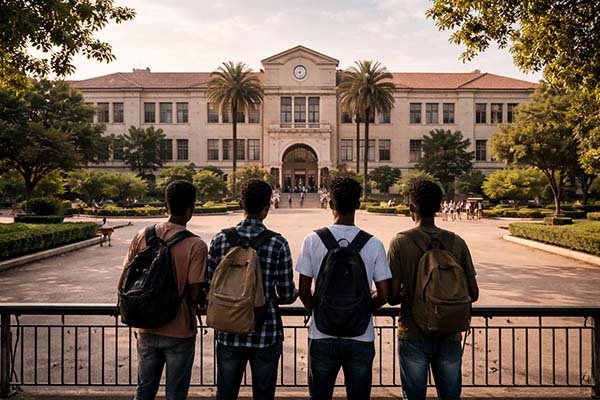
Recent days have witnessed widespread debate among Sudanese on social media concerning reports of Sudanese students being stopped and detained in the streets and schools. Their families fear their children will be deported. While some understand the nature of the measures, acknowledging that they are Egyptian laws that must be respected, others reject them, arguing that they will negatively impact the future of Sudanese students in Egypt.
This situation has been coupled by increased appeals to the Egyptian authorities to facilitate the procedures so that a large number of the students are not deprived of continuing their education at the background of the current strife in the Sudan, a war which is nearing its third year, with no end in sight.
Legalization:
This issue has reignited the debate surrounding the legalization of Sudanese schools in Egypt. Egyptian authorities have granted them several extensions to regularize their status, but Sudanese school owners find the Egyptian requirements for legalization overly complex, particularly regarding adherence to specifications for educational buildings. They argue that these specifications are prohibitively expensive and beyond their means under the current difficult circumstances. With the large number of students in Egypt, they are forced to continue their education in buildings that do not meet Egyptian standards.
Lack of clearence :
The Sudanese schools in Egypt are divided into two categories: those licensed by the Sudanese Ministry of Education, which teach the Sudanese curriculum and operate under the supervision of the embassy in Cairo and the ministry in Sudan (though most of these are not operating successfully in Egypt); schools that teach the Egyptian curriculum; and others that teach an international curriculum. Some of these schools lack licenses in both Egypt and Sudan. In addition, there are a large number of centers that teach the Sudanese curriculum, leading to chaos and disorganization. The large influx of Sudanese refugees into Egypt has resulted in this confusing situation. These campaigns, conducted within a context of unclear legal frameworks, are part of a broader effort to tighten control over foreign workers and residents in general, particularly those violating residency and licensing laws.
Open-Ended Holiday:
Over the past two days, it has been observed that Sudanese schools in Cairo are granting their students an extended holiday, despite the fact that the Egyptian campaigns have not yet reached them or targeted them. We attempted to investigate this matter and understand the reasons that led school owners to make this decision, especially with the Sudanese Certificate exams approaching on April 13th.
The investigation revealed that these campaigns are not targeting Sudanese schools or the Sudanese community in Egypt alone, but rather all foreign refugees in Egypt, whose numbers have reached approximately 10 million – according to official Egyptian statistics and statements. The largest group of these refugees are Sudanese, displaced by the war since April 15, 2023, including tens of thousands of Sudanese students studying in Egypt, whether in Egyptian, Sudanese, or foreign schools.
Previous Issues:
Ambassador Abdel Qader Abdullah, the Sudanese Consul General in Aswan, indicated that the issue of Sudanese schools in Egypt has a “previous backlog” with the Egyptian authorities. He explained that there are only eight schools accredited by the Sudanese Ministry of Education and National Training in the Upper Egyptian governorates, with some having branches outside Aswan, bringing the total to 15 schools. Abdullah told Sudanhorizon that there are other schools run by Sudanese individuals, but they are “not accredited by either Sudan or Egypt” and teach curricula other than the Sudanese curriculum.
He emphasized that the consulate has no connection to these schools other than advising them on the need to regularize their legal status. He stressed that “no accredited Sudanese school in Upper Egypt has been raided by the Egyptian authorities so far,” considering the problem to be related to unauthorized, informal schools not recognized by either country.
He noted that contacts are underway with the Egyptian side in the hope of reaching solutions to these issues, and affirmed that final exams “have no bearing on the opening or closing of schools.” He added that the Egyptian authorities are cooperating extensively on the examinations, facilitating the procedures for the Sudanese Certificate and Basic Education Certificate exams, and even providing Egyptian schools to host the exams.
He expressed his gratitude to the Egyptian authorities for this cooperation, “out of concern for the interests of Sudanese students and their parents,” noting that the number of students registered for the Sudanese Certificate exam, scheduled for April 13, has reached nearly one thousand so far.
The Embassy is working to address this:
For his part, the Cultural Attaché at the Sudanese Embassy in Cairo, Dr. Asim Ahmed Hassan, stated that a number of Sudanese schools in Egypt “have not yet regularized their legal status.” He affirmed that the embassy is currently working to resolve these issues through field visits to these schools, including those in Cairo, Alexandria, and Aswan.
Hassan told Sudanhorizon that Egyptian police raided several schools in Aswan, Alexandria, and Badr City, resulting in the closure of a number of them. He noted that the embassy had contacted the Egyptian Ministry of Foreign Affairs seeking solutions to this crisis, which is causing considerable anxiety among parents. The cultural attaché reassured students and their families that the Sudanese Certificate exams would be held as scheduled on April 13th, emphasizing that these problems “will not affect the conduct of the exams.”
Reasons for the Closures:
For her part, Iglal Hasib, the principal of Wathbat Al-Mu’min School in the Tenth of Ramadan City, stated that the school administration decided to grant students a temporary leave during this period “out of concern for their safety,” given the raids targeting several schools.
Dania is not legally registered. Hasib added that the school teaches th operates under the umbrella of the Friendship School, and has about 350 students. She added that the school operates on a lesson system, while during exam periods students go to large schools accredited by the Sudanese Ministry of Education to take the exams.
She pointed out that the decision to close the school came “out of fear of exposing the students to detention or deportation,” noting that most of them are refugees and hold refugee cards (yellow cards).
She pointed out that the requirements of the Egyptian side, especially those related to the specifications of educational buildings, represent – in her view – an obstacle to legalizing the status of Sudanese schools, saying that she sees these conditions as “impossible” for schools operating temporarily in Egypt, adding: “I don’t think any school has been able to legalize its status under these requirements, and we do not have the ability to do so.”
She revealed that the school has been closed for a week, and the closure may continue if the campaign continues, explaining that they are waiting for the outcome of the Sudanese embassy in Cairo’s communications with the Egyptian side.
She noted that such campaigns are repeated periodically, especially in January of each year, “but they are bigger in scope this time,” while emphasizing her understanding of the randomness in the number of Sudanese schools in Egypt.
She thanked Egypt, both its leadership and people, “for embracing the Sudanese throughout this period,” stressing her respect for Egyptian law, and expressing her hope that the Egyptian side would take into account the circumstances of Sudanese students in light of the war, and that the crisis would end with everyone returning to their homelands
Shortlink: https://sudanhorizon.com/?p=10814