

Between Dostoevsky, Nietzsche, and Iqbal: Love, Will, and the Abyss.
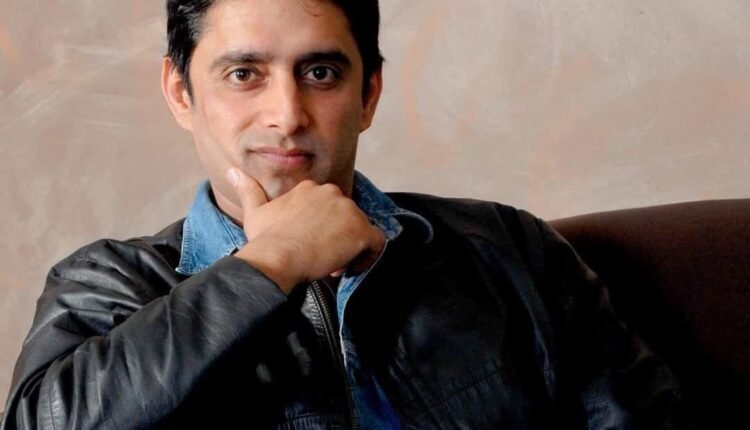
By Salim Mohamed Badat
The nineteenth century was not merely an age of industry and reason, but an age of spiritual unravelling. The ancient pillars of faith were weakening, the presence of God in European life receding into silence, and in the hollow left behind arose a darkness that no science or progress could dispel.
Nihilism, that corrosive conviction that life has no meaning, no purpose, no truth beyond the void, spread like a shadow across the modern soul.
Two figures, Fyodor Dostoevsky and Friedrich Nietzsche, gazed into this abyss with unflinching eyes. Both saw the danger, both wrestled with it, yet each gave voice to a radically different answer.
Dostoevsky: Love as Transcendence.
For Dostoevsky, to cast aside transcendence is to unravel the very fabric of humanity. And yet, his response is not an appeal to power, nor to dogma, but to love, love as the elemental law of life. To forgive, to suffer with the broken, to embrace one’s neighbor, these acts become the true expression of freedom. Real liberty, he insists, is not the indulgence of appetite, but the willing surrender of pride before the mercy of God.
Nietzsche: The Will as Creation.
Nietzsche, gazing at the same abyss, declared it liberation. The death of God, for him, was not the end but a beginning, the clearing of a space long suffocated by guilt and submission. In that void he envisioned the Ubermensch, the creator of new values, the one who dares to shape meaning with the force of will.
What for Dostoevsky was catastrophe, Nietzsche proclaimed as opportunity. Strength, courage, vitality, these he celebrated as life’s highest affirmations.
To deny them in the name of transcendence was, in his eyes, to deny life itself. If Dostoevsky’s horizon was lit by the light of God’s grace, Nietzsche’s horizon burned with the fire of human will.
Iqbal: The Renewal of the Self.
Muhammad Iqbal, the poet-philosopher of the East, stood at the threshold of modernity and entered into dialogue with both men. He admired Nietzsche’s rebellion against stagnation, his call to self-overcoming, and his contempt for herd mentality. But he also saw Nietzsche’s tragedy: a vision of greatness unmoored from God, a superman doomed to wander in the wilderness of his own pride.
Dostoevsky, on the other hand, he recognized as the voice of compassion, but one still haunted by the paralysis of excessive submission. For Iqbal, the way forward lay in neither despair nor defiance, but in the deepening of the self ,khudi.
This self is not inflated by ego, nor dissolved in passivity. It matures through discipline, struggle, and faith until it stands strong before men, and humble before God.
Iqbal’s “perfect man” rises not against the Divine, but through the Divine, affirming both vitality and transcendence.
Islam: The Synthesis Beyond the Abyss.
It is here that Islam gathers the truths of each vision while transcending their limits. Like Dostoevsky, it insists that without God, morality has no root, and love becomes fragile, “Indeed, it is in the remembrance of Allah that hearts find rest” (Qur’an 13:28).
Like Nietzsche, it affirms the necessity of human striving and creativity, “Indeed, We have honored the children of Adam” (Quran 17:70).
And like Iqbal, it teaches that human strength must be refined through spiritual struggle. The jihad al-nafs, the greater jihad, is the battle against the ego.
As Prophet Muhammad (peace be upon him) proclaimed after returning from war, “We have returned from the lesser jihad to the greater jihad, the jihad against the self.” Here strength is not the domination of others but mastery of desire. Imam Ali captured it in a single line, “The most powerful person is he who has mastery over his desires.”
In this vision, Nietzsche’s will to power becomes the will to surrender, not in weakness but in ascent. To bow before God is not to lose oneself, but to find the self perfected, creative, free, and dignified.
Love becomes more than a sentiment, it becomes the law of life. Will becomes more than force, it becomes service. As the Prophet said, “The most beloved of people to Allah are those who bring the most benefit to others.” Here Islam offers the strength Nietzsche sought, the compassion Dostoevsky cherished, and the vision of selfhood Iqbal proclaimed, harmonized in the eternal truth of God.
Conclusion.
Dostoevsky feared a godless humanity devouring itself in despair. Nietzsche feared a timid humanity suffocating in weakness. Iqbal feared a broken humanity, trapped between submission without strength and strength without faith.
Islam speaks beyond all three, offering a path where surrender is strength, where will is disciplined by love, and where the self rises to its true dignity in service to God. In the remembrance of Allah, the abyss does not vanish, but it is illuminated, and the human being rises above it, whole, free, and eternal.
Salim Mohamed Badat
Writer exploring the intersection of faith , politics and justice.
Substack link to this article and others . Subscribe, share and comment.
Shortlink: https://sudanhorizon.com/?p=11152