

Berlin: Between the German Wall and the Sudan Conference
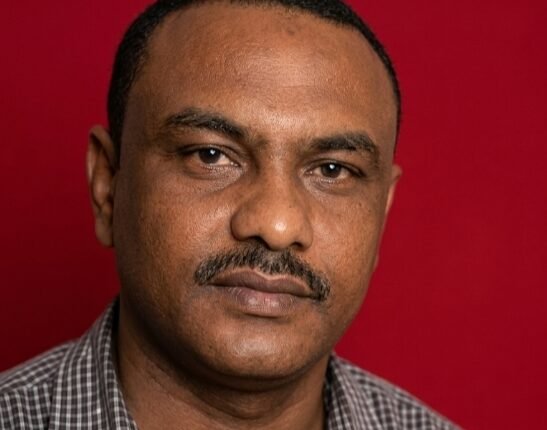
Captain Mohamed Hassan Al-Tahir
When we reflect on history, we find that the Berlin Wall was not merely a concrete structure separating two halves of a single city; it was a glaring symbol of exclusion and division. Millions of Germans were denied normal communication with their families, and the doors of freedom and choice were closed before them.
The Wall embodied the policy of imposing a fait accompli by force, far removed from the will of the peoples, until it fell in 1989 under the pressure of the popular will that rejected isolation and marginalisation.
Today, as we face the Berlin Conference on Humanitarian Affairs concerning Sudan, scheduled to be held today (15 April 2026), a question arises in our minds, perhaps concerning the significance of the location:
Is history repeating itself in a different guise?
The conference, organised by Germany, France, and Britain, in coordination with the African Union, the United Nations, the European Union, the Arab League, and IGAD, is facing widespread rejection from Sudanese political and civilian forces (according to what I have seen on social and traditional media). They see in it a repetition of the approach of exclusion and selectivity, just as the Wall was a symbol of division. This is through the parallels between today’s conference and the Wall of yesterday in its historical sophistry, and through the following points:
Exclusion and Selectivity:
Just as the Wall separated Germans, the conference separates the Sudanese forces whose duty it is to unite on a common word in these exceptional circumstances, where a person is ashamed to declare their affiliation with Sudan because of the disgrace and abandonment the country is suffering at our own hands, not at the hands of ‘Amr’ [a poetic reference to an external other].
Lack of Transparency:
The Wall was managed by top-down decisions that did not reflect the will of the people. The conference is being managed with an external agenda without consultation with Sudanese stakeholders. This is evident from the external countries and bodies that called for it, which indicates a disregard for the Sudanese people’s heritage of foundational slogans… ‘Sudan for the Sudanese’, and ‘Democracy in the balance’, where Sudan mediated between Faisal and Nasser while they intoned in their remembrances: ‘Guide of truth with truth, and guide to the straight path’.
Imposing a Fait Accompli:
The Wall imposed a political and security reality by force. The conference, as suggested, seeks to integrate humanitarian and political tracks in line with the vision of a single party, at the expense of national balance.
External Intervention:
Just as the Wall was a reflection of an international conflict, the conference is accused of being a tool for external intervention that empties the process of its national ownership.
Position of Sudanese Forces:
The political and civilian forces that signed the press statement affirmed their rejection of the conference, pointing out that:
The humanitarian file is being used as a tool of political pressure rather than as a neutral response to citizens’ needs.
Forming committees and structures without Sudanese consensus risks excluding national forces and undermining sovereignty.
Any peace and stability will only be achieved through an inclusive national process based on justice, balance, and genuine partnership among all Sudanese.
Conclusion:
Just as the Berlin Wall fell by the will of the people, any attempt to build a new ‘political wall’ around Sudan through exclusionary conferences will face the same fate – unless the wise lose their wisdom, and Sudan loses its collective conscience and becomes without a conscience after its elders have died. And I hope that its legacy, which remained a distinguishing mark among nations, is not lost – that legacy left to us by the leadership of yesterday, in their scarcity, such as that of Mohamed Ahmed Mahgoub, who made the Sudanese the destination for resolving disputes among Arab nations… ‘My homelands are all Arab, and all Arabs are my brothers’?
In conclusion, peoples do not accept their affairs being managed by top-down decisions or external arrangements.
Sudan, with its history and its components, does not need closed conferences that impose a distorted reality upon it. Rather, it needs a purely national process that preserves the capital left by our ancestors and expresses the will of all its children…
Our ancestors of old protected the homeland… protected the precious soil for which we are willing to sacrifice…
Far removed from old and new walls. So, have we learned the lesson and grasped the embers of the cause, making ‘Sudan for the Sudanese’ a slogan and a decision? The Sudanese people have no existence in the consciousness of this world except in the consciousness of its children. So do not lose your homelands, lest you lose your very consciousness, for then regret will be of no use. On the Day the wrongdoer will bite his hands [in regret], he will say, ‘Oh, would that I had taken a path with the Messenger.’… ‘Barqash brought ruin upon herself.’
Shortlink: https://sudanhorizon.com/?p=12884