

Bank Expert: Some Service Monopoly Affects Liquidity
Hala Hamza – Sudanhorizon
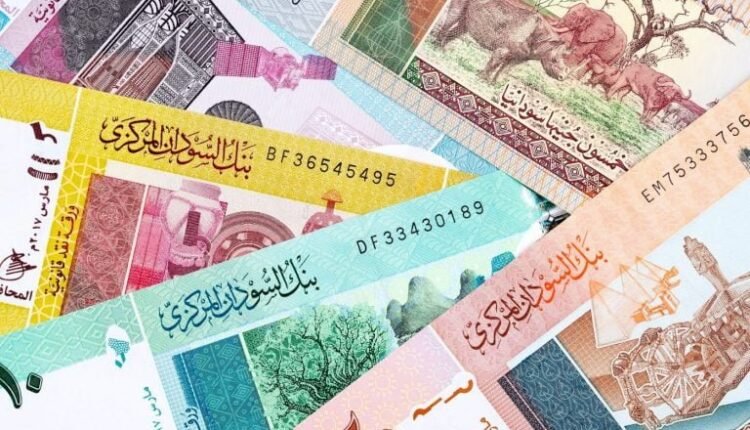
The former Assistant Governor of the Central Bank of Sudan (CBS), Abdullah Al-Hassan, has warned against negative impact of the continued circulation of old currency alongside new currency on the success of the currency change process.
Al-Hassan told Sudanhorizon that this circulation enables citizens to carry and transfer old currency notes from the safe states where the change took place to other states and change them for new denominations or transfer them via an electronic banking application.
He called on the Bank of Sudan to expedite a solution to this problem.
Al-Hassan argued that the purpose of the currency change process is to determine the amount of cash in banks and the cash held by the public within the country and to guide and to take into account when formulating monetary and financing policies.
He pointed out to the difficulty of determining the amount of cash held by the public and banks or calculating liquidity ratios in the presence of unsafe states, regions, and cities.
The former official spoke of some specific obstacles that prevented the completion of the replacement process, including the ongoing war that broke out on April 15, 2023.
These obstacles, he added, included the suspension of electronic clearing for customer checks in both local and foreign currencies, the suspension of the National Banking Exchange (NBE) operated by the Electronic Banking Services Company (EBS), and the suspension of most electronic banking applications operated by banks using the NBE, as well as the suspension of electronic payment methods such as ATMs and points of sale.
He said that these obstacles significantly impacted the success of the replacement process, which was scheduled to take place through the banking system’s branches.However, the suspension of most electronic banking services at banks prevented the completion of the process.
He explained that the congestion that occurred at the start of the replacement process prompted banks to opt for cash replacement and simplify customer account opening procedures, which led to an increase in bank deposits.
He added that banking services, applications, and customer account openings have gradually become confined to approximately four banks, which represents a monopoly by a few.
He explained that this leads to the concentration of deposits in these four banks and the withdrawal of deposits from most banks, which negatively impacts their liquidity position and may lead to undesirable consequences.
Al-Hassan indicated that the chances of success of the replacement process would have been greater if electronic banking services provided by the Electronic Banking Services Company (EBS) and electronic clearing services for local and foreign currencies had been restored, electronic payment methods such as ATMs and points of sale had been activated, and large denomination banknotes had been printed.
He said they propose denominations of 2, 5, and 10 thousand pounds to address the liquidity shortage and stabilize the Sudanese currency denominations.
Al-Hassan called for a study to be conducted after the denominations have been stabilized to determine the small (coins), medium, and large denominations of banknotes.
He hinted at the possibility that the study might recommend a decimal (zero) abbreviation, a percent (two zeros), or a triple (three zeros) abbreviation of the current currency, similar to the procedure implemented in several countries.
He suggested addressing any emergence of non-compliant currency by establishing cash processing centers in bank branches, companies, government and private institutions, and markets, with the possibility of the Central Bank of Sudan providing free inspection machines.
Shortlink: https://sudanhorizon.com/?p=8152