

Ardoul Reveals the Democratic Bloc’s Vision for Upcoming Legislature
Cairo – Sudanhorizon – Sabah Moussa
The leadership of the Democratic Bloc has been holding meetings since last Thursday, in which all factions participated. The meetings concluded on Monday, having discussed a number of organizational and political issues, most notably the approval of the bloc’s constitution and its vision for forming the Legislative Council.
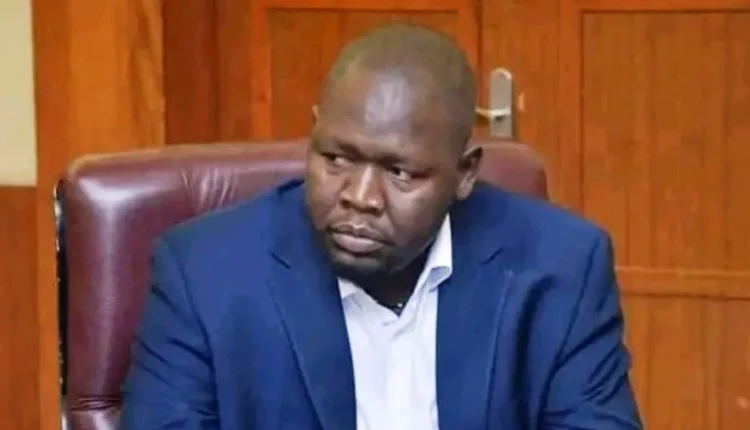
Mubarak Ardoul, a leading figure in the Democratic Bloc, explained in exclusive statements that the meeting approved the bloc’s constitution for the first time since its founding. He noted that its initial launch was a rapid response to urgent national circumstances, which prevented attention from being paid to internal arrangements, especially during the period of the framework agreement and the subsequent outbreak of war, when the bloc and its factions were preoccupied with matters of defending the state and supporting the Sudanese Armed Forces (SAF).
Ardoul added that the bloc, nearly four years after its founding, has finally approved its constitution. He explained that the new structure includes a president, nine vice presidents, and 25 specialized secretariats. The names and responsibilities of the vice presidents will be announced at the next meeting, scheduled for the 25th of Ramadan, following the final ratification of the constitution. The secretaries of the various secretariats, which cover sectors such as politics, peace and reconciliation, human rights, foreign relations, media, and other areas, will also be announced at the meeting. The aim is to activate the bloc’s role in the political landscape. He emphasized that the largest entity of its kind in Sudan is now in place.
Ardoul, in his capacity as head of the committee tasked with drafting the Legislative Council’s vision, revealed that the bloc’s vision is based on establishing a parliament that leads to a democratic civilian transition and preserves the country’s unity through inclusive participation without exclusion. He stated that, according to the proposed vision, 20% of seats would be allocated to the military, 25% to the parties to the Juba Peace Agreement, and 40% to civilians, while the remaining 15% would be distributed among other civilian forces, including civil society organizations, traditional leadership, and religious figures. He emphasized that the vision is nearly complete and will be presented in its final form at the next meeting, paving the way for discussions with other political forces to reach a broad consensus.
Ardoul explained that the meetings also addressed organizing horizontal relations among the bloc’s constituent groups and vertical relations between the leadership, the presidential body, the secretariats, and the executive sectors. He affirmed that the bloc is preparing for a more effective phase in the coming period, with the completion of the leadership structure according to the new constitution. He clarified that the bloc’s presidency will be for a two-year term, renewable once, and that Jaafar al-Mirghani will begin a new term within the framework of the approved structure, following the previous transitional and temporary phase.
Ardoul pointed out that state institutions remain incomplete, arguing that the war should not be used as a pretext to postpone the formation of the Legislative Council, especially given the existence of a government and a Sovereign Council. He called for the establishment of a parliament that would play an oversight role over executive performance. He also noted that there are unnamed entities that may oppose the formation of the council in order to maintain their influence and control over key state institutions.
In conclusion, Ardoul asserted that the current stage requires the formation of strong political blocs, given the weakness of individual parties. He believes that merging into broader entities could pave the way for the formation of a large party capable of effectively contesting elections.
Shortlink: https://sudanhorizon.com/?p=11790