

African Presidents of Sudanese Origins (3–3): President Muhammadu Buhari or Jibril the Sudanese?
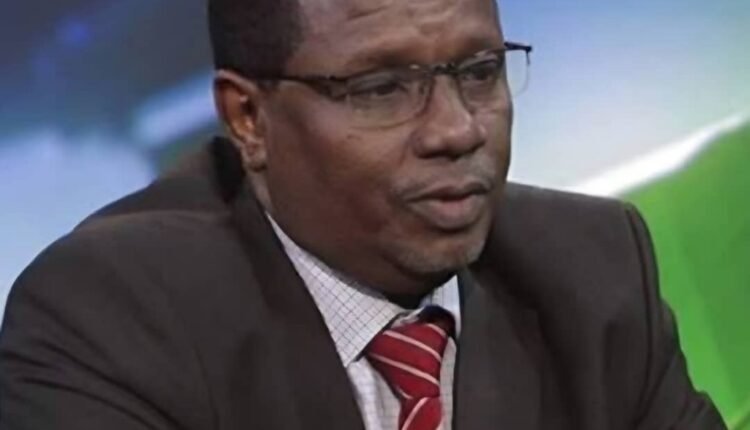
Ambassador Atta Al-Mannan Bakhit
President Muhammadu Buhari—a senior general and seasoned politician—served as Nigeria’s president twice. The first time was following a military coup in 1983, when he was appointed Chairman of the Supreme Military Council and thus became Head of State. His military government, however, did not last long; it was overthrown by another coup led by General Ibrahim Babangida in 1985.
During his brief rule, Buhari launched a firm programme to combat corruption within state institutions—an arduous and risky task for anyone familiar with Nigeria. Yet the general, who had learned combat and confrontation from the age of nineteen when he joined the army, stood resolutely against the corrupt. He continued what he regarded as a sacred mission to fight corruption after leaving the presidency, entering political life with vigour. Throughout his career, whether in power or in opposition, Muhammadu Buhari was known for integrity, probity, and an iron determination to confront corruption and its symbols, despite the many difficulties he faced.
I personally tested his resolve in fighting corruption during the only meeting that brought us together in Paris in 2015. I met my friend, Nigerian Ambassador Yahya Al-Awwal, who informed me that General Buhari was in Paris as part of a European tour to engage with diaspora communities ahead of his electoral campaign. I asked Ambassador Yahya to arrange a meeting, and the General graciously accepted my invitation to dinner at a Parisian restaurant. It was a rich conversation in which General Buhari spoke with striking frankness about his programme for governing Nigeria and recounted the challenges posed by deeply entrenched corruption lobbies in the country. Joining us at that dinner was our late friend, Ambassador Majid Youssef—may God have mercy on him—who happened to be visiting Paris at the time.
I asked the General about his relationship with Sudan. He replied that he loved Sudan deeply, like most Nigerians, and viewed it as a microcosm of Africa. When I asked whether he had relatives in Sudan, he answered diplomatically: that all the people of northern and eastern Nigeria have family extensions in Sudan, owing to the African pilgrimage route and the closeness of cultures and social life.
I recalled that question and answer years later, when strong rumours began circulating in Nigeria claiming that General Buhari was Sudanese rather than Nigerian. Here is the story.
In 2015, General Muhammadu Buhari won the presidential elections, becoming the first elected president in Nigeria’s contemporary political history to take power from another elected president. Immediately upon assuming office, President Buhari launched a strict and successful anti-corruption programme that enjoyed overwhelming popular support. Suddenly, however, he fell ill with a mysterious condition that was never officially disclosed, forcing him to travel frequently to the United Kingdom and remain hospitalised for long periods, without clarification from the presidency.
This official silence allowed many rumours to spread, all accusing the corruption lobby of attempting to eliminate the upright president—either through witchcraft, widespread in the country, or by poisoning his food.
In 2019, President Buhari’s first term ended, and the ruling party nominated him for a second and final term in accordance with the constitution. His health had improved considerably by then, but the opposition lay in wait. Unable to accuse him of corruption, they advanced an extraordinary claim: that President Buhari had died in London, that the ruling party had concealed the news, and that Buhari was originally Sudanese, not Nigerian. They alleged he had an identical brother named Jibril living in Sudan, who had been brought to London to impersonate Buhari and trained to perform presidential duties. Therefore, they argued, the current candidate was not Muhammadu Buhari but “Jibril the Sudanese”—and voters should not vote for him.
To lend plausibility to this rumour, the opposition exploited the death of a Nigerian diplomat at the Nigerian embassy in Sudan during that period. His body was repatriated to Nigeria, and they claimed that the body arriving from Sudan was in fact the real Muhammadu Buhari, buried secretly. Remarkably, this crude rumour gained significant traction and became a focal point of the election campaign, forcing President Buhari himself to deny it repeatedly during campaign appearances. Despite the strength of the rumour, the real President Buhari won the election and remained in office until the end of his term in 2023.
The story of “Jibril the Sudanese” did not end there. After leaving office, President Buhari fell ill again and was transferred to London for treatment, where he passed away in 2025—may God have mercy on him. To confirm that President Buhari indeed died in London and not in Sudan, the government ensured complete transparency in the funeral arrangements, all broadcast on camera. Television footage showed his body laid out in the London hospital. Nigeria’s Vice President was dispatched on a special aircraft to transport the body, with departure from London and arrival in Abuja publicly announced—thankfully, the aircraft arrived on time. The body was received and laid to rest with ceremonies befitting President Buhari’s record of clean public service.
Yet even so, there remain those who insist that it was “Jibril the Sudanese” who died.
Shortlink: https://sudanhorizon.com/?p=10275