

The Narrative of War and the Prospects of Peace (3/7): Political Alliances – The Post-Revolution Landscape
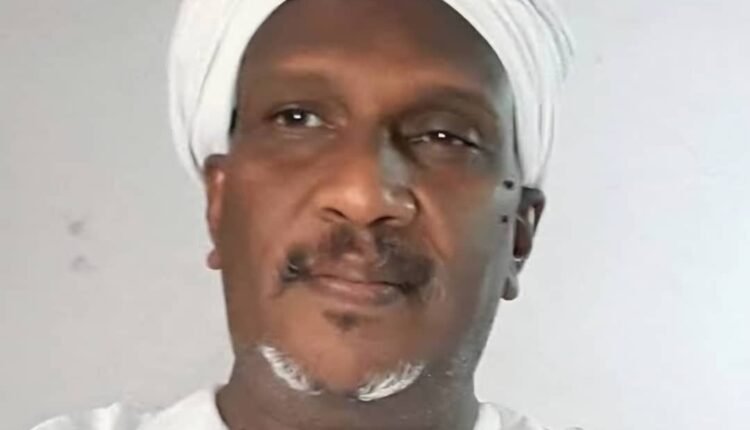
Taj al-Din Banga
After the December Revolution, the political landscape entered a complex phase. The Forces of Freedom and Change (FFC) classified all forces that had participated in the Salvation Regime as “remnants of the former regime”, regardless of the reasons or justifications for that participation. This classification did not even exempt the armed movements that had fought the regime for many years and later returned through peace agreements, whether signed inside the country or abroad (Naivasha, Cairo, Asmara, Abuja, Doha). It also encompassed political forces that had opposed the regime at various times and had joined the National Dialogue project launched in 2014 in response to calls for reform and peaceful change, as well as groups that had emerged within the ruling party itself in protest against its governance practices. Large segments of youth affiliated with these parties had taken part in the revolutionary movement and played an active role in sit-ins and demonstrations. Yet, none of this counted in the calculus of the Forces of Freedom and Change, who excluded them and branded them as “remnants”, attaching labels that diminished their political role.
Despite this exclusion, these forces continued their political activity, convinced that they were genuine actors that could not be marginalised by top-down decisions, whether domestically driven or influenced from abroad. They engaged in broad political mobilisation, raising slogans of democratic transition and demanding a fair opportunity to participate in shaping the country’s future—or at the very least, recognition as stakeholders in the political process—while stressing that they did not seek to participate in government during the transitional period and were instead focused on preparing their forces for forthcoming elections.
During this period, multiple political alliances began to take shape, some of which remain active to this day, such as the Sudan Justice Alliance (TESA) and the National Movement Alliance, alongside other currents that emerged in response to rapidly unfolding political developments. A broad Islamic current also emerged, bringing together parties and movements with Islamic references and encompassing diverse trends.
Following the dispersal of the sit-in, renewed efforts were made to unify these alliances within a broader coordinating framework to manage the transitional period on a participatory basis. Invitations were extended to the Forces of Freedom and Change to join this track, based on the conviction that excluding any party would complicate the scene and could push the country towards violence and division. These invitations, however, were rejected by the FFC. Consequently, a Coordination of National Political Forces was established, excluding the Forces of Freedom and Change.
At the same time, regional and international efforts intensified—with the participation of the United Nations, the African Union, the European Union, and a number of embassies—to support a political settlement in Sudan. These efforts (the Quartet mediation) culminated in the signing of the Constitutional Document between the Forces of Freedom and Change and the military component, marking the start of the transitional period.
The Forces of Freedom and Change designated themselves as the “civilian component”, in contrast to the “military component” represented by the army and the Rapid Support Forces, and began exercising authority in accordance with the provisions of the Constitutional Document.
Nevertheless, the excluded political forces did not cease proposing initiatives—whether partisan or societal—out of their belief in the necessity of comprehensive dialogue that excludes no one, and in the conviction that the path pursued by the ruling partnership would not lead to stability or democratic transformation.
Post-War Alliances
In the period preceding the outbreak of the war, the Sudanese political scene witnessed intense political activity marked by sharp polarisation and division within the political community, against the backdrop of the Framework Agreement. Political forces at the time split into two main currents:
One current was led by the Forces of Freedom and Change – Central Council, now represented in the current landscape by the “Sumoud Alliance”, with a notable development being the joining of some political forces that had previously been classified within the “remnants” camp into a political alliance that brought together the so-called forces of the revolution (FFC Central Council), even though they had previously stood in opposing camps. This represented a qualitative shift in the structure of political alliances.
In contrast, another political current emerged, rejecting the Framework Agreement, viewing it as an attempt to turn back the clock by re-empowering the Forces of Freedom and Change and restoring their former position after they had lost their standing following the decisions of 25 October 2021. This sharp polarisation between the two currents persisted until the outbreak of the war.
On the morning of 15 April 2023, war erupted after a period of escalating tension marked by the heavy deployment of Rapid Support Forces in strategic and vital locations in the capital, in addition to other military movements, including the move to Merowe without the army’s permission, as stated in its communiqué at the time. This sustained tension culminated in a military explosion on that date and the beginning of a war of aggression launched by the Rapid Support Forces—not only against military sites, but also targeting civilian and service facilities and even the homes of peaceful civilians, extending into villages and rural areas.
In response, national political forces lined up. They described the war as an act of aggression carried out by a rebellious militia against legitimate authority and against the armed forces, which, in accordance with their constitutional role, moved to confront this rebellion. These forces considered it their political and national duty to support the armed forces in this battle.
In this context, broad political mobilisation began to unify the national front in support of the armed forces. The first major political gathering was the “Gathering of National Forces” in the Arkawit suburb of eastern Sudan, initiated by Nazir Mohamed Al-Amin Turk under the name of the Supreme Council of Beja Nazirates and Independent Chiefdoms. The invitation included various political, societal, and national forces. Its conferences were held in July and September 2023, during which clear resolutions were announced affirming the support of political, civilian, and community forces for the armed forces.
This was followed by political activity in Cairo, Asmara, other capitals, and within Sudan itself, involving multiple political forces. These included the Democratic Bloc, formed through the expansion of the Freedom and Change – Consensus alliance after the joining of the Democratic Unionist Party (Original) and the Council of Beja Nazirates. The movement also included the Sudan Justice Alliance, the Return to the Founding Platform Alliance, the National Line Alliance, as well as the National Coordination of National Forces, which emerged after the war as an attempt to coordinate positions among the various blocs before later evolving into a bloc in its own right.
Alongside this, some political parties continued to operate outside formal alliance frameworks, without officially joining any coalition, yet remaining present on the political scene—such as the Popular Congress Party, the Democratic Unionist Party, the National Unionist Party, and other national forces.
Through numerous conferences, workshops, and meetings, these forces succeeded in formulating a unified political vision that was presented to the Sovereignty Council and the Council of Ministers on multiple occasions. This vision incorporated the recommendations of the Arkawit Conferences, the Port Sudan Declaration 2024, the Roadmaps issued in February and November 2025, as well as the vision submitted to the African Union in July 2024, which was reaffirmed and renewed during subsequent meetings in February 2025.
These forces, through their various alliances and bodies, continue to press ahead in support of the army in bringing the battle to a conclusion and in designing a comprehensive political process that leads to a sound transition and a smooth democratic transformation.
To be continued…
Shortlink: https://sudanhorizon.com/?p=9951