

American Website: Dozens of Emergency Response Room Volunteers Killed by the Militia
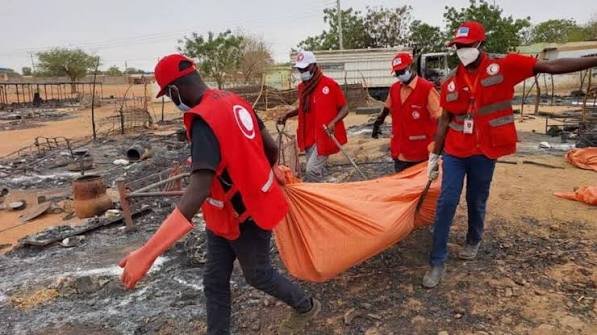
New York – Sudanhorizon – Agencies
The electronic website Pass Blue, which specializes in relations between the United Nations and the United States and women’s issues worldwide, reported that the Rapid Support Forces (RSF) militia executed Suham Hassan Hasaballah, a former Sudanese parliamentarian who volunteered with the charitable Emergency Response Rooms network in El Fasher, along with other civilians, on October 26, when the RSF seized control of the capital of North Darfur. These response rooms are run by local residents, but have become targets for killing amid the ongoing civil war in the country.
Nearly three years into Sudan’s devastating war, estimates indicate that the death toll has exceeded 150,000, while more than 21 million people face acute hunger. In 2025 alone, out of a total population of 46.8 million, some 30.4 million people are in need of humanitarian assistance.
The website notes that amid irregular access to international aid for civilians in Sudan, local heroes have emerged for millions of people across the country: the Emergency Response Room volunteers. These emergency response teams emerged from the resistance committees during Sudan’s popular revolution in 2019, operating as grassroots mutual-aid networks across the country’s 18 states. They are interconnected, yet largely focus on local areas to deliver assistance where it is most urgently needed.
Some volunteers have been killed, including a prominent former parliamentarian this year.
Through their highly localized approach, volunteers work within the communities they belong to, serving their family members and neighbors. They have an acute understanding of community needs in ways that large-scale relief efforts often cannot meet. This year, organizations called for the Emergency Response Teams network to be awarded the Nobel Peace Prize.
Haitham Al-Nour, spokesperson for the Emergency Response Teams, told Pass Blue: “They are not working for strangers; they are working with their families and neighbors. It’s about how the community mobilizes.”
Led by volunteers at all levels, the Emergency Response Teams have succeeded in delivering life-saving medicines, food, and other essential resources, in addition to providing educational and psychosocial support. However, their efforts have made them targets for warring factions.
The Office of the United Nations High Commissioner for Human Rights reported in a recent fact-finding mission that amid disregard for international humanitarian law and escalating violence, “humanitarian relief is being used as a weapon.” With aid access blocked, pressure on Emergency Response Teams has increased, forcing volunteers to seek alternative—and potentially dangerous—ways to secure basic necessities.
The report notes that, in fact, volunteers such as Suham Hassan Hasaballah, the former parliamentarian, were killed along with other civilians by the Rapid Support Forces when they took control of El Fasher, the capital of North Darfur, in October, committing massacres, rapes, and other atrocities in a single night. As the youngest elected member of Sudan’s National Assembly in 2016, Hassan’s assassination made global headlines, particularly as she continued to serve her community after the end of her parliamentary term, volunteering in a community kitchen in her hometown.
Hassan, a member of the Liberation and Justice Party, devoted her efforts to wartime relief work as part of her public service. She was widely known for her commitment to supporting the people of Darfur and other regionally and nationally marginalized communities, representing for many a new hope for Sudanese leadership—hope that emerged and expanded during the 2019 revolution.
Hassan’s killing was not random. Al-Nour of the Emergency Response organization estimates that more than 100 of its volunteers have been killed since the start of the war, a figure that, he says, reflects the scale of nationwide loss of life.
He noted that Hassan and Emergency Response volunteers across Sudan, despite their geographic dispersion, share a “sense of duty” toward their communities and their country.
Al-Nour added, pointing to their deep understanding of the country’s realities: “These volunteers have been running the country for three years. They know everything. They are doing the work that the international community should be doing. They have a clear vision for Sudan and know how to move forward.”
Suha Moussa, Sudanese-American journalist
Shortlink: https://sudanhorizon.com/?p=9947