

The War Narrative and the Prospects of Peace (2/7): The Trajectory of Political Alliances from the Revolution to the War
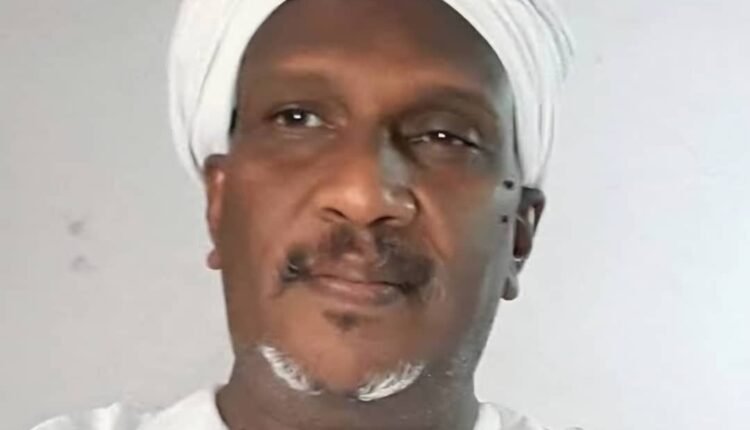
Taj al-Din Banga
Since the fall of the Inqaz regime in April 2019, Sudan’s political landscape has undergone rapid transformations, marked by the proliferation of alliances, the multiplication of decision-making centres, and the decline of a unified role for political forces.
This article reviews the evolution of the alliances of the revolutionary forces, foremost among them the Forces of Freedom and Change (FFC), from the outbreak of the revolution to the eruption of the war.
The following article will be devoted to the alliances of national political and societal forces that supported the Sudanese Armed Forces in the Battle of Dignity.
The Emergence of the Forces of Freedom and Change Alliance
The Forces of Freedom and Change alliance was formed in early 2019 and brought together a range of political and professional components, including the National Consensus Forces, Sudan Call, the Professionals Association, the Revolutionary Front, and the Democratic Unionist Gathering. The alliance emerged from prior coordination among these forces, supported by several actors, amid a severe economic crisis and mounting internal and external pressure on the ruling regime. It was as though all parties anticipated the inevitability of change and the regime’s limited lifespan.
Nevertheless, despite the broad base of the alliance, some political forces that had participated in the demonstrations and revolutionary popular movement were not included; rather, they were forcibly excluded. Among them was the Alliance of National and Islamic Forces, which made determined efforts to join but ultimately failed. This exclusion raised early questions: was it based on ideological grounds, or the result of a veto imposed by influential actors who drew the map of representation, mechanisms of participation, and its boundaries?
After the Fall of the Inqaz Regime
Following the announcement by the Security Committee of the fall of the regime, in response to the voice of the street gathered at the sit-in outside the General Command of the Sudanese Armed Forces, and the establishment of the Transitional Military Council as the governing authority through republican decrees, the Forces of Freedom and Change entered into negotiations with the Council over the management of the transitional period.
During this phase, a number of revolutionary forces and leaders were excluded from the FFC’s circle of political influence. The organisational role of the Professionals Association, which had led the revolutionary street movement, also declined, while the Revolutionary Front was sidelined from both the political scene and the negotiations.
The Constitutional Document: “Quarrelsome Partners”
In August 2019, the Constitutional Document was signed between the Transitional Military Council and the Forces of Freedom and Change. It was intended to regulate a 39-month transitional period and complete the democratic transition through elections. The document stipulated a partnership between the civilian and military components, with the military presiding over the first phase, followed by a transfer of leadership to the civilian component after 21 months. The transitional government was formed in September 2019, headed by Dr Abdalla Hamdok as the FFC’s representative within the partnership.
About a year later, in October 2020, the Juba Peace Agreement was signed between the transitional government and the armed struggle movements, through its five tracks reflecting Sudan’s geographical regions. This led to the inclusion of these movements within the structures of power. The agreement contributed to reshaping political alliances by creating the Partners’ Council (the “tripartite”), comprising the military component, the armed movements, and parts of the FFC, following the departure of the “radicals” from the FFC in protest against the Juba Agreement and its methodology.
However, the agreement deepened divisions within political forces, leading to the withdrawal of some parties and groupings from the FFC and the emergence of new blocs with divergent visions. These included the FFC – Central Council, FFC – Consensus, FFC – National, FFC – Radical, and others.
The 25 October Decisions and the New Political Divide
On 25 October 2021, the Commander of the Army announced exceptional measures that brought the partnership with the civilian component to an end. This followed the intensification of disputes within what remained of the FFC and its split into the FFC – Political Declaration (which later evolved into the FFC – Central Council) and the FFC – Consensus, which organised a sit-in at the Republican Palace Square, mirroring the General Command sit-in.
These developments culminated in decisions by the Chairman of the Sovereignty Council and Commander of the Army to remove the civilian component, represented by the Central Council group, from power.
Thereafter, political forces split between those who opposed the measures and described them as a military coup, and others who sought accommodation with the existing authority, viewing them as corrective measures imposed by national necessity.
Tensions persisted, alongside attempts by the Central Council group within the FFC to regain power and influence by any means possible. The ingenuity of the UN sponsor became evident in producing a Framework Agreement that enabled the forces removed by the October decisions to return to power, while also proposing security sector reform to integrate the Rapid Support Forces into the army at a later stage. Supporters of the Framework Agreement threatened war if their demands were not met—and indeed, war broke out.
After the Outbreak of the War
With the outbreak of war in April 2023, the political scene entered an even more complex phase. The Forces of Freedom and Change repositioned and realigned amid the armed conflict, announcing the formation of the “Taqaddum” alliance, led by Hamdok. This alliance included some forces previously classified as “remnants of the former regime”, on the grounds that they had described the October measures as a coup.
At the beginning of 2024, political understandings were announced between the “Taqaddum” alliance and the Rapid Support Forces, sparking widespread controversy over the role of these forces in the post-war phase and the limits of their relationship with military actors, while exposing the contradiction in the slogan “No to war” that they espoused.
The matter did not stop there: the “Taqaddum” alliance later split into “Sumoud”, chaired by Hamdok, and “Ta’sis”, founded under the leadership of the RSF commander, which subsequently formed a parallel government in Nyala.
Meanwhile, the Radical Forces of Freedom and Change—primarily composed of the Communist Party and some leftist groups—remained distant from both the political arena and the existential battle, largely invisible and disengaged.
It is also important to note that on 19 December 2025, youth demonstrations took place in Port Sudan and Omdurman. Ostensibly, they were celebrations of Independence (the parliamentary declaration of 19 December 1955) and commemorations of the December 2018 revolution, complete with its symbols and slogans—including those calling for the army to return to the barracks—at a time when the army was fighting to defend the Sudanese people and their dignity against a brutal aggression.
This raises the question of the relationship between these events and the simultaneous rise in the rhetoric of initiatives seeking a political settlement that would return the Forces of Freedom and Change, in their revised “Sumoud” version, to power once again, while divisions and disagreements remain unresolved.
An Open-Ended Scene
The trajectory of the Forces of Freedom and Change, in all its manifestations, points to a state of political and organisational instability. It has failed to preserve the country’s unity, sovereignty, and security. With the war ongoing, political settlement pathways faltering, and the dream of a democratic transition receding, the scene appears increasingly bleak and the crisis ever more complex.
To be continued.
Shortlink: https://sudanhorizon.com/?p=9912