

Kenya on the Verge of a Major Transformation… and Gachagua Puts Sudan at the Heart of the Game
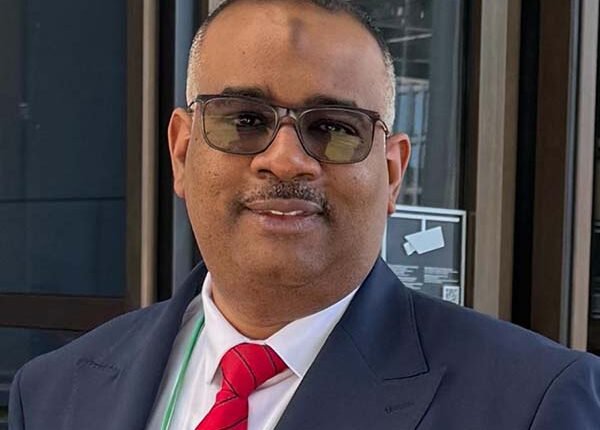
Mohannad Awad Mahmoud
Kenya is witnessing an unprecedented political ferment that is almost redrawing the country’s political map, after former Deputy President Rigathi Gachagua stepped out of the inner circle of power to lead a political wave that extends beyond domestic disputes and has an impact across the entire region. He is no longer just an ambitious opposition figure, but a new centre of gravity reshaping alliances within Nairobi and attracting the attention of regional capitals. He has turned the international arena – specifically the Kenyan diaspora platforms in the United States – into a stage from which to confront President William Ruto, launching accusations that touch on highly sensitive files, foremost among them the war in Sudan and cross-border gold networks. As Gachagua accelerates his efforts to build a broad opposition front ahead of the 2027 elections, Sudan finds itself at the heart of this clash, not as an external issue, but as a decisive factor in the emerging balance of power inside Kenya.
Since his removal from office in October 2024, Gachagua has been rebuilding his political position by founding the Democracy for the Citizens Party (DCP), relying on his deep-rooted influence in the Mt Kenya region, one of the country’s largest electoral blocs. Within a few months, he forged an alliance with two of the most prominent figures on Kenya’s political scene:
Kalonzo Musyoka, former Vice President and leader of the Wiper Party, who has a wide electoral base in the eastern region and among the Kamba community; and Martha Karua, former Minister of Justice and Constitutional Affairs – dubbed the “Iron Lady” – who enjoys strong influence within civil society, the educated middle class, and advocates of the rule of law.
This alliance gave Gachagua a national dimension beyond his traditional strongholds and created around him a political bloc capable of challenging the ruling party in a way not seen since Ruto came to power.
In July 2025, Gachagua’s rise took on an international dimension when he embarked on a political tour in the United States, announced by his office and party. He moved between several cities, most notably Seattle, where he held large public meetings with the Kenyan diaspora. His visit included open events in hotel halls, churches and community centres, alongside round-table discussions with activist groups and research circles concerned with East African affairs. During this tour, he presented himself as the de facto leader of the emerging opposition, outlining his vision on the economy, domestic politics, and Kenya’s regional role.
Although the tour had been planned to last longer, Gachagua returned to Nairobi earlier than expected due to rapidly unfolding political developments at home and the formation of a broad coalition around him.
What truly sparked controversy in Gachagua’s overseas rhetoric, however, was not the size of the crowds but the nature of the accusations he levelled at President Ruto. He publicly accused him of benefiting from gold networks linked to Sudan’s rebel Rapid Support Forces (RSF), claiming that Nairobi has become a hub for laundering and smuggling Sudanese gold abroad, and that these networks are helping to prolong the war in Sudan. He also called on Washington to re-evaluate Kenya’s designation as a major non-NATO ally and to reopen files related to terrorism and money laundering and their impact on regional security.
These unprecedented statements from a former senior Kenyan official put President Ruto on the defensive both at home and abroad, prompting the government to issue categorical denials and to demand formal clarifications from Gachagua regarding his allegations.
Reactions inside and outside Kenya were mixed. Among the diaspora, Gachagua found support from broad segments of young people frustrated with the government’s economic and security policies. In contrast, others viewed him as exploiting highly sensitive issues to score political points. Domestically, his remarks strengthened his profile as a potential opposition leader and led many within the opposition ranks to see him as a figure capable of unifying forces against Ruto.
These developments have a direct bearing on Sudan, which now finds itself a player – or more precisely, a political “subject” – within the struggle for power in Nairobi. Once the Sudan file becomes part of Kenya’s internal political discourse, it turns into a bargaining chip that can be used to undermine the legitimacy of one side or bolster the standing of another.
The scenario of “politicising Sudan” inside Kenya means that Khartoum may, in future, face shifting Kenyan positions driven more by electoral calculations than by strategic assessments. A deepening split within the Kenyan leadership could generate contradictory visions of Kenya’s role in the Sudan file, potentially disrupting regional efforts rather than reinforcing them.
With the 2027 elections drawing closer, a strategic question arises: can Rigathi Gachagua turn this political and popular momentum into a real electoral gain? The answer depends on his ability to unite the opposition, maintain cohesion in the Mt Kenya region, and craft a message that can transcend ethnic and regional lines to compete effectively with the ruling party. If he succeeds, Kenya could witness its first major political realignment in two decades, with all that entails for Sudan and the wider regional security architecture.
In the final analysis, what is happening in Kenya today is not merely an internal contest for power; it is a new chapter in the struggle for influence in East Africa, where domestic politics intersect with the Sudanese war, and leaders’ ambitions collide with regional turbulence. In this complex context, Sudan finds itself – whether it likes it or not – part of a larger political game now being reconfigured in Nairobi.
Shortlink: https://sudanhorizon.com/?p=9333