

Sudanese Government: Ethiopia Involved in Drone Attacks on Sudanese Civilian Infrastructure
Khartoum – Sudanhorizon
The Sudanese government has revealed documented evidence proving Ethiopia’s involvement in drone attacks targeting Sudanese civilian infrastructure and power stations across several Sudanese regions -most recently, an attack on Wednesday, on a power station in the city of Al-Managil, in Al-Gezirah State, central eastern Sudan.
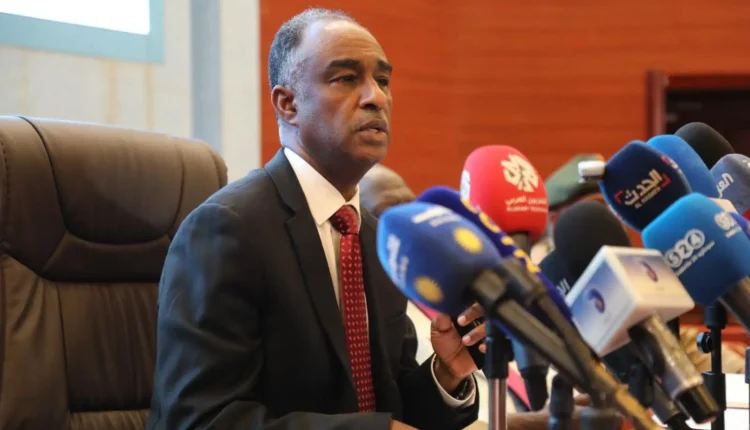
This was disclosed during a joint press conference organized on Wednesday by the Sudan News Agency (SUNA), featuring representatives from the Ministries of Defense, Foreign Affairs and International Cooperation, and Culture and Information, alongside the General Intelligence Service. The authorities outlined the scale of the attacks on civilian sites in the states of Khartoum, Al-Gezirah, White Nile, Sinnar, and Al-Gadarif, confirming that the drones originated from Ethiopian territory.
The conference showcased various types of drones downed by the Sudanese Armed Forces (SAF) in several locations over the recent period. A detailed presentation was provided regarding the drones’ launch points, flight paths, targeted locations, and the resulting damage. It was noted that the targets were exclusively civilian, reflecting a deliberate intent to strike civilians and prevent their voluntary return to their homes.
The presentation further indicated that data extracted from the downed drones—using advanced software—points to launch coordinates located within Ethiopian territory, including from Bahir Dar Airport. Satellite imagery was also presented as additional evidence.
For his part, the Undersecretary of the Ministry of Foreign Affairs and International Cooperation, Ambassador Muawiya Osman Khalid, urged the international community not to overlook the Ethiopian-UAE aggression against Sudanese territory. Speaking at the conference, he stated that Sudan reserves its right to self-protection and to keep the international community informed, emphasizing that international justice institutions must take decisive action to halt this aggression.
He noted that Ethiopia has shown no restraint, continuing its aggression against Sudan in a manner that has become increasingly dangerous. While affirming that Sudan maintains good relations with the Ethiopian people, he pointed out that the Ethiopian government—backed by the United Arab Emirates—has disregarded this, persisting in its attacks against the Sudanese people using drones.
He underscored that the strategic objective of the Sudanese stakeholders is to defeat the terrorist militia, which is supported by regional and other international actors. He stressed the capability of the relevant Sudanese institutions to defend the nation, while continuing both their protective efforts and their engagement with the international community.
For his part, Graham Abdel-Qader, Undersecretary of the Ministry of Culture, Information, Antiquities, and Tourism, stated that the terrorist militia has recently intensified its targeting of civilian sites. The aim, he explained, is to subjugate the population and prevent citizens from returning to their homes or resuming their normal lives. He further noted that the drones used to strike vital facilities and infrastructure across several Sudanese states were launched from Ethiopian territory.
During the press conference, he pointed out that the militia’s attacks have struck civilian infrastructure—including hospitals, mosques, residential neighborhoods, power plants, and other essential facilities—across various states. He highlighted that these sites provide critical services to the public and are vital for supporting agricultural activities and daily life. He explained that the targeting of vital facilities is a primary reason preventing citizens from returning to their homes and cities. He noted that these attacks necessitate clarifying the facts to both the Sudanese public and the international community, and revealing the full extent of the targeting—and the resulting damage—that Sudan is enduring.
Graham emphasized that the Sudanese government has responded to these developments with “strategic patience,” stressing that assaults on civilian infrastructure violate international humanitarian law. He added that the conference aims to present the facts, supported by evidence and documentation.
International Community’s Leniency
For its part, the Ministry of Foreign Affairs stated that the Rapid Support Forces (RSF) militia continues its criminal pattern of destroying state institutions and sabotaging vital infrastructure. The Ministry reiterated its accusation that Ethiopia and the United Arab Emirates (UAE) are complicit in these violations.
In a press statement issued Wednesday evening, the Ministry noted that the militia is seeking to obstruct the path toward recovery, reconstruction, and the ongoing voluntary return of refugees and displaced persons. It has done so by intensifying, in recent weeks, attacks using drones—supplied by the UAE and launched from Ethiopian territory—that target civilian infrastructure, including airports, power and water stations, hospitals, fuel depots, and oil pipelines.
The Ministry further stated that these attacks have resulted in civilian deaths and severe injuries, in addition to causing extensive damage to these critical facilities. The Ministry of Foreign Affairs noted that the recent attacks coincided with the first anniversary of the El Fasher massacre—perpetrated by the rebel militia in October 2025—and represent a continuation of the massacres they carried out in El Geneina, Wad al-Noura, Al-Hilaliyya, and other areas.
The Ministry added: “These massacres stand as a stain on the conscience of humanity. The international community merely looked on as the rebel militia tightened its siege on the city and starved its inhabitants before storming it—this, despite the adoption of UN Security Council Resolution 2736 and a call by the UN Secretary-General for a humanitarian truce, which the Government of Sudan accepted but the terrorist militia rejected, in defiance of the will of the entire international community.”
The statement asserted that the militia’s persistent commission of genocide, unprecedented and horrific atrocities, war crimes, and crimes against humanity—along with the continued bombardment and destruction of vital infrastructure—is an inevitable consequence of the international community’s leniency toward the militia and its backers. It further noted that the international community has turned a blind eye to the militia’s blatant and unprecedented violations of international law and international humanitarian law, as well as its utter disregard for human rights.
The government reiterated its strongest condemnation of these atrocities, crimes against humanity, and unprecedented war crimes. It reminded the international community—specifically the UN Security Council and the African Union Peace and Security Council—of their obligation to fulfill their responsibilities regarding the militia and its supporters. Furthermore, the government underscored its right to repel aggression and defend itself, affirming its intent to take all necessary measures to protect civilians and safeguard the nation’s assets, in accordance with the United Nations Charter.
Shortlink: https://sudanhorizon.com/?p=19583