

Federal Cabinet and State Governors Meet to Discuss Mitigating Rising Living Costs
Khartoum – Sudanhorizon
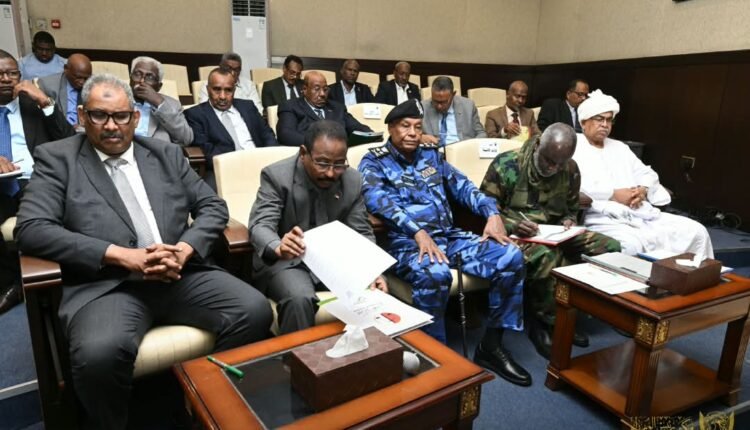
The Sudanese Cabinet held an extraordinary session on Saturday, chaired by Prime Minister Prof. Kamil Idris and attended by regional and state governors. The meeting aimed to strengthen coordination mechanisms between the federal government and the states regarding economic issues and the cost of living.
Minister of Culture, Information, and Tourism Khalid Al-Aisir stated to the press that the meeting discussed a report presented by Minister of Justice Dr. Abdullah Mohammed Darf regarding the prohibition of fee collections not included in the approved budget laws for 2026.
The report addressed unlawful fees, calling for coordination with the Federal Ministry of Finance—even when a fee is charged for a service authorized by the state—and emphasized the need to coordinate with the Ministry of Minerals and the Sudanese Mineral Resources Company regarding fees and collections related to the mining sector.
Al-Aisir noted that the meeting addressed the necessity of prohibiting the collection of fees on imported goods and the imposition of levies on fuel—even in states that had previously announced such measures—and called for the cancellation of all fuel-related fees except those announced by the Ministry of Energy. Furthermore, the meeting discussed prohibiting the deposit of collected funds into the personal accounts of state employees and banning all fees on national highways, regardless of the circumstances, while stressing the need to adhere to previous decisions in this regard. He noted that the meeting emphasized the need to proceed with the government’s plan for electronic revenue collection, implement and refine the “receipt-based” system within the general collection framework by the end of the year, and integrate it with the “Baladuna” platform—all with the aim of combating negative practices associated with revenue collection.
The Minister of Culture and Information indicated that the meeting addressed a report on the availability of food commodities, discount markets, and cooperatives, as well as the necessity of providing services that help alleviate the cost of living for citizens. He stressed the need to halt illegal levies on industrial products throughout the supply chain until they reach the consumer.
Furthermore, he affirmed the importance of lowering prices and tightening oversight of market outlets and discount centers at both the central and state levels.
The minister explained that the meeting discussed a report—presented by the Minister of Agriculture and Irrigation—regarding the summer agricultural season and preparations for the winter season. The report outlined several challenges and obstacles, most notably rising production costs and the Agricultural Bank’s financing for the planned summer cultivation area.
It also emphasized cooperation with aerial spraying companies and the provision of pesticides, noting that the Ministry of Agriculture and Irrigation has made significant progress in supplying irrigation pumps to areas in need to ensure the season’s success.
Furthermore, the meeting addressed arrangements for currency replacement in the states of North and South Kordofan; the Deputy Governor of the Central Bank of Sudan briefed the council on preparations for the currency changeover in these states.
Al-Aisir added that the council directed the need for coordination between the Border Crossings Administration and the states to establish and improve regulations for border trade. He noted that a consensus was reached on various issues related to service improvement—which positively contributes to alleviating the cost-of-living burden on citizens—and it was agreed that such joint meetings between ministers and state governors would be held on a quarterly basis.
Shortlink: https://sudanhorizon.com/?p=18616