

The Battle to Set the Tracks in Order Begins in New York… Must Dialogue Wait for the Guns to Fall Silent?
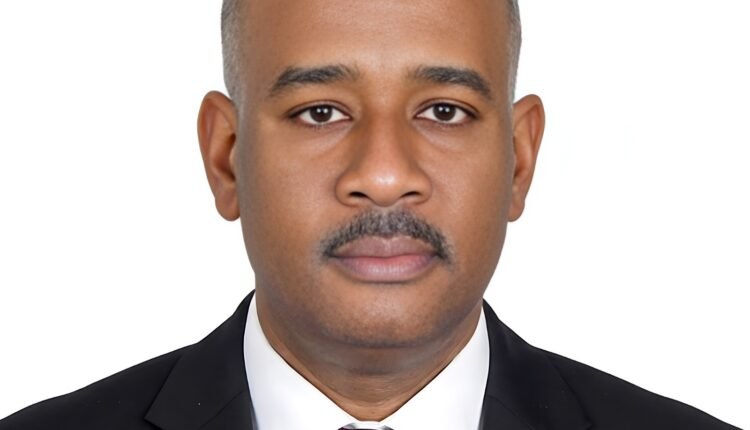
Muhannad Awad Mahmoud
This year’s meetings of the United Nations General Assembly in New York will be more than an occasion for delivering speeches about Sudan. They will also serve as a forum for reshaping international and regional approaches to the war. A reading of the ongoing diplomatic activity suggests that the members of the Quad — the United States, Egypt, Saudi Arabia and the United Arab Emirates — may meet with the members of the Quintet: the African Union, IGAD, the League of Arab States, the European Union and the United Nations.
If such a meeting takes place, its task will not be to convince the world of the scale of Sudan’s catastrophe; the world already knows it. The more complex issue will be how to sequence three tracks: a ceasefire, humanitarian action, and efforts towards a sustainable and inclusive political dialogue led by Sudanese themselves.
Should the war end first and humanitarian access be opened, followed by dialogue? Or should all three tracks move forward in parallel?
This is where the political battle begins — one that could determine the shape of the next phase.
The presence of the Sumoud delegation in New York is closely connected to this contest. Even if it is not present at the official meeting, it is expected to meet some of the participating parties and focus on ending the war, protecting civilians and opening humanitarian routes, while advocating the postponement of political dialogue and refusing to engage in it under the current circumstances.
This is a legitimate and predictable course of action. Sumoud has every right to present its vision, and the international community has a responsibility to listen to the various Sudanese forces. The humanitarian situation also cannot tolerate delay or bargaining.
But the question that should be asked is: Should humanitarian action serve as a gateway to dialogue, or could it become a justification for postponing it?
Sumoud’s position may be that ending the war must precede any political process, and that it therefore refuses to participate in the ongoing dialogue and is pressing for its postponement. However, the members of the Quintet have clearly expressed their support for the principle of Sudanese dialogue. Indeed, some of its members have indicated during recent meetings that the vision being put forward is consistent with their own conception of a solution based on comprehensive Sudanese dialogue.
I therefore do not believe that Sumoud’s activities in New York will alter this publicly stated principle, even if it is allowed to present its opposition to the international parties involved.
Yet postponing dialogue until the war has been completely brought to an end would leave the country’s future hostage to the course of negotiations and battlefield fluctuations.
If negotiations drag on, if the militia uses truces to rearm and reposition itself, or if a permanent ceasefire proves impossible to achieve, are Sudanese people expected to wait indefinitely before discussing the future of their country?
Dialogue is not a prize awarded after the war ends; it is one tool for bringing the war to an end.
Beginning dialogue now does not mean ignoring civilian suffering, negotiating over the distribution of positions, or bypassing humanitarian priorities. It means that Sudanese people should, in parallel with other efforts, discuss how the war can be stopped, how aid can reach those in need, how displaced people and refugees can return, what guarantees can prevent a renewed outbreak of fighting, and how the war can end with one army and one state, rather than parallel authorities and parallel armies.
From this perspective, Sumoud’s activities may serve dialogue more than they harm it.
If it succeeds in increasing pressure to end the war and open humanitarian routes, it will help create a better environment for the political process. And if it presents its objections to the international parties concerning the dialogue, its timing or its mechanisms, it will put these issues on the table and draw the international community’s attention to them, rather than leaving them as unresolved objections that might later be used to obstruct any political process.
This leaves another question: What alternative does Sumoud propose?
Are the civil forces waiting for a ceasefire agreement that may take a long time to achieve? Or will they leave the Quad and Quintet to shape the political process and then join it once it is complete?
The ongoing Sudanese efforts to facilitate dialogue have emerged from the suffering of the Sudanese people and from the need to ensure that the country’s future does not remain suspended between war and external initiatives.
They are not a platform against Sumoud or any other group. Rather, they are intended to provide a space broad enough to accommodate different positions. Their independence from political alliances remains essential to their success and credibility.
Here, questions arise that concern not Sumoud alone, but the political process as a whole:
Should dialogue begin only after a particular alliance approves it, or only after it completes the arrangements it considers appropriate?
And can any party or alliance claim to represent civilians absolutely, particularly in light of the growing momentum inside Sudan, the numerous meetings among stakeholders, and the emergence of social, professional and community-based forces that do not necessarily belong to the familiar political alignments?
There is no problem with Sumoud meeting members of the Quad or Quintet, or presenting its objections to dialogue.
The problem begins if the Sudanese dispute is transferred wholesale abroad, or if the priority of saving civilians is used to postpone a political discussion that could itself help save them.
Humanitarian action does not take place in a political vacuum. Opening humanitarian corridors requires agreements; protecting civilians requires guarantees; and the return of citizens requires security, functioning authority and services.
Dialogue that begins now does not compete with efforts to end the war. Rather, it provides those efforts with a national foundation and prevents developments on the battlefield alone from determining the country’s future.
New York can coordinate positions and provide support and guarantees, but it cannot manufacture Sudanese political legitimacy.
The Quad and Quintet can help Sudanese people come together, but they should not do it for them or choose who represents them.
The question is not: Do we stop the war first, or begin dialogue first?
The right question is:
Why can we not stop the war, save civilians and begin dialogue at the same time?
Dialogue does not wait for the guns to fall silent; it is one way to silence them.
Shortlink: https://sudanhorizon.com/?p=18270