

Returning to the People Is a Virtue
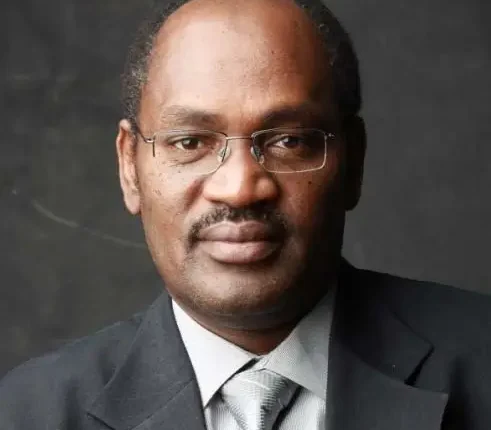
Ramadan Ahmed
Over the past few days, the Sudanese media have discussed the announcement of the names of the members of the Dialogue Committee, with widely differing reactions. Some welcomed the idea, viewing it as a positive step in the right direction. Others questioned the intentions behind it, seeing the committee’s composition as little more than a recycling of the same familiar faces under new labels, with little prospect of achieving anything. Others went further still, arguing that the idea itself was futile, and that institutional dialogue amid a continuing war and the fragmentation of the state was closer to a mirage than a solution.
But beyond these three positions, all of which revolve around the political and elite establishment, a fundamental question remains unasked with sufficient urgency: where are the Sudanese people in all of this?
The point is not merely for the people to participate in the dialogue; they should be at its very centre. A dialogue whose agenda is prepared behind closed doors, whose participants are selected in closed rooms, and which is then presented to the public as a fait accompli is not dialogue in the democratic sense. It is an announcement of the outcome of internal negotiations among the traditional centres of decision-making.
Is it not the right of the Sudanese citizen—the ordinary person who experiences the war through their own body, home and family—to have a say in who represents them in any dialogue and who shapes the contours of their future?
We live in an age of open communication, in which any citizen can express their views through a mobile phone at minimal cost and with virtually no effort. Why, then, do some insist on keeping the people outside the circle of choice, as though they were mere spectators to their own future?
It seems that the mindset behind major decisions and Sudanese dialogue remains trapped in the logic of “top-down decisions”—decisions taken in closed rooms and then imposed upon the people. It is as though it has yet to realise that this era has passed for good.
Revolutions, wars and the fragmentation of central authority have all demonstrated that the people are no longer a silent mass to be led. They are present in every street, every detail and every decision of consequence.
Over more than three years of war, Sudanese people have demonstrated that they are not merely figures in opinion polls, but genuine actors who take initiatives, show solidarity, establish organisations and keep life going under the most difficult circumstances. How, then, can they be excluded from choosing those who represent them on committees for dialogue and change?
The issue is neither complicated nor impossible. All that is required is a simple electronic form through which citizens can nominate individuals they consider suitable for membership on the Dialogue Committee. The number of members would be determined in advance, and the successful candidates selected according to the votes they receive.
This simple process could:
Relieve the appointing authority of the burden of choosing, because the people themselves would have made the selection.
Give the committee genuine popular legitimacy, making it harder to claim it was imposed from above.
Secure broader acceptance of the final decision, because the people themselves would bear responsibility for their choice.
And the matter need not stop with the Dialogue Committee. The same mechanism could be applied in the future to the selection of a prime minister, ministers and senior public officials. The wider the circle of popular participation, the fewer the opportunities for corruption and favouritism, and the greater the prospects for integrity and transparency.
The open media environment and social media have enabled Sudanese people, during the years of war, to learn about one another regardless of geographical, tribal, and regional barriers. A citizen in Port Sudan no longer knows only what is happening in Khartoum; they can follow the daily experiences of displaced people in Kassala, the resilience of volunteers in Al-Jazira, and the efforts of doctors in Nyala.
Perhaps the most significant thing this period has revealed is the true character of men and women. Some people did not leave the country despite having opportunities to escape, choosing instead to risk their lives to save others, comfort them, assist them, and extend a helping hand in their darkest hours.
I am referring here to those who run the tukaya—community kitchens and food centres whose fires never went out—and to the voluntary initiatives that stepped in to confront the consequences of the war when everyone else had abandoned the effort. These are not simply kind-hearted individuals; they represent a model of ethical leadership that our official institutions so sorely lack.
Others held honourable positions during the war and did not hesitate to stand for what they believed was right, even at a high cost. Such examples are not confined to one particular region; they can be found throughout Sudan, from north to south and from east to west.
People know these individuals and can attest to their goodness, courage, and sincerity. These are the people who are most deserving of taking centre stage during the transitional period.
If we are genuinely serious about building a new Sudan, then those who have demonstrated honourable commitment should be the natural candidates for national responsibilities in the next phase. Someone who sacrificed their time, money and personal safety for the sake of others during wartime is surely better placed to be entrusted with the country’s future in peacetime.
By contrast, those who have confined themselves to media statements and recorded declarations from behind screens are not suited to leading a country that needs a practical rather than merely theoretical model.
Based on all the above, I would like to put forward a practical proposal:
I call on the Sudanese Government to establish an official website, announced through its official platforms, through which Sudanese citizens can nominate the individuals they believe should take on public responsibilities—from membership of dialogue committees to ministerial and state-level positions.
Although this approach may appear ambitious, it would ensure:
Transparency in managing public affairs, with all names and votes made public.
Genuine community participation, instead of centrally determined selections.
Relieving decision-makers of the burden of choice, with the people serving as the ultimate reference and bearing responsibility for their choices.
Breaking the political monopoly, while giving new, independent figures with competence and integrity an opportunity to serve.
Returning to the people in every aspect of public affairs is neither a sign of weakness nor a surrender of authority. It is a virtue that strengthens the legitimacy of the system, deepens the roots of democracy and establishes a new relationship between those who govern and those who are governed—one based on trust and participation rather than domination and fear.
Ultimately, no dialogue, reform or constitution can succeed in the absence of the people. The people are not merely applause at national occasions; they have the inherent right to determine their own future, choose their representatives, and hold them accountable.
If the war has taught us anything, it is that salvation does not come from above, but from within—from the very people who have sustained life in the face of death, upheld justice in the absence of the state, and demonstrated that Sudan is not merely a state, but a people who cannot be subdued.
Shortlink: https://sudanhorizon.com/?p=18220