

The Return to the Presidential Palace
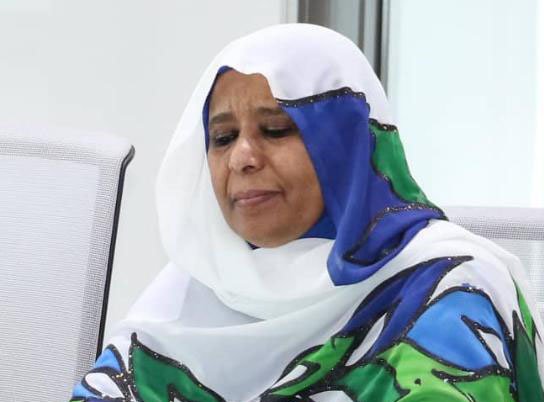
Dr Salwa Hassan Siddig
Yesterday’s return to the Presidential Palace and the resumption of sovereign duties there carries a symbolism reminiscent of the return to Sennar so evocatively portrayed in the poetry of the creative writer Mohammed Abdel-Hai. The same stories, the scent of history and the tales of heroism that people once breathed in have returned today, embodied in the exercise of sovereign authority from the Presidential Palace in the heart of Khartoum.
Sudanese people have a profound attachment to the Presidential Palace. Remarkably, unlike many countries, we do not have several palaces; we have only one. Yet for us, it has been a symbol of pride and dignity since the killing of General Gordon. Its location has endowed it with a distinctive geographical and historical dimension, almost like a painting. Its proximity to Al-Mogran and the picturesque Tuti Island, with its history and the famous Sword of Al-Arbab, together with many other vivid landmarks, are sights that Sudanese people glimpse as they come and go along Nile Street opposite the Palace. Even a passing glance can draw one into contemplation, prompting the thought: what ancient glory does this place embrace, and what a profound and venerable past does it inspire us to remember?
I recall that when our children were very young, we made a point of attending the changing of the guard at the Republican Guard, which took place on a Friday morning each month. We would gather for this national occasion, only to find others already lined up to watch the elegant and evocative ceremony. Afterwards, the children would exchange brief conversations with members of the Guard, with the same affection and respect, as though the guards were sharing with them the secrets of their sovereign duties and handing them the keys to the nation.
We did this because we regarded it as a free lesson in civic and national education, almost as though we had somehow anticipated a day when our children and we would miss the Palace — its beautiful appearance, its green lawns, its flowers that delighted those who tended them, and the aura and guards surrounding it.
The President’s return to the Palace, accompanied by the same sovereign protocols and a display of strength and courage, represents a defining moment in Sudan’s history. It was a moment when the cameras of every international and local television channel — led by the national broadcaster — should have stood alongside the motorcycles of the Presidential Guard to tell the people, and history itself, the story of those who made this return possible.
They should have told of the courage and valour that defied the drones on the day of the return to the Palace; of the brave officers and media professionals who joined the ranks of the martyrs; of Farouk Al-Zahir and Magdi, whose camera was blown into pieces just as his pure body was torn apart.
The Palace, which had once been desecrated by villains both before and during the war, has today returned to the people of Sudan as a gift from heaven — reclaimed by force and determination, through courage and valour, in a victory crowned with honour. Within its walls, the country’s leaders can once again receive ambassadors and diplomatic missions with dignity and pride after years of displacement and separation.
These may have been mere moments in time, but measured by the magnitude of events, they were equivalent to years. In them, truth triumphed over falsehood, and we therefore have every right to celebrate and take pride in them.
May God preserve your glory, my country, bring your victory to completion, and protect your army and your patient, steadfast and struggling people. May He receive your martyrs among those in the highest ranks of Paradise, alongside the prophets and the truthful — and what excellent companions they are.
Shortlink: https://sudanhorizon.com/?p=16974