

Surfing the Sands of Kordofan
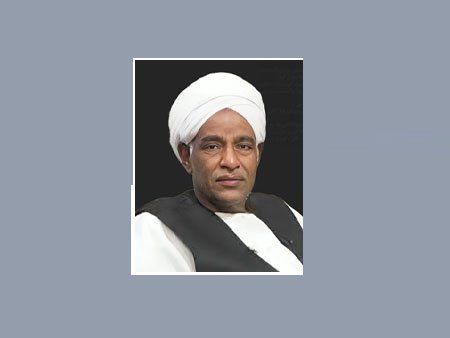
Mahjoub Fadl Badri
Our Armed Forces have never failed us. Time and again they have accustomed us to clear and decisive victories. They have always been a source of our pride and the symbol of our dignity, never hesitating to cleanse our land of the defilement of anyone reckless enough to approach their impregnable stronghold—a fortress that can be reached only at the price of precious blood and noble lives, with no outcome other than victory or martyrdom.
Neither the militia nor its political backers have fully grasped what happened on the sands of Kordofan. Their footing gave way beneath them as their knees buckled from the shock that shook them to their core and brought their entire enterprise crashing down. Their leader, whose baseness the author likens to that of a hyena, was heard exclaiming: “From tonight onwards, there’ll be no more sleep!” In the author’s telling, God caused him to reveal the fear and panic consuming him. No rescue, no reinforcements, would come from anywhere after the army severed his supply lines, struck him from both expected and unexpected directions, and closed in from every side. The army, the author writes, ground them down like a millstone, seized their weapons depots and hidden equipment, and those who survived fled in disorder, scattering in panic. Weren’t you the brave warriors you claimed to be?
General Abdel Fattah Al-Burhan came to the battlefield. He did not find you there; instead, he found the spoils you had left behind—enough, in the author’s view, for the army to complete the task of eliminating the remainder of your forces using your own weapons. The Sudanese expression the author employs at this point is left to those familiar with local idiom to appreciate.
They believed they were laying siege to El Obeid, only to discover that they themselves had become the besieged. Bara, Umm Sayala, Umm Garfa, Jureijikh, and the surrounding areas became battlefields whose true significance, the author argues, can only be understood by those forged in the factory of men and the stronghold of heroes—together with their comrades from the Joint Forces, the popular mobilisation units, and the regular armed services. There is no place in this equation, or in our homeland, he adds, for incompetent officers, traitors, or mercenaries.
The Commander-in-Chief declared on more than one occasion: “This country cannot accommodate both us and the militia—it will be either us or them.” The renowned Sudanese poet Al-Hadday likewise wrote:
“Who can weigh down the heavy chain?
He who lights the fire must warm himself by it.
When the hour of hardship comes, a man finds his brother.”
Now, the author says, it is the militia’s turn to warm itself by the very fire it ignited and to pay the price of betrayal and treachery. What Hemedti imagined at the outset to be victory was, in reality, nothing more than a treacherous stab in the back of those who had entrusted him with the nation.
In politics, a leader is never stabbed from the front; the blows always come from behind. Yet a skilful leader, the author writes, is like an elephant: endowed with a keen nose, large ears, and an iron memory, capable of choosing precisely the right time and place for the battle that must eventually be fought.
Our Armed Forces, he argues, have waged this campaign as a war for dignity rather than one of revenge.
Revenge, after all, is a dish best served cold.
If mistakes are made at the outset, it is never too late to conduct a fresh experiment and correct them. “Mistakes befit the wise,” the author observes, because wise people acknowledge them and learn from them. Fools, by contrast, make the same mistakes repeatedly, refuse to admit them, and learn nothing.
The proof lies in what the army has achieved on the sands of Kordofan. Some imagined those sands held waves upon which they could surf, only to find themselves swallowed up without warning. Those whom they regarded as their political support proved, in the author’s words, to be nothing more than “rubbish wrapped in coloured paper.”
The victories achieved by our Armed Forces, the author concludes, cannot be contained within a single article, however gifted the writer may be in shaping language, weaving narrative, or constructing argument—even if all the trees were pens and the Nile itself were ink.
A person becomes a hero not when fear is absent, but when fear is overcome. Sudanese people feared for their country and their faith, even as they continued to sing the national anthem:
“We are the soldiers of God, the soldiers of the homeland.”
Between what has passed and what lies ahead, all the sons and daughters of the nation have become heroes, united under a single slogan:
One Army. One People.
That is all.
Shortlink: https://sudanhorizon.com/?p=16429