

What Do the Return Figures to Sudan Tell Us?
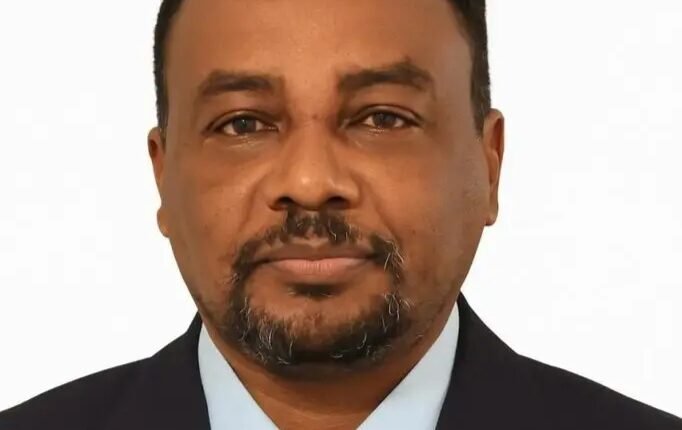
Brigadier (Ret.) Omar Mohamed Osman
When the International Organisation for Migration (IOM) announced that approximately 4.6 million Sudanese had returned to their areas of origin across nine states, many interpreted the news as evidence of improving security conditions and expanding stability. Yet the true significance of this statistic lies not simply in the number of returnees but in what it reveals about the realities of return and the obstacles that continue to prevent millions of Sudanese from returning to their homes.
When interpreted correctly, statistics become a decision-making tool. They answer not only the question, “How many have returned?” but also the more important one: “Who has not returned, and why?”
According to IOM data, around 8.69 million people remain internally displaced within Sudan, while a further 4.6 million Sudanese continue to live as refugees in neighbouring countries and elsewhere. Of those who have returned so far, 82 per cent were internally displaced persons (IDPs), while only 18 per cent were refugees returning from abroad.
The more meaningful comparison, however, is not between 82 and 18 per cent, but between the number of returnees and the total population within each category. On that basis, approximately 44 per cent of internally displaced persons have returned to their areas of origin, whereas the proportion of refugees who have returned from abroad does not exceed 18 per cent. This disparity deserves careful attention, as it indicates that returns from within Sudan are proceeding at more than twice the rate of returns from overseas.
This gap does not suggest that Sudanese living abroad are any less willing to return. The overwhelming majority left the country out of necessity rather than choice. Instead, it highlights the fact that the decision to return is considerably more complex for refugees than it is for those displaced within Sudan.
Internally displaced people have generally remained closer to their home areas and can monitor security conditions directly. Moreover, the financial and logistical costs of returning are relatively limited. Refugees abroad, by contrast, have often begun rebuilding their lives. Their children have enrolled in schools, some have secured employment, while others have settled into new homes. For them, the decision to return depends not only on security, but also on a broader comparison between the lives they have established abroad and the prospects awaiting them in Sudan.
This is where quality of life emerges as one of the most influential factors shaping the decision to return. Sudanese living overseas are not asking simply, “Have the fighting stopped?” They are also asking: “Is electricity reliable? Is there access to clean water? Are schools functioning? Can hospitals provide adequate healthcare? Are there employment opportunities? Can my family live in safety, dignity, and stability?”
For this reason, improving security—important though it is—will not, on its own, significantly accelerate returns from abroad. Security removes fear, but it does not provide the essentials of daily life. People do not return merely to see their homes; they return to rebuild their lives.
The message these figures convey to the state is therefore clear. The next phase of recovery must focus on restoring essential public services with the same urgency that has characterised security improvements. Reliable electricity, clean water, education, healthcare, employment opportunities, the rehabilitation of residential neighbourhoods, and simplified administrative procedures are all just as important as security in encouraging people to return. Likewise, programmes that support returnees, promote investment, and provide incentives for Sudanese living abroad would make the decision to return both more practical and more attractive.
At the same time, Sudanese abroad are partners in this national effort. This does not mean that everyone should return immediately, as every family faces different circumstances. Rather, it means maintaining their connection with their homeland. Some may be in a position to return, while others can contribute through investment, the transfer of expertise, support for community initiatives, or participation in reconstruction efforts. Sudan will not be rebuilt by the government alone, but through the collective efforts of all its people.
A careful reading of these figures leads to an important conclusion: the real challenge is no longer persuading people to love their country, but preparing the country to welcome its people home. As the quality of life improves, public services are restored, and economic stability strengthens, the number of Sudanese returning from abroad will naturally increase.
Shortlink: https://sudanhorizon.com/?p=16248