

What We Have in Common with Brazil
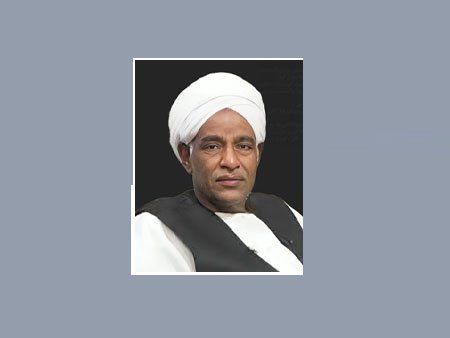
Mahjoub Fadl Badri
Brazil offers an experience worth emulating in building a strong economy capable of providing a decent standard of living for a society made up of diverse cultures. Within a relatively short period, Brazil’s economy grew into one of the world’s largest. Brazil once had a ministry dedicated to combating hunger, which later evolved into a ministry focused on combating poverty. Agriculture, in both its crop and livestock sectors, played a central role in this transformation.
A Supreme Council for Agriculture was established, positioned institutionally between the President of the Republic and the Council of Ministers, with its decisions becoming effective immediately upon issuance. Without going into extensive detail about Brazil’s experience, suffice it to say that it is a model worthy of emulation—and seeing is believing.
Since the fundamental responsibility of any government is to protect the country’s borders, maintain security and provide prosperity for its people wherever they may live, weapons must remain exclusively in the hands of the state, represented by the armed forces, police and security institutions, alongside an independent public prosecution service and judiciary.
It is self-evident that people also need essential public services, including healthcare, education, clean drinking water, energy and other basic necessities.
This is the challenge confronting any government accepted by the people under the political system they choose, whether a hereditary monarchy, a civilian government, or military rule. No government can ever satisfy everyone. Society, in all its components, must therefore participate in driving production and ensuring the maximum utilisation of the country’s visible and underground resources and wealth.
As simple as this proposition may appear, implementing it on the ground is extremely complicated. Problems multiply and diversify, sometimes leading to conflicts and wars, as has happened—and continues to happen—in our country throughout different periods of its history.
Brazil, however, succeeded in transforming its economy in a manner resembling an economic miracle. The strength of the Brazilian economy lies in its diversity. It does not depend on a single resource, but combines agriculture, industry, mining, energy and services, making it one of the world’s largest economies.
Our country’s climate resembles Brazil’s in its diversity. There would therefore be no harm in following Brazil’s approach to development, since we are apparently unable to compete with it in football!
Establishing a Supreme Council for Agriculture, bringing together the ministries and institutions responsible for agriculture, forestry, irrigation, natural resources, energy, livestock, fisheries and food industries, would help unify national efforts, prevent institutional overlap and direct resources towards ensuring maximum benefit from every drop of water and every inch of land.
As long as general and higher education continue to function and expand, their graduates should find an open labour market ready to absorb their skills.
As long as the healthcare sector has sufficient hospitals, laboratories and pharmacies, citizens will enjoy better health and well-being.
And as long as the media, through all its platforms, works to promote and encourage production, increase productivity, strengthen society’s culture, attract tourism, uphold moral values, promote peaceful coexistence, reject destructive tribalism and combat hate speech, then achieving these objectives would be as though the whole world and all its blessings had been placed within our reach. We would live in unparalleled happiness—and nothing is beyond the power of Almighty God.
I never tire of speaking about Brazil. You may be astonished to learn that in a single institute nearly 28,000 academics are holding the title of professor, working solely in the fields of agriculture, veterinary science and livestock production!
In one of the villages of Al-Aisailat, after Brazil won the 2002 FIFA World Cup by defeating Germany 2–0, with both goals scored by Ronaldo, a man brought out the village’s traditional copper war drum. He began beating it until people gathered around him.
They asked him why he was celebrating so enthusiastically.
He replied, “We have won the World Cup!”
He then claimed that their common ancestor had two sons: one named Isail, the ancestor of the Al-Aisailat people, and the other named Brazil, the ancestor of Ronaldo and all Brazilians.
“So,” he concluded, “we are cousins!”
Shortlink: https://sudanhorizon.com/?p=15611