

Sudanese Prime Minister Predicts Berlin Conference to Be “‘total failure”
Sudanhorizon – Agencies
Julian Pecquet, a correspondent for The Africa Report website, prepared a report on the Berlin Conference, which failed to invite the Sudanese government to participate in its preparation and execution. The report concluded that while the Sudanese government, through some of its ministers, acknowledged the need for humanitarian and medical support, it nevertheless predicted the conference’s failure. The conference invited all the various Sudanese entities but deliberately excluded the civilian-led government and the Transitional Military Council from participating in a forum to decide on Sudan’s future.
The correspondent notes that “as the war in Sudan enters its fourth year, the largest international gathering dedicated to helping alleviate the world’s worst humanitarian crisis is facing resistance from the Sudanese government itself. The Berlin Conference, which ignores the military-appointed Sudanese government, is scheduled for next week’s summit, while civil society and health authorities welcome any assistance that can be provided.”
He says the Berlin conference, scheduled for April 15, the third anniversary of the war, aims to highlight the largely ignored conflict and revive calls for a transition to civilian rule. However, the decision to exclude the de facto authorities now running the country after the Sudanese Armed Forces regained control of the capital is creating chaos at the summit.
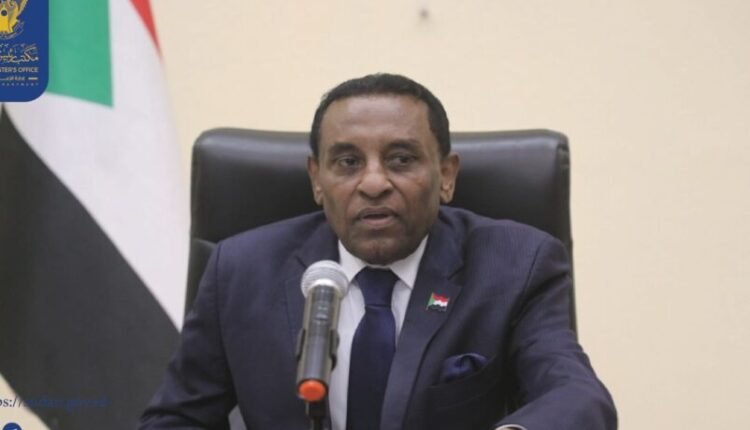
The report states that, speaking to a rare delegation of foreign journalists visiting Khartoum, Prime Minister Kamil Idris said on April 9 that he had warned German Foreign Minister Johannes Wadephul against ignoring his military-appointed government during the Munich Security Conference in February.
Idris said if the Sudanese government does not participate in the Berlin conference scheduled for April 15, I assure you, with complete confidence and frankness, that it will be a complete failure. If we are invited to this conference… we can make a positive contribution and express our views on how to establish a sustainable process. But they cannot make the decision for us.”
Idris told the journalists that Germany still had time to make the right decision. Otherwise, the Sudanese government would not abide by any decisions made in Berlin, and the conference would repeat the failures of its predecessors in Paris and London.
The report notes that this exclusion is causing division among Sudanese human rights activists.
For Salma Ishaq Sharif, a women’s rights activist who became Minister of State for Human Resources and Social Welfare, excluding the authorities the international community needs to achieve anything is illogical.
They are tailoring it to a specific group,Sharif told reporters in Port Sudan. “It’s not inclusive.” But for members of civil society who haven’t joined what many call the “military government,” Berlin represents a rare opportunity to refocus attention on the civilian groups that helped oust Omar al-Bashir before Sudanese Armed Forces chief Abdel Fattah al-Burhan seized control of the revolution in 2021.
Kholoud Khair, a Sudanese political analyst and founding director of the Confluence Advisory think tank in Khartoum, argues that a conference without the Sudanese Armed Forces could help refocus attention on civilian issues and offer a rare opportunity to meet civilians from diverse backgrounds and political affiliations and test the waters of a viable civilian process.
“The discourse surrounding this war is already dominated by the parties to the conflict,” Khair told The Africa Report. “So why would the Berlin conference add to that?”
Even within Idriss’s own government, not everyone can ignore the issue. At Sudan’s technocratic Ministry of Health, Deputy Director of International Health, Reem Jalal Ahmed, explains that the government has received only $385 million of the $2.9 billion it is seeking for its 2026 Humanitarian Response Plan. Prior to the Berlin Conference, she held meetings with heads of international organizations to urge them to support her cause.
“Everyone who is participating in this meeting must support us,” Reem says.
To that end, she shared a list of urgently needed medicines in Sudan, along with an explanation of the regulations governing their importation. She also highlighted the critical need for CT scanners and MRI machines, which are lacking in many areas.
“Ultimately, we must support our people in Sudan,” Reem says. “We must ensure the continuity of services and the provision of medical equipment and supplies.”
It is to be noted that the Africa Report is visiting Sudan on a trip organized and funded by the ONE Campaign, with logistical support from the Sudanese government.
Shortlink: https://sudanhorizon.com/?p=12758