

Political Forces and the Military Institution: Responsible Dialogue in the Interest of Sudan
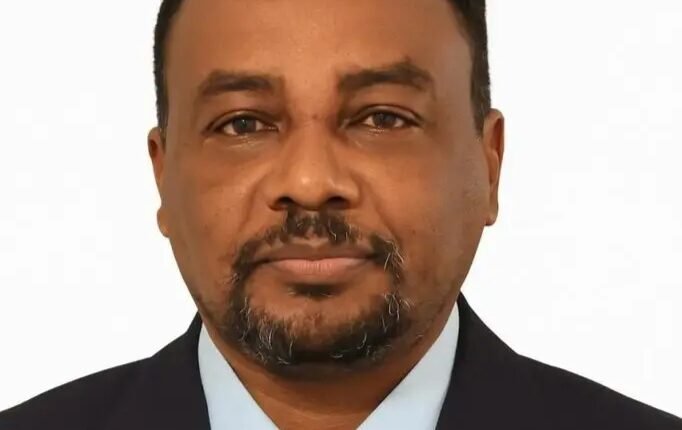
Brigadier (Ret.) Omar Mohamed Osman
The relationship between political forces and the military institution in Sudan is not merely a formal matter; it is a genuine indicator of national stability. Any imbalance in this relationship quickly affects all aspects of the state and society.
Within this context, the Alliance of the Forces of the Revolution for National Issues (Watan) has taken an important step by meeting with the leadership of the Sudanese Armed Forces and presenting a working paper addressing the agenda for the proposed dialogue between the alliance and the military institution.
The call to examine civil–military relations is not new. Several political blocs and parties presented a roadmap in February 2025, most notably the Democratic Bloc, the Democratic Unionist Party (Original), and other parties. This reflects an ongoing recognition of the importance of dialogue between the two components and indicates a level of political awareness that stability can only be achieved through responsible engagement, moving the relationship away from suspicion and historical tensions towards constructive dialogue serving the national interest.
The Sudanese experience over the past decades has shown that a breakdown in relations between politics and the military produces nothing but tension, and that relationships based on mutual distrust deepen divisions and complicate the national landscape. For this reason, the initiative comes at a particularly sensitive and important moment to open discussion on major issues relating to the state and its future, foremost among them the nature of the relationship between political forces and the military establishment.
The American thinker Samuel Huntington, in his well-known book The Soldier and the State: The Theory and Politics of Civil–Military Relations, emphasises that careful management of civil–military relations is not a luxury but a necessity for political stability and the protection of state institutions. Without such organised relations, security policies may erode under the pressure of long-term social, economic and political changes.
The alliance’s paper addressed the issue of developing the military institution through three main axes:
Strengthening its professionalism, unity and institutional competence.
Emphasising efficiency, discipline and institutional order, while maintaining distance from politicisation.
Establishing guarantees to prevent the emergence of parallel armed formations in the future.
All these points demonstrate the alliance’s concern with building a strong and unified military institution. However, discussion of development remains a sensitive matter, as military professionals are often cautious of any language that might suggest political interference in their professional affairs—even when the wording is less direct than previous terms such as “restructuring the armed forces”.
For this reason, it is important that political forces carefully calibrate the language of dialogue and clarify what they mean by “developing the armed forces”, including defining its scope and boundaries. Development is fundamentally a technical and scientific process carried out by military professionals, while the political sphere’s role is to set general policies that preserve professionalism, discipline, institutional unity, and neutrality.
Regarding the need to avoid politicisation, the primary responsibility lies with the political forces themselves, not with the military institution. Political parties must cease attempts to infiltrate the armed forces or recruit their members for partisan purposes. Such practices have historically weakened the national character of the military institution. Only then does the responsibility fall upon the military institution to safeguard its personnel and reinforce professional and disciplinary values within its ranks.
Equally important is the development of political forces themselves. The Sudanese political landscape reveals organisational and structural challenges, including a persistent confusion among some actors between the concepts of the state and the government. The country has also witnessed attempts to push the armed forces into political conflicts through coups. These experiences must be openly addressed if a healthy and stable relationship between political forces and the military institution is to be built.
The roadmap proposed by political forces last year, along with the initiative by the Alliance of the Forces of the Revolution for National Issues (Watan) to open dialogue with the leadership of the armed forces, represents a positive step that can be built upon. Honest and responsible dialogue is the shortest path to building trust and establishing a balanced relationship that protects the military institution and preserves its professionalism and national character, while at the same time enabling political forces to perform their role in managing public affairs within a state governed by law and institutions.
The convergence of political positions on the necessity of addressing civil–military relations invites an expansion of the dialogue to include all blocs, alliances and parties that have supported state institutions, foremost among them the armed forces, in confronting the rebellion of the Rapid Support Forces militia, described by the author as a terrorist group.
It may also be appropriate to address a message to the Democratic Unionist Party (Original)—a historic party with a large popular base—which has not historically attempted to infiltrate the military institution or encourage coups. The party could play a greater role in supporting such initiatives, whether directly or through its presence within the Democratic Bloc.
In conclusion, responsible dialogue between political forces and the military institution is not merely an option but a national necessity. It is the path towards ensuring stability, protecting the state, and enabling each party to perform its role effectively—ultimately serving Sudan and its people first and foremost.
Shortlink: https://sudanhorizon.com/?p=12116