

Justice (Adl), Authority, and Resistance Theology, Leadership, and the Palestinian Question in the Muslim World
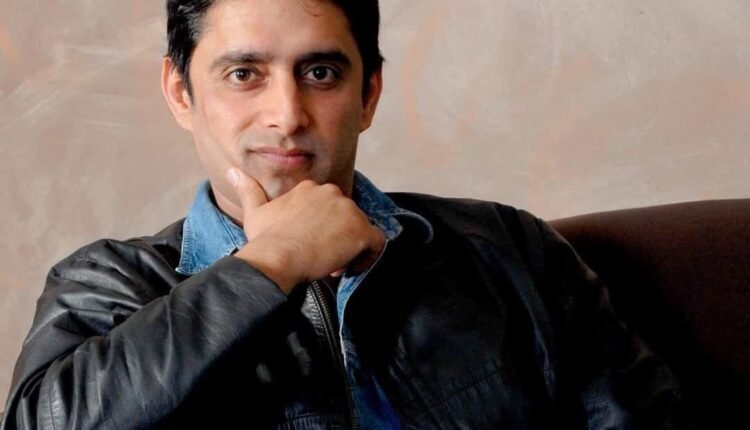
Salim Mohamed Badat
Introduction: A Visible Fracture in the Ummah
In the present phase of the Palestinian struggle, a stark and increasingly undeniable reality has emerged within the Muslim world. The most consistent, material, and confrontational support for Palestine today comes from movements and states commonly described as the Axis of Resistance. Iran, Hezbollah, the Yemeni resistance, and allied forces have positioned themselves, at great political, economic, and military cost, as active opponents of Zionism and Western imperial domination.
In contrast, most majority Muslim states have either normalized relations with Israel, maintained covert cooperation, or actively suppressed resistance movements within their own societies.
Egypt enforces the siege of Gaza, Jordan secures Israeli borders, Saudi Arabia signals normalization, and the Gulf monarchies operate as strategic pillars of the U.S.-led regional order.
This contrast has provoked an urgent question that can no longer be dismissed as sectarian polemics: is this divergence merely geopolitical, or does it reflect deeper differences in how justice, authority, and moral responsibility are understood and enacted?
Justice as a Foundational Principle in Shia Thought
Within Shii Islam, Adl, divine justice,is not simply an attribute of God but a foundational principle of belief. God does not will oppression, nor does He compel human beings into injustice while holding them morally accountable for it. Justice, therefore, is inseparable from human agency. To believe in divine justice is to believe that resisting is both possible and obligatory.
Classical Shia scholars such as Shaykh al-Mufid and Allama Hilli articulated this moral architecture with clarity, insisting that ethical responsibility presupposes freedom of action. This theology was not confined to abstract discourse. It was engraved into Shia consciousness through Karbala, where Imam Husayn ibn Ali rejected allegiance to Yazid an unjust ruler despite knowing the cost. From that moment, legitimacy and justice became inseparable. Authority without justice was no authority at all.
Sunni Theology, Qadar, and the Drift Toward Political Quietism
Sunni Islam unquestionably affirms that Allah is Just. The divergence lies not in belief in justice, but in how justice interacts with divine decree and human responsibility. Classical Sunni theology, particularly within Ashari thought, emphasised divine omnipotence and predestination. The project initiated by Abu al-Hasan al-Ashari sought to protect transcendence, but over time this emphasis was interpreted in ways that weakened moral causality and political agency.
Historically, this theological posture became entangled with power. Although figures such as Ahmad ibn Hanbal personally resisted coercion, Sunni legal tradition increasingly privileged obedience to rulers as a safeguard against social disorder.
Later thinkers such as Ibn Taymiyyah challenged this drift by arguing that tyranny itself constitutes fitnah, yet these arguments were rarely allowed to shape governing doctrine. Over centuries, obedience became institutionalized, while resistance was pathologized.
The Clergy–State Nexus and the Normalization of Fatalism
In the modern era, Sunni religious institutions were absorbed into postcolonial states designed to manage, not represent, their populations. Ministries of religious affairs, state-appointed muftis, and regulated mosques transformed theology into an instrument of political stabilization.
Fatalism ceased to be a theological nuance and became a governance strategy. Injustice was reframed as divine testing, patience was elevated above resistance, and submission was sanctified as wisdom.
By contrast, Shia clerical authority evolved with a degree of independence from the state. The institution of the marjaiyyah preserved space for moral confrontation rather than political accommodation. This independence enabled revolutionary reinterpretations of authority, most notably articulated by Imam Khomeini, who argued that political silence in the face of imperial domination contradicts Islam itself. Justice, in this view, must be defended institutionally or it becomes meaningless.
Theology Is Not Destiny: A Necessary Qualification
Yet it would be intellectually dishonest to reduce political reality to creed alone. Sunni history is filled with scholars, movements, and populations that rejected fatalism and resisted oppression. Anti-colonial struggles across North Africa, the Levant, South Asia, and Palestine itself were overwhelmingly Sunni in composition. Thinkers such as Hasan al-Banna and Sayyid Qutb articulated visions of justice, sacrifice, and resistance rooted firmly within Sunni tradition.
Likewise, not all Shia societies embody justice consistently. Corruption, authoritarianism, and inequality exist wherever power concentrates.
Theology does not mechanically produce justice; it provides moral infrastructure. Whether that infrastructure is activated or suppressed depends on leadership, institutions, and historical conditions.
Palestine as the Moral Divider Between Rhetoric and Reality.
Despite these complexities, Palestine has become the clearest moral test of the contemporary Muslim world. It exposes the distance between belief and action, between rhetoric and cost.
The decisive question is no longer who speaks most eloquently about justice, but who is willing to pay for it. Who arms the oppressed? Who criminalizes resistance? Who invokes Islam to justify obedience to empire?
Here, the divide is unmistakable. Shia aligned movements, despite contradictions and imperfections, have translated justice into confrontation.
Most Sunni governments have translated justice into accommodation. This divide does not reflect the will of Sunni populations, who overwhelmingly oppose Zionism and imperial domination. It reflects the nature of their political leadership.
The Central Impasse: Captured States and the Impossibility of Justice.
At this point, the analysis reaches its most difficult but unavoidable conclusion. The primary obstacle preventing the Sunni world from aligning with Palestine is not theology, nor public sentiment, nor even fear of Western power. It is the continued rule of captured governments, regimes whose survival depends on imperial alignment rather than popular legitimacy.
Across the Sunni world, particularly in the Gulf and key Arab states, authority has been severed from moral accountability. These governments normalize relations with Israel, cooperate through security and intelligence channels, suppress solidarity with Palestine, and criminalize dissent while invoking Islam selectively to enforce obedience.
They function less as representatives of the ummah and more as administrators of imperial order.
Under such conditions, justice cannot be realized through reform alone. A system designed to suppress resistance cannot suddenly embody it. As long as these regimes remain in place, solidarity with Palestine will remain conditional, symbolic, or rhetorical.
If justice is to exist as a lived principle rather than an abstract belief, political agency must be reclaimed.
This reclamation does not imply chaos or sectarian vengeance. It implies mass moral clarity, sustained popular pressure, civil resistance, and the withdrawal of legitimacy from regimes that rule through coercion while serving foreign power. It means insisting that governments sever all diplomatic, economic, and strategic ties with Zionism and its imperial sponsors, and that they align fully and unambiguously with the Palestinian cause.
History shows that no intermediary of empire relinquishes its role voluntarily. Transformation occurs when populations reclaim sovereignty and impose a new moral direction upon the state. Without this rupture, justice remains impossible, not because Islam lacks the resources for resistance, but because those resources are held hostage.
Conclusion: Justice as Political Responsibility.
The defining conflict in the Muslim world today is not Sunni versus Shia, nor theology versus theology. It is justice versus subjugation, agency versus managed obedience, moral independence versus client-state dependency. Shia movements have translated justice into resistance because their leadership structures retained relative independence from imperial power.
Sunni populations share the same moral instincts, but remain politically immobilized by regimes that rule over them rather than represent them.
Palestine has stripped away all remaining illusions. It has revealed which governments serve justice and which serve power, which invoke Islam to resist oppression and which invoke it to pacify the oppressed. The path forward is neither sectarian triumphalism nor abstract unity, but the reclamation of justice as a political demand.
Until the Sunni world regains political agency and demands leadership aligned with its conscience rather than its captivity, solidarity with Palestine will remain incomplete. Justice cannot be postponed, outsourced, or selectively applied. It must be embodied, socially, politically, and institutionally, or it ceases to exist at all.
Karbala was never meant to remain history. It was meant to remain a standard. Palestine continues to ask the Muslim world, without pause or compromise, whether that standard still commands loyalty, or whether injustice has simply learned to speak the language of faith.
Salim Mohamed Badat
Writer exploring the intersection of faith, politics and justice
Shortlink: https://sudanhorizon.com/?p=11743