

Cairo Night… and My Deferred Questions to the Prime Minister and the “Government of Hope”
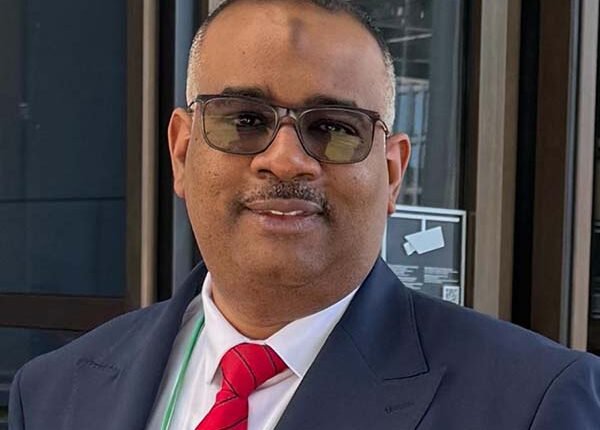
Muhannad Awad Mahmoud
Last night’s gathering at the residence of Sudan’s Ambassador to Cairo, Lieutenant General Engineer Imad Adawi, was no ordinary social occasion. It was, in every sense, a political event of significance. In attendance were Prime Minister Professor Kamil Idris and a high-level delegation including Foreign Minister Ambassador Mohi El-Din Salem, Finance Minister Dr Jibril Ibrahim, Minister of Agriculture and Irrigation Professor Moatasim Qureshi, and Director of the General Intelligence Service Lieutenant General Ahmed Ibrahim Mufaddal.
I received a gracious invitation from the embassy to attend the event, which was held in the ambassador’s garden and brought together a broad cross-section of the Sudanese community in Egypt: representatives of the Higher Council of the Sudanese Community, the Deputy Head of the Egyptian–Sudanese Business Council, business leaders, members of chambers of commerce and industry, prominent media figures led by Dr Omar Al-Jazuli, distinguished cultural personalities including Ambassador Ali Mahdi and artist Kamal Terbas, as well as a number of journalists and writers.
The evening was well organised and convivial. Yet the chill of the winter night made its presence felt as the gathering drew to a close, despite the outdoor heaters — a subtle reminder that even the warmest conversations cannot entirely dispel the cold.
I will not dwell on the substance of the Prime Minister’s briefing, followed by remarks from the Finance Minister and the Foreign Minister. The media will naturally cover those aspects. What concerns me are two specific questions I had hoped to raise when the floor was opened. However, what began as a session for concise questions gradually turned into extended interventions. Time slipped away, the cold intensified, and the opportunity passed. I have therefore chosen to set down my questions here, through the widely read platform Al-Muhaqqiq, in the hope that they reach the Prime Minister and the ministers of the so-called “Government of Hope”.
First Question: Corruption — A Threat Greater Than War
My first question concerns corruption — that monster that has grown so dangerous it is more dangerous than the war itself.
I visited Sudan once after the outbreak of war, in November 2025. What I witnessed was corruption of a magnitude I have not encountered in any African country, despite having worked across the continent for two decades. It pains me to say that Sudan today appears to lead the continent in corruption, particularly within government services.
Consider one example, seemingly minor yet deeply alarming: the renewal of commercial registrations. Officially, the process requires verification of at least one owner or founder to ensure there is no link to the terrorist militia. In principle, this is an excellent safeguard. In practice, however, the requirement can reportedly be bypassed for three million Sudanese pounds. Through a lawyer or intermediary, the renewal proceeds without meaningful verification — even if the business owner is outside the country.
If such an arrangement was presented to me — someone residing abroad — how many companies have been processed in this manner? How many security loopholes have been exploited by militia elements through larger sums of money? This is not a procedural irregularity; it is a direct national security concern. It demands decisive action, not hesitation or courtesy.
Second Question: The Strategic Future of Sudan–Egypt Relations
My second question was intended for the Foreign Minister, Ambassador Mohi El-Din Salem, in response to the Prime Minister’s light-hearted remark inviting us to “ask the ministers of the Government of Hope”.
What, precisely, is the strategic framework guiding Sudan–Egypt relations in the next phase?
We do not require repetition of the well-rehearsed language about the Nile and shared destiny. Those phrases are familiar. The essential question is: upon what concrete mutual interests will this relationship be built?
Egypt has done much. It has hosted millions of Sudanese. It has consistently affirmed its support for Sudan’s unity and national security. President Abdel Fattah el-Sisi has publicly drawn red lines, echoed by Foreign Minister Dr Badr Abdel Aty. These are significant positions, deserving of a clear, structured, reciprocal vision — not general expressions of appreciation.
The Prime Minister spoke of Egypt having “the lion’s share” in Sudan’s reconstruction. Yet he did not clarify whether this refers to grants, investments, or fully prepared development projects backed by feasibility studies. Given Sudan’s current circumstances, it is difficult to imagine readily available funding for large-scale reconstruction without clearly structured partnerships.
What can realistically anchor the relationship is agricultural integration.
Egypt faces acute water stress, with per capita water availability at roughly 500 cubic metres annually — half the global minimum threshold of 1,000 cubic metres. With a population exceeding 110 million citizens and an additional 10 million residents, water management has become a daily strategic challenge.
Sudan, by contrast, enjoys approximately 1,700 cubic metres per capita annually and possesses over 200 million feddans of arable land, of which only about 20 per cent is utilised — often through traditional methods. Yet Sudan remains the world’s largest producer of sesame, a major producer of sorghum and groundnuts, and accounts for roughly 80 per cent of global gum arabic production.
What might be achieved if Egypt contributed expertise and technology while Sudan contributed land and water resources? The result could be joint food security, surplus exports, and a durable economic interdependence that binds the two nations through shared prosperity.
A Missed Opportunity for Practical Integration
In October 2025, the Governor of Northern State visited Cairo with members of his cabinet. Ambassador Imad Adawi facilitated an important meeting at the Sudanese embassy, which I attended in my capacity as a member of the Egyptian Council for International Cooperation.
The discussions were substantive, and the Governor announced the formation of a joint committee. It was agreed that a conference on agriculture and mining would be held in Cairo in December, hosted by the Egyptian Council for International Cooperation. I prepared a detailed paper on agricultural investment in Northern State, later expanded to include mining at the request of Council Chairman Engineer Moataz Raslan.
Yet upon the delegation’s return to Sudan, communication ceased. Despite requiring only modest additional information to finalise the conference programme, the initiative stalled.
This was not Cairo’s failing; it reflected a lack of seriousness at the state level. I sincerely hope the Government of Hope will revive this initiative and adopt it as a practical gateway to genuine Egyptian–Sudanese integration.
Conclusion: Beyond Promises to Decisions
The Cairo gathering was not merely a winter evening reception. It was a mirror reflecting the magnitude of the challenges confronting the Government of Hope, nearly nine months after its formation — a period sufficient to move beyond foundations toward concrete answers and decisions.
Sudan today requires clarity in combating corruption, rebuilding institutions, and crafting a robust strategic partnership with Egypt grounded in shared interests and practical implementation rather than diplomatic courtesy.
The country stands at a historic crossroads. It cannot afford to hesitate or manage crises on a day-to-day basis. What is required is a state that knows what it wants, knows how to achieve it, and understands that speeches will not shape the future — but that decisions will.
Shortlink: https://sudanhorizon.com/?p=11736