

Finance Minister: Egyptian Companies Reserved For Bigger Projects
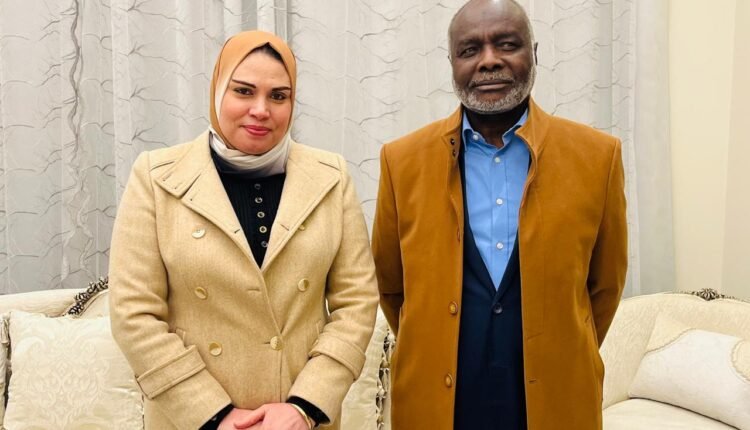
Cairo – Sudanhorizon – Sabah Moussa
Minister of Finance and Economic Planning, Jibril Ibrahim, has confirmed that what is happening in Mustariha, North Darfur state, is a conflict within a single ethnic groupo and not a general tribal conflict. He explained that this was a competition for leadership of the Rizeigat tribe between the Mahameedd, the Mahariya, and other branches.
In exclusive statements to Sudanhorizon news website, minister Ibrahim said he does not expect the conflict in Mustariha to escalate into ethnic fighting. He clarified that the clashes are confined to one tribe in three localities in North Darfur State. He added that the government’s assessment indicates that the rebellion seeks to establish complete control over Darfur region, and that the goal is not primarily ethnic, but rather to consolidate control over the region as a prelude to later discussing its domination. He emphasized that the government is aware of these efforts and will not allow them to succeed.
Ibrahim deemed the remarks made by Rapid Support Forces (RSF) commander Mohamed Hamdan Dagalo “Hemedti” in the Ugandan capital, Kampala, unworthy of comment. He described Hemedti as being in a difficult position after admitting his forced removal from Khartoum, his defeat, and his reliance on mercenaries.
Ibrahim added that Hemedti’s statement in Uganda was a burden on the RSF leader and added nothing to his standing. He clarified that Darfur is not entirely under the control of the RSF, and that fighting continues there. The situation in Kordofan is similar, with the militia continuously losing territory. He affirmed that military operations are advancing westward, predicting that Kordofan will soon be declared free of rebellion, followed by the complete recapture of Darfur. He emphasized that the inhabitants of both regions do not accept the RSF, and their displacement from their homes is evidence of this rejection. Therefore, the separation of Darfur or Kordofan is out of the question.
Regarding the truce, Ibrahim clarified that no official truce had been proposed to them so that they would be rejecting it, noting that any truce that does not lead to genuine peace is pointless, especially after past experiences where truce was used to reposition rebels without achieving peace. He added that the government has a vision that it has presented to some parties, but it does not recognize the Quartet because of the UAE’s participation. He emphasized that Egypt, Saudi Arabia, and the United States can address Sudan directly, while the Quartet, as a group, could not.
Ibrahim pointed out that the Juba peace movements have not dominated the government and will not dominate the anticipated legislature . He explained that the idea of forming the council is still under discussion among political and civil forces. He stressed that a party’s demand for its share does not mean control, and that forming a legislative council during a time of war is natural and preferable to its absence.
Regarding the reassignment of the rehabilitation of the Halfaya Bridge to a local company instead of Egyptian companies with whom there was a preliminary agreement, Ibrahim said that the government prefers that Egyptian companies undertake major infrastructure projects, explaining that the Halfaya and Shambat bridge projects are relatively small, and that Egyptian companies possess huge capabilities and experience after reconstruction projects within Egypt, adding that Sudan wants to assign them strategic road projects such as the Port Sudan-Adre road and the Halfa road to the Sudanese border, which are projects whose cost is estimated at billions of dollars, while the cost of the Halfaya Bridge is only about 11 million dollars, stressing that Sudan is “saving” Egyptian companies for major projects.
Shortlink: https://sudanhorizon.com/?p=11722