

Banking and Financial Literacy in Sudan: The Reality of Financial Inclusion and the Challenges of Economic Reform
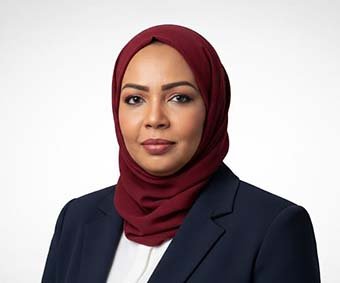
Dr Marwa Qabbani
Strategic Planning and Digital Transformation Expert
Sudan faces significant weaknesses in its banking culture and financial inclusion. Banking services have remained confined to limited segments of society, while the majority of the population has remained outside the formal financial system.
Estimates suggest that, prior to the outbreak of war, the proportion of the population holding bank accounts did not exceed 6% to 10% of the total population, compared with a global average of over 60% in developing countries and more than 90% in advanced economies.
Weak financial inclusion represents one of the principal obstacles to economic development and financial stability. It directly affects levels of savings, investment, and the financing of productive activities.
First: The Reality of Banking Culture in Sudan
In Sudan, dealings with banks have largely been associated with commercial and investment activities and government institutions, while the majority of citizens have relied on a cash-based economy.
Unofficial estimates indicate that more than 80% of economic transactions were conducted in cash outside the banking system, leading to weak mobilisation of national savings.
Second: Challenges in Opening Bank Accounts
Individuals seeking to open bank accounts have faced several challenges, most notably:
Requirements relating to identity, residence, and employment documentation.
Minimum deposit requirements ranging between 50,000 and 500,000 Sudanese pounds (pre-war, depending on the bank).
The requirement to provide referees or guarantors.
Limited geographical spread of bank branches, with more than 60% concentrated in Khartoum State.
Exchange rate volatility and high inflation—exceeding 300% in some years—have further undermined confidence in the banking system.
Third: Types of Bank Accounts
Current Accounts
Represent approximately 30% to 40% of total bank accounts.
Used primarily for daily transactions and transfers.
Savings Accounts
Account for around 20% to 30% of total accounts.
Target individuals and salaried employees, encouraging savings.
Investment Deposits
Represent roughly 40% of total deposits.
Based on Islamic financing structures such as mudaraba (profit-sharing) and musharaka (partnership).
The Banking Sector and the Number of Banks
Before the war, there were 38 operating banks in Sudan, including:
Commercial and Islamic banks.
Developmental and specialised banks (agricultural, industrial).
Branches of Arab and foreign banks.
All were subject to the supervision of the Central Bank of Sudan.
Policies of the Central Bank of Sudan
The Central Bank of Sudan operates under the Islamic banking system, in place since 1984 (updated 2026), and undertakes the following:
Setting statutory reserve ratios for banks (ranging between 10% and 20%, depending on monetary policy).
Directing up to 60% of total bank financing towards productive sectors.
Managing monetary policy to curb inflation and achieve financial stability.
Bank Financing by Sector
The estimated distribution of bank financing is as follows:
Agriculture: 25% to 35%
Trade and services: 30% to 40%
Industry: 10% to 15%
Housing and construction: 10%
Consumer finance and others: 10% to 20%
Banking Investment Policies
Sudanese banks rely primarily on Islamic financing instruments, notably:
Murabaha (cost-plus financing): over 50% of total financing
Musharaka and Mudaraba: 15% to 25%
Salam, Istisna’a, and Ijara: 10% to 20%
There is a noticeable dominance of short-term financing over long-term developmental financing.
Types of Financing and Their Impact on Economic Development
Microfinance
Targets an estimated 5 to 7 million potential beneficiaries in Sudan.
Focuses on home-based, artisanal, and small agricultural projects.
Small and Medium Enterprises (SMEs)
Represent more than 90% of total economic establishments in Sudan.
It contributes approximately 40% of GDP and employs a large proportion of the workforce.
Investment Financing
Investment financing is one of the most important tools for supporting infrastructure, energy, agriculture, and industry projects. However, it remains limited, accounting for only 10% to 15% of total bank financing, thereby constraining the economy’s ability to achieve sustainable growth.
Financial Inclusion as a Strategic Priority
Financial inclusion is defined as enabling all segments of society to access formal financial services. According to World Bank estimates, raising financial inclusion to 50% could increase economic growth by approximately 1% to 2% annually.
Financial inclusion encompasses:
Basic bank accounts
Electronic wallets and digital services
Microfinance
Financial literacy programmes
Virtual accounts opened through service providers and telecommunications companies—via USSD systems linked to mobile phone numbers—have reportedly doubled the number of traditional bank accounts. These systems utilise agent networks to fund and withdraw from wallets and to access services through mobile payment platforms.
Conclusion and Economic Recommendations
Weak banking culture and limited financial inclusion represent major structural challenges to the Sudanese economy. Improving this situation requires:
Simplifying procedures for opening bank accounts.
Expanding digital and mobile-based financial services.
Supporting microfinance and SMEs.
Strengthening confidence in the banking system through transparency and deposit guarantee schemes.
Implementing national financial literacy programmes.
Achieving these reforms could enhance savings and investment rates, support sustainable economic growth, attract liquidity into the banking sector, and channel it towards developmental projects in Sudan.
Shortlink: https://sudanhorizon.com/?p=11215