

The High Commissioner’s Visit
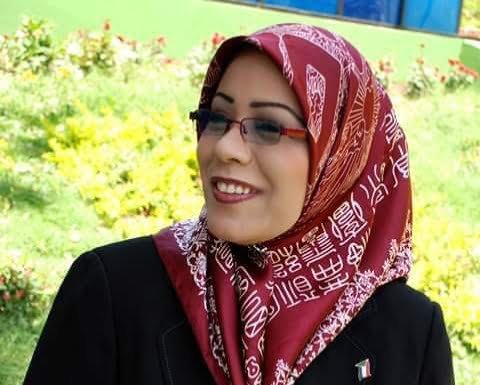
Dr Enas Mohamed Ahmed
International law documents the establishment of the United Nations High Commissioner for Human Rights (OHCHR). Its origins date back to the 1940s, when it began as a small unit at United Nations Headquarters. Over time, its experience evolved and was refined through a series of legal studies and major global events, including world wars, the independence of states, the establishment of international organisations, the conclusion of treaties, and other pivotal international political developments. By the 1980s, the Office had moved to Geneva and later became a central hub for human rights. Subsequently, the World Conference on Human Rights, held from 14 to 25 June 1993, adopted the Vienna Declaration and Programme of Action, which put forward practical recommendations to strengthen and coordinate the United Nations’ capacity to monitor human rights situations. The Conference called upon the General Assembly to establish the post of United Nations High Commissioner for Human Rights, which was duly created on 20 December 1993 under General Assembly resolution 48/141.
The development of the OHCHR and its mandate coincided with the evolution of international human rights mechanisms, beginning with the Universal Declaration of Human Rights of 1948, followed by international and regional human rights conventions. The Office’s work was later integrated into peacekeeping operations, which enhanced the United Nations’ role in preventing and addressing human rights violations. This development aligned with the emerging global consensus on imposing sanctions on perpetrators of human rights violations, paving the way for the establishment of the International Criminal Court in 1998 under the Rome Statute, to bring perpetrators of war crimes and crimes against humanity to justice. It can therefore be said that the OHCHR is the principal United Nations body responsible for human rights.
At the national level, an agreement was signed between the Government of Sudan and the OHCHR on 25 September 2019, leading to the establishment of a fully mandated country office in Sudan. The launch of the Sudan Office was announced during the 44th session of the Human Rights Council on 16 July 2020.
Following the outbreak of war in April 2023, the OHCHR has worked intensively in Sudan to monitor human rights violations, provide assistance to civilian victims, support peace efforts, offer technical assistance for building human rights institutions, strengthen the rule of law, prevent impunity, and support transitional justice—an aspect of critical importance.
The OHCHR has described the situation in Sudan as a “ticking time bomb”, according to statements made by the United Nations High Commissioner for Human Rights, Volker Türk, in December 2025, following the atrocities and crimes committed by the militia in El Fasher. Türk called for an impartial, comprehensive, and effective investigation into the attack on civilians at the Zamzam displaced persons camp and for those responsible to be brought to justice.
The Sudanese people have endured unbearable suffering, pain, and tragedy throughout years of war. These have all been documented in reports by the United Nations, the OHCHR, and a number of international and regional human rights organisations. Yet the question remains: what benefit do these reports bring as long as the militia continues to shed Sudanese blood, committing crimes, violations, and atrocities without any action being taken against it?
The significance of the visit by the High Commissioner for Human Rights, Volker Türk, which began yesterday, lies in its coincidence with the convening of the Consultative Mechanism in Cairo. According to statements by the United Nations Spokesperson, Stéphane Dujarric, this meeting brought together the UN Secretary-General’s Special Envoy, Ramtane Lamamra; Massad Boulos, Senior Adviser to the US President on Arab and African Affairs; representatives of a number of European, African, and Asian countries; as well as the European Union, the League of Arab States, the African Union, and IGAD. All convened in Cairo under the umbrella of the Consultative Mechanism to enhance coordination of peace efforts in Sudan. The meeting was chaired by Egypt’s Minister of Foreign Affairs, Badr Abdelatty, and participants called for support for peace tracks, the protection of civilians, the facilitation of humanitarian access, and support for an inclusive political process that preserves Sudan’s unity and territorial integrity.
In this way, efforts converge along parallel and closely aligned tracks to support peace initiatives and back the Sudanese government’s efforts to establish peace and resolve the crisis.
As for the High Commissioner’s visit programme, it includes a visit to Al-Afdaad Camp, listening to testimonies from displaced persons and survivors from El Fasher, documenting crimes and violations committed by the terrorist militia against civilians, and collecting the necessary information and documentation from field reports and data on affected areas. This will feed into a comprehensive report to be presented at the Human Rights Council session scheduled for February 2026. The visit also includes meetings with Sudanese government officials, humanitarian workers, and representatives of civil society.
It is important to note that United Nations reports do not lapse with the passage of time; they remain legal references and evidentiary records documenting events and facts, as well as the international community’s responses to them.
The most effective way to ensure the success of any international plan to resolve a major crisis, such as war, is to ground it in a national vision for resolution, as this is closest to the realities on the ground and best positioned to understand the dimensions of the crisis. Accordingly, international law mechanisms—including the OHCHR—alongside other international and regional organisations and broader international efforts to promote peace in Sudan, must unify their efforts with national initiatives, support them, stand by the Sudanese government, and take concrete international measures to achieve tangible results on the ground. Reports, statements, and meetings alone are not sufficient.
In conclusion, a press conference is expected to present the outcomes of the visit and an assessment of the humanitarian situation in Sudan. It should be recalled that the High Commissioner last visited Sudan in November 2022, prior to the outbreak of the war—making this his first visit since the conflict began.
The High Commissioner’s visit comes amid a catastrophic humanitarian situation, widespread crimes against civilians, a worsening food and health crisis, continued targeting of civilians through killing and starvation, the ongoing arbitrary detention of civilians in militia detention centres, obstruction of the rapid and safe delivery of humanitarian and medical assistance in areas under militia control, the targeting of infrastructure—particularly hospitals and medical convoys—and the killing of medical personnel.
Shortlink: https://sudanhorizon.com/?p=10438