

When We Become Judges… Without Sitting on the Bench
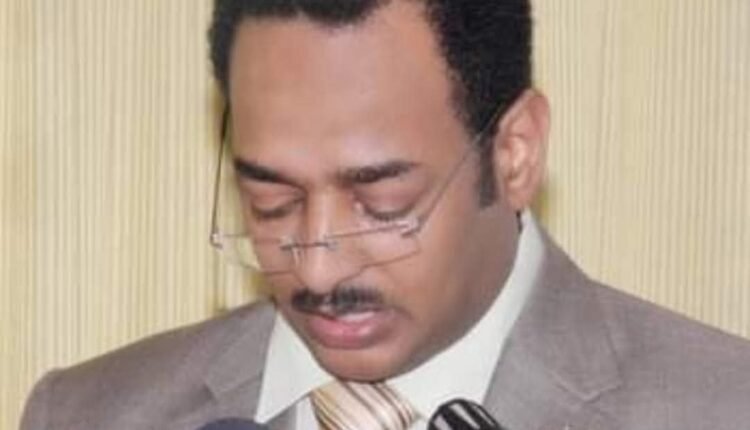
Dr Salah Da’aak
I still find myself recalling that story my father once told me about my grandfather—as though it were unfolding now, not in some distant past.
After completing his studies in Islamic jurisprudence and memorising the Qur’an, my grandfather was awarded the ‘Ālimiyya certificate—under the system of the time (a qualification from the Ottoman era equivalent to a doctorate, granted to those who studied Qur’an and jurisprudence in mosques). Having met all the requirements to become a judge, he stood at the threshold of a path widely regarded as honourable and prestigious.
Yet he saw it differently.
He perceived, beyond its outward dignity, the weight of its responsibility and the gravity of its accountability.
It is said that he refused to enter the judiciary—not out of inability or negligence, but out of piety and caution. He would say that he had a passionate temperament and feared that one day he might judge a person wrongly, bearing the burden of that mistake before God.
The well-known saying—“Judges are of three kinds…”—was not, for him, a passing remark. It settled deep within his heart, awakening him and compelling him to reconsider every step that might lead him to the bench.
Instead, he chose another path—one that seemed less prestigious in the eyes of some, but to him was clearer and more reassuring: the path of teaching and Qur’anic instruction.
There, he found his true place. And there, people found in him not a man who divided them through judgment, but one who united them through knowledge. His students carried him in their hearts. They understood his choice and, if anything, their respect for him only grew—because he had not withdrawn from responsibility, but rather drawn closer to its deeper meaning.
As time passed, I began to reflect on this story from a different perspective. Was my grandfather afraid only of the formal role of judging? Or had he understood that passing judgment among people is not confined to those who sit in courtrooms?
Gradually, I came to see that the meaning is far broader—and that in the details of our daily lives, we assume this role without even realising it.
At home, when a father or mother resolves a dispute between children, there is judgment.
At work, when a manager decides between employees in conflict, there is judgment.
In neighbourhoods, in community committees, in team leadership—wherever decisions are made that affect others, we encounter different forms of judgement, even if they bear different names.
Indeed, the matter may be even simpler—and more dangerous.
A passing word.
An opinion sought.
A piece of advice we consider light—yet upon it, decisive outcomes may be built.
When someone is consulted about a marriage and offers praise or criticism, a family’s future may hinge upon that judgment. When we are asked about a person and respond based on our personal impression, we may open doors—or unjustly close them.
Here, the deeper meaning emerges—perhaps one my grandfather grasped early: that judgement is not merely a profession, but a human condition that recurs in our lives; and that justice is not a rule applied only in courts, but a virtue that must permeate our words and actions.
In Sudan, there are many living examples of this understanding—particularly within traditional leadership structures, Sufi scholars, and even mosque imams who mediate between spouses or oversee matters such as inheritance.
Among the most notable figures renowned for their wisdom and fairness were Babiker Nimer among the Misseriya, Abu Sin among the Shukriya, and Deng Majok in Abyei.
A telling anecdote is often recounted: a man once asked Abu Sin how he managed to resolve disputes—even the most severe ones—so that both parties left satisfied.
He replied:
“When two disputants come to me, no matter how serious their conflict, I look at them and try to ‘press upon the better one’—the one with greater virtue—so that he concedes. And often, the matter is resolved.”
The man then asked:
“And if both are stubborn and difficult?”
He smiled and said:
“In that case… I press upon my own pocket”—meaning that he might resolve the dispute at his own expense.
When one’s commitment to justice reaches such a level—willing even to spend from one’s own resources to extinguish conflict—then one is far removed from injustice and closest to the true spirit of judgement.
Stories of this kind are many, but they all point to one truth: justice is not a position—it is a character.
In this light, the meaning aligns with the saying of the Prophet ﷺ:
“Each of you is a shepherd, and each of you is responsible for his flock.”
For stewardship, at its core, is a form of judgement; responsibility is its measure; and each of us, in our place, will be accountable for what we say, what we decide, and how we weigh matters between people.
May God have mercy on my grandfather Hassanein, on our forefathers, and on all the departed among the Muslims—and may He have mercy on us when we return to them.
He chose to stay away from the judge’s bench…
Yet in truth, he drew closer to its very essence.
Shortlink: https://sudanhorizon.com/?p=12550