

The Return of the Rhinoceros… The Return of Khartoum
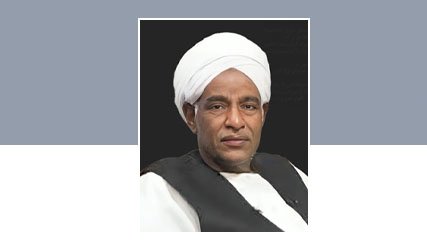
Mahjoub Fadil Badri
Lieutenant General Abdel Fattah al-Burhan, Commander-in-Chief of the Sudanese Armed Forces, described his exit from the General Command headquarters (which was besieged at the time) as a purely military operation, planned and executed by the army, during which soldiers were martyred. He stressed that it was not the result of negotiations or understandings—thus refuting the rumours that had circulated about it.
The army, for those who may not know, is a tribe with its own traditions and codes; it is one family—indeed, one body—such that if one part complains, the rest of the body responds with wakefulness and fever. The head of this body is the Commander-in-Chief. We witnessed how the Presidential Guard devoted itself to protecting him, offering their lives freely in the line of duty. The last instruction given by the head of the guard to his troops was, “Evacuate the Commander,” before every one of them fell as martyrs, for the sake of God and then the الوطن.
Next in command after the Commander-in-Chief is the Chief of the General Staff, the highest professional military commander of the Armed Forces, and the central figure in planning, readiness, and military leadership—the bridge between the army and the political leadership, Lieutenant General Mohamed Osman al-Hussein fulfilled this role with patience, wisdom, and composure, without seeking media exposure, despite the exhausting effort involved. He sees this as his foremost duty, for what a duty cannot be fulfilled without becoming itself a duty. It was therefore incumbent upon him to ensure the evacuation of the Commander-in-Chief from the General Command buildings, which lay within the enemy’s line of fire, so that he could discharge his constitutional and political responsibilities. Thus unfolded the operation dubbed “The Return of the Rhinoceros”, which so stunned the militia’s second-in-command that he blurted out, flustered, on satellite television: “I was guarding al-Burhan, but he slipped out wearing slippers and underwear and boarded a small plane.” People laughed at him.
Al-Burhan emerged victorious. He joked with his soldiers—who were themselves astonished by the operation—and said to one of them as he shook his hand, “Take a good look at me—don’t you believe it or what?” Then he calmly enjoyed a cup of coffee at his leisure.
From that moment, the tide turned against the militia and its fifth column. The hired mouthpieces found nothing to do but deride the government by branding it “the Port Sudan government” (Port Sudan). Then came the liberation of Khartoum. The Commander-in-Chief was the first to land his aircraft at Khartoum International Airport—of course, under army arrangements—while the smoke of battle still hung in the air. He entered the Republican Palace to the astonishment of all. The opposition’s claim that the army had used chemical weapons to expel the militia from Khartoum was exposed as a lie—an allegation so flimsy that the world paid it no heed, as it watched life return to the capital, with citizens coming back without masks and without any known injuries associated with chemical weapons.
It was a mark of the narrow-mindedness of Abdalla Hamdok and “those with him” that he once claimed he would respond to the government’s invitation if the government returned to Khartoum—his infamous “ifs”. Well, the government has now returned to the national capital. What, then, will they say? Perhaps they will borrow the approach of the hapless Abdul Rahim in explaining how al-Burhan exited the headquarters under his very eyes—by a small plane, as he claimed. Or perhaps the Qahata will say: “This isn’t Khartoum; it’s a small model in a studio,” or claim—like the Balabisa—that it was artificial intelligence pretending to be Khartoum!
We say to them: this is the army, you fools. It is the army that planned and executed the “Return of the Rhinoceros”. It is the army that fought with courage and offered columns of martyrs for the return of Khartoum—by liberating the capital and paving the way for citizens to come back. And it is the army that implemented the provisions of the Jeddah Agreement by clearing civilian properties of the militia—by force of boots and handcuffs, not by evasion or deception.
Sound premises always lead to sound conclusions. Therefore, “The Return of the Rhinoceros = The Return of Khartoum”, from every angle—acute, right, obtuse, or otherwise.
God bless the Sudanese Armed Forces, their Commander-in-Chief, the Chief of the General Staff, his deputies, and all commanders, officers, NCOs, and soldiers. Let us praise God and give thanks for His grace, and let us all sing with Abu al-Sayed:
“O Khartoum, whose beauty is a Garden of Paradise,
All my life, I have never seen your equal anywhere.”
And hasten to sincerity in work—men and women, young and old alike. Special salutations to Lieutenant General Ibrahim Jaber, Assistant to the Commander-in-Chief, to the Chief of the General Staff, to the Governor of Khartoum and his government.
God is greatest, and victory comes only from God.
Shortlink: https://sudanhorizon.com/?p=10627