

The Golden Compass: Engineering Major Alliances in Sudan’s Geo-Economic Space
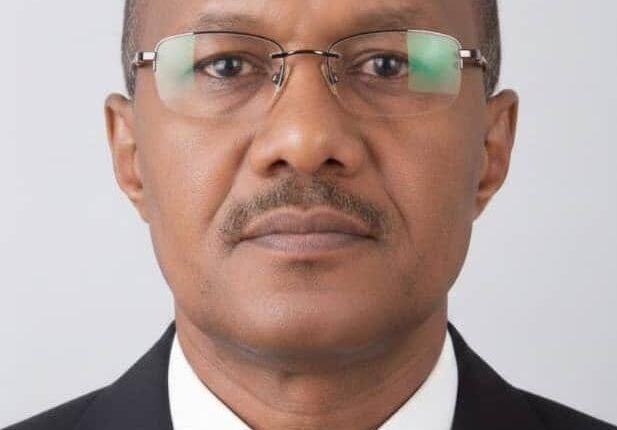
Dr Mohamed Awad Mohamed Metwally
At this pivotal historical juncture, the Sudanese economy can no longer afford the politics of “palliatives” or reliance on conditional grants. It must instead recalibrate its golden compass towards the centres of global gravity that are reshaping today’s power order. Sudan’s transition from a “raw resource state” to a “strategic partnerships state” is not merely a diplomatic option; it is a precise geo-economic engineering process aimed at monetising its geographical and material advantages and transforming them into leverage and mutual interests with emerging regional and international powers.
The philosophy of “sovereignty through networking” requires that partners be viewed not as donors, but as stakeholders in a comprehensive growth equation—thus shifting Sudan from a “conflict zone” to an indispensable anchor point in global trade stability and supply chains.
First: Geopolitical and Economic Analysis of Development Partners
There is a group of sisterly and friendly states with which Sudan can forge diverse partnerships for economic advancement. I will refer to them briefly, one by one:
Saudi Arabia
The Kingdom of Saudi Arabia represents Sudan’s closest natural economic partner by virtue of geography and Red Sea security. The strategic approach is to transform Sudan into a “breadbasket” aligned with Saudi Vision 2030, through the establishment of joint agro-industrial zones supported by Saudi financing and modern technologies to achieve food security for both nations.
The State of Qatar
Engagement with Doha should focus on port development, railway connectivity, and major real estate and tourism investments, based on the concept of “trade corridor development” linking the heart of Africa to the world.
The People’s Republic of China
Sudan’s orientation towards China should centre on the Belt and Road Initiative, localising manufacturing industries and transferring technology in renewable energy and rare mineral extraction in exchange for guaranteed resource flows.
The Russian Federation
Relations with Moscow should shift from mere “extraction and export” to the development of advanced extractive industries, with refining and processing centres established within Sudan to increase added value.
The Republic of Türkiye
Sudan can benefit from the Turkish model in reconstruction and urban renewal, while revitalising the textiles and leather sectors as technical bridges for Sudanese exports.
South Korea and the Asian Tigers
South Korea, alongside the Asian Tigers—Singapore, Malaysia, and Vietnam—offers an optimal model for emulation. Partnerships here should be knowledge-based, focusing on e-government, smart irrigation, and attracting multinational corporations to establish regional assembly hubs, positioning Sudan as a technological gateway to Africa.
Second: Methodological and Scientific Recommendations
Establish the Supreme Commission for Strategic Partnerships
Implementing authority: Sovereign Council / Council of Ministers.
Execution: A sovereign body comprising economic and legal experts to unify negotiation files with the six partner states and Asian Tigers, avoiding ministerial overlap.
Draft a Cross-Border Sovereign Investment Law
Implementing authority: Parliament / Ministry of Justice in cooperation with the Ministry of Investment.
Execution: Legislation granting legal and fiscal protection to major internationally agreed projects, shielding them from political change.
Create a Geo-Economic Information Bank
Implementing authority: Ministry of Finance and Economic Planning in cooperation with the National Information Centre.
Execution: A comprehensive digital database of resources (land, minerals, energy), packaged as bankable investment projects.
Launch a Joint National Sovereign Fund
Implementing authority: the Ministry of Finance, in partnership with the sovereign funds of allied states.
Execution: Sudan contributes assets and resources, while partners provide capital, managed under private-sector principles.
Asian Knowledge and Technology Localisation Programme
Implementing authority: Ministry of Higher Education and Scientific Research.
Execution: Annual scholarships for 5,000 students in the Asian Tiger states and South Korea, specialising in advanced manufacturing and free zone management.
Develop the Continental Logistics Corridor
Implementing authority: Ministry of Transport and Infrastructure, in cooperation with Qatari and Chinese investment.
Execution: Linking Red Sea ports to western and southern borders via a modern railway network to activate Sudan’s transit-state role.
Activate Specialised Economic Diplomacy
Implementing authority: Ministry of Foreign Affairs.
Execution: Appointment of economic attachés with commercial backgrounds in partner capitals to oversee agreement implementation.
Establish Specialised Economic Zones
Implementing authority: Free Zones Authority.
Execution: Designating zones for Chinese industries, Saudi food processing, and Korean technology, managed under international administrative standards.
Transition to Smart and Sustainable Agriculture
Implementing authority: Ministry of Agriculture and Forestry.
Execution: Applying Korean and Malaysian irrigation and production technologies in national agricultural schemes to increase vertical productivity.
Strategic Resource Barter System
Implementing authority: Central Bank of Sudan in coordination with the Ministries of Minerals and Petroleum.
Execution: Exchanging extraction concessions for infrastructure development (energy, roads, bridges) to reduce reliance on cash-based debt.
Third: Proposed Implementation Timeline
Short Term (6 months to 1 year)
Enact the new sovereign investment law.
Form the Supreme Commission for Strategic Partnerships.
Host a “Six Partners and Asian Tigers Conference” in Khartoum to present ready investment packages.
Medium Term (2 to 5 years)
Launch specialised economic zones (Chinese, Turkish, Saudi).
Complete the first phase of railway and port integration.
Localise initial technology assembly plants in cooperation with South Korea and Asian Tigers.
Long Term (5 to 10 years)
Achieve self-sufficiency and regional export capacity through manufacturing industries.
Transform Sudan into a leading financial and logistics hub in Africa.
Reap the benefits of the knowledge programme as returning graduates lead economic institutions.
A Forward-Looking Conclusion: Sudan 2035
If these recommendations are effectively implemented, Sudan could witness the birth of a “new African tiger.” By 2035, Sudan may evolve from a “conflict zone” into a major industrial and logistics platform connecting global supply chains with the African continent’s core.
Crossing into this future demands technocratic political will—one that recognises that power in today’s world is not built through isolation, but through intelligent alliances and robust integration into the global economy.
The time has come for Sudan to leave the waiting bench and assume its natural place as a locomotive of development at the heart of the world.
Economic Expert, Associate at the Centre for Development Studies and Crisis Analysis
Shortlink: https://sudanhorizon.com/?p=11253