

The El Fasher Holocaust: Genocide with a Regional Signature and International Engineering
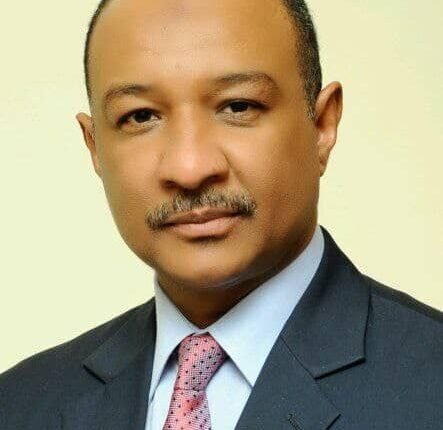
Dr Mohamed Hasab al-Rasoul
In February 2026, two major human rights reports were published detailing the tragedy in El Fasher. On 13 February, the Office of the United Nations High Commissioner for Human Rights issued a 29-page report based on testimonies from 140 victims and survivors, bearing a title drawn from one survivor’s account: “They were shooting at us like animals.”
This was followed, on 19 February, by the report of the Independent International Fact-Finding Mission, chaired by Shandy Osman, which described the situation in Sudan as bearing the hallmarks of genocide in El Fasher. After interviewing 230 witnesses, the mission concluded that genocidal intent was the only reasonable inference that could be drawn from the systematic acts committed against the city’s population.
Eyewitness Testimony Confirms the Crime of Genocide
With the publication of the High Commissioner’s report, the United Nations placed the world before its responsibilities. The report documented the killing of approximately 6,000 civilians in El Fasher and the pursuit of 1,600 others as they attempted to flee.
The subsequent fact-finding report removed any lingering doubt, affirming that the elements of “genocidal intent” had been established through ethnic cleansing, the infliction of serious bodily and mental harm, and the deliberate creation of destructive living conditions aimed at eliminating ethnic groups from African tribes, including the Zaghawa and the Fur.
Deliberate Abandonment: A Crime of Premeditation
In essence, these two reports, with their harrowing findings, go beyond routine human rights monitoring. They constitute a historic indictment exposing the conscience of the international system, which stood by as a spectator to the inferno of El Fasher.
These shocking accounts cannot be separated from what may be described, legally and politically, as “deliberate abandonment” — a crime committed with premeditation by Western powers and international institutions against 900,000 civilians. These lives were left to their fate behind the walls of siege and death, despite repeated cries for help: for a sip of water, a dose of medicine, a morsel for an infant, an elderly woman, or an ageing man.
This systematic neglect demonstrates that the international community’s silence was not the result of incapacity; it was a conscious political choice, carried out through complicity and abandonment.
The Illusion of a Ceasefire: Between Gaza and El Fasher
Throughout 18 months of suffocating siege in El Fasher, calls for a “humanitarian truce” by the United Nations served merely as a temporary cover, enabling the militia to complete its plan. On 13 June 2024, the UN Security Council adopted Resolution 2736, explicitly demanding an end to the RSF’s siege of the city. The militia, however, refused to comply and ignored both the resolution and the UN Secretary-General’s appeals.
More troubling was the Security Council’s and the Secretary-General’s absolute silence in the face of this defiance. The militia’s rejection of the resolution and of humanitarian appeals clearly served its military objectives and the external project it was implementing in Sudan.
The siege and massacre of El Fasher inevitably draw comparison with Gaza during the Israeli assault (2023–2025), when Western powers persistently rejected calls for a ceasefire or for lifting a blockade that had strangled the territory for nearly two decades. The parallels are striking: the perpetrator in both cases is one, as are the enablers and facilitators. Just as Israel rejected lifting the siege and halting hostilities, so too did the RSF.
The stark irony lies in the renewed calls by the international organisation, the United States, and regional allies for a ceasefire in Sudan — but only after the militia had taken control of El Fasher and as the Sudanese army and popular resistance began advancing towards Darfur to liberate it. As these forces moved, calls for a ceasefire intensified, accompanied by urgent diplomatic efforts to halt their advance.
These efforts were conspicuously absent when El Fasher was in desperate need of relief from the siege and the daily killings inflicted upon its civilian population. This deliberate silence enabled the militia to seize the city and complete the stages of massacre and genocide against its original inhabitants — echoing once more the horrors witnessed in Gaza and the war crimes committed there.
The true motive behind the Western push, led by the United States, for a ceasefire at this specific juncture is not difficult to discern. It is not purely humanitarian, but rather an attempt to impose a new reality aimed at:
Blocking the liberation of El Fasher and preventing its restoration to national control;
Granting the militia time to regroup, reorganise, and rebuild its combat capabilities;
Entrenching a reality of fragmentation and replicating the Libyan scenario, particularly the model of General Haftar in the east, with the objective of dividing and weakening Sudan.
Instigators and Supporters: Britain as the UAE’s “Goalkeeper” at the Security Council
The United Arab Emirates has emerged as a principal financier and supporter of the militia, through military air bridges documented by Yale University and The New York Times.
Such financing, however, would not have passed without firm political cover within international decision-making corridors. Here, the controversial British role becomes apparent. As the “penholder” for Sudan at the Security Council, London is portrayed as having acted as the UAE’s “goalkeeper”, using its position to block attempts to condemn Abu Dhabi, obstructing Sudan’s complaints, and diluting resolutions to strip them of any punitive content. In doing so, it afforded both perpetrator and financier the time needed to complete demographic change through war crimes and crimes against humanity.
A New Legal Characterisation and the Imperatives of Justice
The reports of the High Commissioner and the Fact-Finding Mission place the world before a genuine test. Documentation of executions carried out by the RSF at Al-Rashid dormitory, Zamzam camp, and across El Fasher demonstrates that the attacks were not random, but part of an organised and premeditated campaign bearing the hallmarks of genocide.
This development imposes three moral, legal and political imperatives:
Accountability, not accommodation: No political settlement can be accepted if it preserves the militia as a military or political actor. Criminals belong in courtrooms, not in halls of power. Impunity today is an invitation to future genocide.
Disqualification of the sponsor: From moral, legal and political standpoints, no state that financed or sponsored the militia should be permitted to act as mediator or impose terms of settlement. Those who ignited the flames of genocide and sought to divide the country cannot be entrusted with extinguishing them or shaping peace.
Terrorist designation: The militia’s atrocities — compared by international media to the Rwandan genocide and the devastation in Gaza — warrant its classification as an international terrorist organisation, and its supporters should be treated as partners in the financing of terrorism and ethnic cleansing.
Criminal Responsibility Without Limitation
The reports of February 2026 do not condemn merely the gun, but also the hand that purchased it, the tongue that remained silent over the siege, and the pen that obstructed justice at the Security Council.
What occurred in El Fasher was genocide bearing a “regional signature and international engineering”. Justice will not be restored unless the perpetrator, the financier, and the protector alike are pursued.
The question remains: will the conscience of the international community remain hostage to political bargains, or will justice find its moment in history? History will not forgive those who, with diplomatic composure, authored one of the most horrific massacres of the twenty-first century.
Shortlink: https://sudanhorizon.com/?p=11593