

The Dark-Skinned Muse and the Shorelines of Sorrow… Alas!
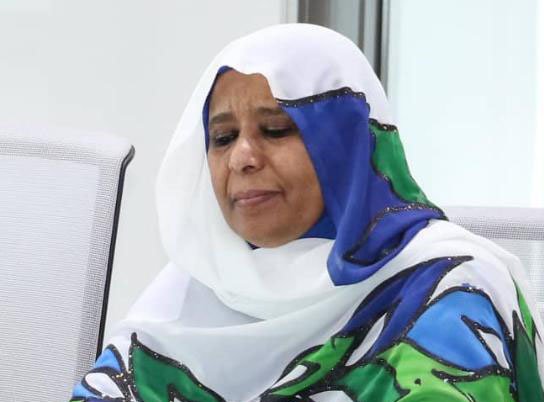
Dr Salwa Hassan Siddig
When the Caesar, Kadim Al-Sahir, sang the words of the poet Hassan Marwani in Ana wa Laila:
“Alas, my ships have drifted away from me,
My sails have departed…
I have been exiled, and strangers have taken root in my homeland,
Tearing apart all the beloved things that once were mine…”
We watched and listened as the sorrowful Caesar chanted them in his deep, resonant voice—an overwhelming symphony that could shake mountains.
We saw the song fill television screens as young men and women waved their hands, and the elders wept with longing.
Our own hearts wept with them—Laila lost, and Iraq bleeding through the 1990s and early 2000s, while the world watched the lie of loud media theatrics and the farce of “searching for forbidden weapons” in a land of scholars and geniuses.
How similar tonight is to yesterday.
The very same scene is repeating itself in Sudan—Sudan of resilience, dignity, and pride.
The same deception, the same treachery and betrayal we now live, as though history has not moved at all; only its tools and fingers have changed.
It is no wonder that the dark-skinned Rose grieves, shedding burning tears—salted with her love for Sudan—and we, too, have not ceased grieving.
She stood like Zarqa’ al-Yamama on every platform, scattering her verses like a free, surging flood, powerful as a torrent, proclaiming in her lofty angelic voice—so like her own—that they are stealing the kohl from the eye of the poem.
She weeps for our silent sorrows—and she has every right to. For her, the rock is Sudan the Proud: its beauty she longs for—its Nile, its sea, its Taka mountains and Butana plains; its theatre and radio; its gentle people of the East, the North, the Centre, and the West, all of whom her heart embraced.
How could she not mourn, writing:
“Ah, my country, you are not well…
By God, you are not well.
And I shall remain until you are well.
So long as your wound bleeds, mine shall bleed with it.
Life carried me far and wide and sheltered me—yet your yearning flows in me.”
The dark-skinned one who taught us to love our homeland once sang like a nightingale, unrestrained, in a country worthy of her stature.
She strengthened our pride with the artistry of women and the nest of poetry, just as she mended our spirits in the cities of exile.
We drew our joy for our homeland from her joy, and our pride from her pride.
We saw our country as the most beautiful of places—and still do.
How could you not weep for it, O dark-skinned one, when they have stolen our moments, stolen our sweet memories, stolen the albums of our golden days?
They tightened the world around us so that we would not whisper its secrets to our grandchildren, that the thread may remain unbroken…
But our children—they cannot touch them, for the children were raised on pure milk of love for Sudan, white as turbans and as hearts.
But you, all of you—those who try and those who conspire—you shall never defeat her, nor us.
Tomorrow you will return, O dark-skinned muse, head held high, as radiant as the Sudanese sun, singing the loveliest poems and sweetest words with Hallenqi, waving to Kassala as the autumn birds take flight.
Just as you once shook their platforms and stirred their emotions, you shall do so again.
And Sudan—your beloved country—shall once more be a wide-open stage for you, a Janadriyah overflowing with its love and glowing with its light.
The darkness will not last, so long as our army still beats with life, overflowing and filling the land with justice after the tyrants filled it with cruelty and oppression.
Tomorrow, all its corners will again be our proud homeland.
Tomorrow we shall sing with you, O dark-skinned one:
“The spirit returned the day Khartoum returned.”
Shortlink: https://sudanhorizon.com/?p=9171