

The Crisis of Western Modernity: Between Material Triumph and Moral Fragmentation
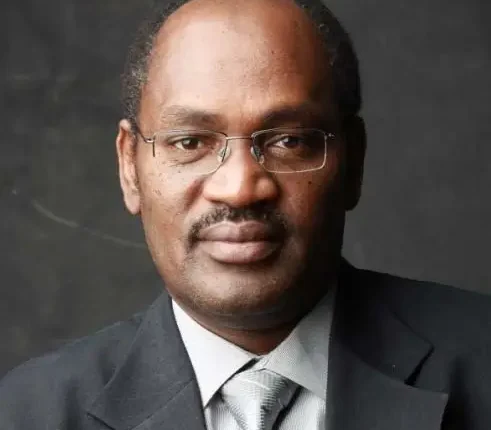
Ramadan Ahmed
In recent years, a growing debate has emerged within Western societies about the future of the modernist model that has shaped global political and economic life since the mid-twentieth century. Criticism no longer comes solely from external observers; it now emerges from within Western universities, think tanks, and political institutions. Amid mounting political turbulence, widening inequality, and declining trust in elites, a question has become increasingly difficult to ignore:
Has Western modernity fulfilled its grand promises? Or has its material success concealed deeper fractures at the moral and social levels? And, if modernity is indeed facing a structural crisis, what viable alternative might emerge?
This article does not proclaim the “end of the West.” Rather, it seeks to examine the internal tensions of the modernist project and to raise a broader civilisational question: if modernity is in crisis, what intellectual framework can address its unresolved dilemmas?
I. Rational Mastery and the Limits of Human Design
Western modernity was built upon extraordinary confidence in reason, science, and institutional planning. Enlightenment thought held that, through rational inquiry and the scientific method, humanity could design a more just, orderly, and efficient society. Bureaucratic administration and technocratic governance were seen as tools of progress.
Yet the twentieth century exposed a profound paradox. The most scientifically advanced and industrially organised societies produced two catastrophic world wars. Administrative systems designed for order and efficiency, in certain contexts, became instruments of mechanised destruction.
This contradiction generated a philosophical dilemma: is reason alone sufficient to guide moral life? Or does human freedom require an ethical reference point that transcends technical calculation and institutional efficiency?
Modernity’s faith in rational mastery proved materially powerful — but morally incomplete.
II. The Dissolution of Shared Meaning
Modernity weakened traditional religious authority, reframed morality as largely individual, and reduced the binding power of local communal structures. The result was an unprecedented expansion of personal autonomy and freedom of thought.
Yet alongside this liberation emerged new pathologies: crises of meaning, social isolation, declining institutional trust, and intense cultural polarisation. Old certainties dissolved, but no equally cohesive moral consensus replaced them.
The modern individual became freer than any previous generation — yet often found himself detached from shared narratives that once anchored identity and belonging.
The question is not whether freedom expanded; it unquestionably did. The question is whether a society can sustain cohesion without a shared moral grammar.
III. Material Abundance and Psychological Deficit
Modernity equated progress with industrial growth, economic expansion, urbanisation, and consumer culture. By these measures, it succeeded spectacularly. Living standards rose, life expectancy increased, and technological advancement transformed daily existence.
But material progress did not automatically produce existential fulfilment.
Critics argue that consumption replaced transcendence; identity became market-driven; and community bonds weakened as economic competition intensified. Wealth grew, yet so too did inequality. Some Western nations simultaneously host the world’s highest concentrations of billionaires and deeply entrenched poverty.
The paradox is stark: modernity achieved material abundance while struggling to produce durable social cohesion and psychological contentment.
IV. Hyper-Individualism and the Fragility of Social Bonds
Modernity’s elevation of individual rights remains one of its most significant achievements. Civil liberties, gender equality, and freedom of expression expanded dramatically.
Yet when individual autonomy becomes an absolute organising principle, social side effects emerge: weakening family structures, declining birth rates, reduced intergenerational solidarity, and the rise of identity politics that fragments rather than unifies.
Rights expanded — but relational obligations often thinned.
A society that prioritises the individual above all must still answer a fundamental question: what sustains the bonds that hold individuals together?
V. Globalisation and the Dislocation of the Middle Class
Under modernity, industrial capitalism, financial integration, and global supply chains accelerated. While globalisation created unprecedented wealth, its gains were unevenly distributed. Financial and technological elites benefited disproportionately, while segments of the working and middle classes experienced deindustrialisation, job insecurity, and the erosion of local communities.
This imbalance fuelled populist movements, declining trust in political institutions, and increasing political volatility across Western democracies.
Economic efficiency, divorced from social stability, proved politically combustible.
VI. The Crisis of Global Credibility
For decades, Western powers championed democracy and human rights as universal principles. Yet selective application and geopolitical double standards weakened the moral authority of this discourse abroad. Support for authoritarian regimes when strategic interests demanded it exposed contradictions between professed ideals and political practice.
Notably, critiques of modernity now flourish within Western intellectual circles themselves — suggesting not external hostility, but internal reassessment.
The Deeper Question
The challenge facing the twenty-first century is not merely economic competition between blocs, nor the rearrangement of geopolitical alliances. It is the search for an integrated intellectual framework capable of addressing questions modernity left unresolved:
What is the proper role of religion in public life?
How can individual freedom coexist with social cohesion?
How can economic justice be pursued without undermining productivity?
How can material progress avoid hollowing out moral and spiritual meaning?
To declare modernity’s collapse would be premature. Its institutional and technological achievements remain formidable. Yet to deny that it faces structural strain — moral, demographic, and political — is increasingly untenable.
Modernity triumphed materially, but it struggled to maintain equilibrium between reason and transcendence, autonomy and community, prosperity and meaning.
A Civilisational Crossroads
The open question is therefore twofold:
Will Western societies generate a renewed modernity — one that corrects its moral imbalances while preserving its scientific and institutional strengths?
Or is the world entering a new civilisational phase in which alternative ethical frameworks, including religiously grounded ones, will re-enter the public sphere with renewed confidence?
For Muslim thinkers in particular, this moment presents both a challenge and an opportunity. If Islamic principles are to be presented as a civilisational alternative, they must be articulated not merely as theological claims, but as coherent responses to the global dilemmas of governance, justice, freedom, and meaning.
The twenty-first century may ultimately be defined not by the collapse of modernity, but by the contest over what comes after its unquestioned dominance.
And that contest will shape the moral architecture of our shared future.
Shortlink: https://sudanhorizon.com/?p=11442