

“Sun Tzu in Khartoum”: When Chinese Military Philosophy Meets the Contemporary Sudanese War (1–2)
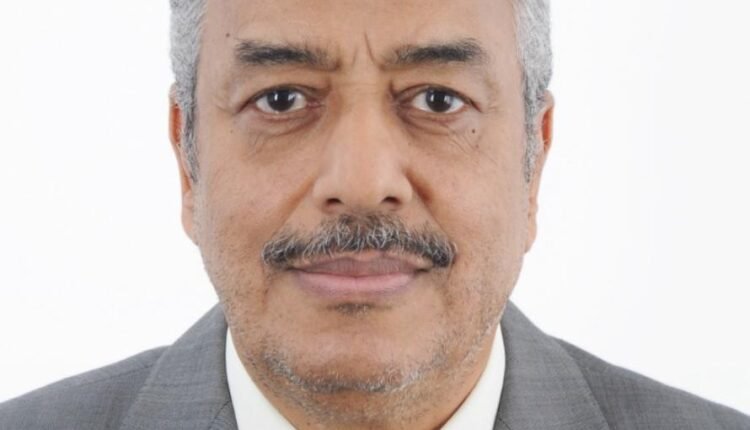
Dr Ismail Sati
This story did not begin in Khartoum or on a battlefield, but in the summer of 1995, inside Building 1715 of the Aramco compound in Dhahran. There, Rob Rice, a Scottish-British friend, handed me a small red-covered book and said it would change the way I viewed war. The book was The Art of War by Sun Tzu. I read it at the time, and then it sank into the quiet recesses of memory, resting for years on a small office shelf—part of a subdued intellectual curiosity rather than a living analytical reference.
But wars—unlike books—do not remain on shelves.
With the outbreak of war in Sudan, and as I followed daily shifts in battles, the fall of cities, and the changing balance of power, the dust of decades seemed to lift from that forgotten volume. In late 2024, following the battle to liberate Khartoum, the book returned to my mind not as a nostalgic recollection, but as an analytical key.
From that moment, I began to read Sudan’s military and political conflict through a different lens—one that searches for the deeper structure of military decisions behind fast-moving events. I returned to the neglected book on the shelf and decided to write.
War Between Military Theory and Sudanese Reality
More than 2,500 years ago, in a region geographically far removed from Sudan, the Chinese general and philosopher Sun Tzu summarised his military thought in a small yet enduring work known as The Art of War. The book was not merely a tactical guide to combat, but a comprehensive philosophy for achieving victory with minimal losses—or, if possible, without fighting at all.
Today, amid the war unfolding in Sudan between the Sudanese Armed Forces led by General Abdel Fattah al-Burhan and the rebel Rapid Support Forces (RSF), the landscape appears almost like a living laboratory for testing the principles of this ancient philosophy.
This article seeks to examine the Sudanese theatre through the lens of The Art of War, attempting to answer the following question: How is General al-Burhan—whether consciously or otherwise—seeking to apply Sun Tzu’s principles not merely to win the war, but to redefine the concept of victory itself within the context of an existential conflict against a militia accused of committing war crimes?
First: Who Was Sun Tzu? A Philosophy Beyond the Battlefield
Before delving into the Sudanese case, it is useful to outline Sun Tzu’s core principles briefly. His philosophy is not based on brute force, but on deception, knowledge, flexibility, and exhausting the enemy without prolonged confrontation. Sun Tzu famously wrote: “The supreme art of war is to subdue the enemy without fighting.”
He identified five fundamental factors for victory:
The moral element (harmony between ruler, army, and people)
Weather
Terrain
The commander (wisdom, sincerity, courage, strictness)
Discipline
He also posed seven well-known evaluative questions regarding victory, including:
Which ruler is more aligned with the moral law?
Which commander is more capable?
Which army is stronger—morally and materially?
Which force is better trained and disciplined?
The answers, one might suggest, require little elaboration.
Second: Do the Seven Criteria of Victory Apply to the Sudanese Army?
In an earlier analysis published by Al Jazeera Net in August 2024, a writer attempted to apply Sun Tzu’s seven criteria to the Sudanese conflict. The conclusions were noteworthy, particularly regarding the Sudanese Armed Forces and their leadership.
1. Moral Legitimacy (Harmony Between Ruler and Ruled)
Here, the Sudanese army appears to hold its strongest card. While documented UN reports accuse the Rapid Support Forces of committing war crimes and crimes against humanity in El Fasher and across Darfur—along with other Sudanese cities and villages, including allegations of mass killings, sexual violence, and ethnic cleansing—the army is portrayed as the defender of the state and its citizens.
This popular alignment grants the leadership substantial moral capital. In Sun Tzu’s terminology, this reflects “the Tao”—the spiritual harmony that compels soldiers to face death without fear.
2. The More Capable Commander
As Commander-in-Chief and Chairman of the Sovereignty Council, General al-Burhan stands at the centre of a severe test. According to Sun Tzu, a commander must embody “wisdom, sincerity, benevolence, courage, and strictness.”
Through his political rhetoric, al-Burhan seeks to project “wisdom” in framing the war narrative, “loyalty” in defending Sudan against “rebellion”, and “courage” both on and off the battlefield. The greater challenge remains balancing military firmness with political magnanimity in order to enable eventual national reconciliation—a matter to be explored separately.
3. The Stronger Army (Morally and Materially)
Despite the shock of the war’s early stages, the army appears to have absorbed the lesson. Sun Tzu wrote: “Each war has its own logic; fixed rules cannot be imposed. Victory comes through flexibility and adaptation.”
The Sudanese Armed Forces seem to have shifted from defending fixed positions to a more flexible, attrition-based strategy.
Third: Practical Applications – How Might al-Burhan Be Reading The Art of War?
1. Deception and Internal Disruption
“All warfare is based on deception,” wrote Sun Tzu. “If the enemy is united, divide them.”
Recent events in North Kordofan—where RSF commander Makki Mohamed al-Tijani reportedly surrendered along with his troops and equipment—may be interpreted within this framework. The Governor of North Kordofan welcomed them, saying: “Better to come late than never.”
This may not be an isolated event but part of a broader strategy aimed at fracturing RSF cohesion by encouraging defections and reintegration—a practical application of dividing the enemy before defeating them.
2. Attrition and Avoidance of Prolonged Urban Warfare
Sun Tzu warned strongly against prolonged wars: “There has never been a case in which a prolonged war benefited a state.”
Analysts suggest that the army adopted an approach reminiscent of the Roman general Fabius Maximus—avoiding direct, decisive confrontation with widely dispersed RSF forces and instead wearing them down through manoeuvre and attrition across extended lines.
Such a strategy demands considerable patience from the commander, particularly amid humanitarian suffering and media pressure. Yet it reflects an awareness that attempting to expel militias from major cities and critical infrastructure by brute force could lead to catastrophic destruction. The objective, as Sun Tzu advised, is to subdue the enemy without fighting—or at least to weaken them fatally through peripheral engagements.
3. Psychological and Political Warfare (Knowledge)
“Know your enemy and know yourself, and you will not be imperilled in a hundred battles.” This remains Sun Tzu’s most cited maxim.
To know the enemy is to expose their weaknesses. In his speeches, al-Burhan consistently frames the adversary as a militia “receiving significant foreign support”, “killing civilians”, and “threatening international interests”. This narrative serves multiple audiences:
Domestically: to remind citizens of the enemy’s nature.
Internationally: to position Sudan’s war within a broader struggle against terrorism or to protect global interests, citing UN reports documenting RSF abuses.
Regionally: to expose states allegedly supporting the militia and to cut off supply lines.
4. Rebuilding Strength (Discipline and Logistics)
Following heavy early losses, the army reportedly rebuilt its military capacity through both internal and external channels. Here appear Sun Tzu’s principles of “foraging on the enemy”—leveraging captured resources—and of discipline, which enable organisational restructuring, the training of volunteer resistance forces, and their integration.
The wise commander, according to Sun Tzu, “does not burden the people with excessive taxation” yet ensures adequate supply lines. The Sudanese government appears to be attempting this delicate balance: broad popular mobilisation without total economic collapse.
To be continued…
Shortlink: https://sudanhorizon.com/?p=11285