

Sudanese Migration to Egypt: How a Catastrophe Turned into an Opportunity
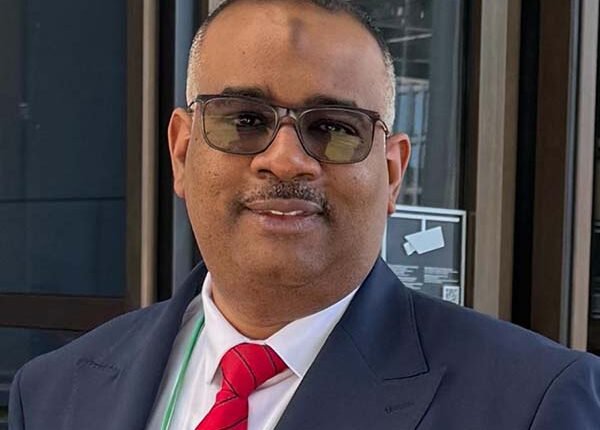
Mohannad Awad Mahmoud
Egypt did not treat the influx of Sudanese who entered the country after the outbreak of war as a sudden burden, but rather as a humanitarian and sovereign test at a turbulent moment. The borders were opened without hesitation. Sudanese entered with complete and incomplete documents alike; even children without papers were included in their mothers’ documents, to safeguard their right to security and livelihood. This was less an administrative decision than an expression of a state mindset that understands the meaning of neighbourhood and the shared history of the Nile, and that possesses a rare capacity to absorb human crises without turning them into bargaining chips or sources of resentment.
This policy is not new to Egypt. In December 1966, following a change in Saudi Arabia’s rules, King Saud bin Abdulaziz sought residence in an Arab country. Gamal Abdel Nasser responded clearly and unequivocally:
“Egypt is a homeland for all Arabs and Muslims.”
King Saud arrived in Cairo on 18 December and was received by Nasser at his home in Manshiyet al-Bakri two days later, before later settling at the Shepherd Hotel. That moment marked an early declaration of the “open Arab door” policy—one that is being renewed today with Sudanese arrivals, but on a broader and deeper economic and social scale.
In the spirit of this legacy, those arriving from Sudan were integrated directly into the heart of Egyptian cities. No camps or tents were set up for them; they were not isolated from society. Instead, they entered rental markets, shops, hospitals, and schools, becoming part of the economic cycle rather than a marginal bloc on its edges.
Although the official number registered with the refugee agency stands at 672,930, a realistic reading based on border movements, spending patterns, and residential spread suggests that the number of Sudanese residing in Egypt exceeds five million. This figure has reshaped demand and consumption, pushing the economy into new trajectories.
The first impact was felt in the real estate market. Rents rose as demand expanded, reactivating a sector that had been suffering clear stagnation. New income flowed to property owners, while maintenance, painting, finishing, furniture, transport, and household appliances sectors all became more active. Thus, displacement was transformed into added value that revitalised an entire sector in the heart of Egyptian cities.
Daily consumption then expanded in unprecedented ways. Every Sudanese family became part of the demand for food, clothing, transport, healthcare, education, and communications. Notably, most of this consumption has been financed through external remittances from the Gulf, Europe, and the United States—foreign currency inflows entering the Egyptian market without draining domestic resources.
This type of spending does not merely reflect in sales activity; it creates a chain of benefits that extends across the economy. Every pound spent becomes profit for a business, which then turns into demand for maintenance, raw materials, or labour, moving money on to workshops, shops, and other sectors. Indirect tax revenues—from value-added tax, service fees, and banking commissions—increase without placing additional burdens on Egyptian citizens. Economists call this the multiplier effect: one dollar spent can turn into three or four dollars circulating within the local economy.
A further phase followed in June 2023, with the regulation requiring entry to be regulated by prior visas or security clearance. This generated a new economic value. Security clearance fees began around $800, then rose to over $2,000 as demand intensified, before fluctuating with circumstances. This generated direct state revenue through consular and security fees and indirect income from agency, office, and ancillary services—translation, authentication, travel, transport, and more. Thus, entry regulation itself became a dual resource: direct through fees, and indirect through surrounding service chains.
As large numbers of Sudanese traders and businesspeople relocated to Egypt, a new wave of enterprises emerged in packaging, food industries, logistics, and distribution. In this context, the role of Premier Company—led by Ms Sheimaa Al-Toudi—became particularly prominent as a trusted gateway for helping Sudanese entrepreneurs enter the Egyptian market legally and safely. The company provided Sudanese firms with detailed feasibility studies, proposed suitable projects, and followed through on the establishment and registration of companies with the Tax Authority, the General Authority for Investment, the Industrial Development Authority, and other government bodies.
Over time, Sheimaa Al-Toudi—by virtue of her experience, the trust she earned, and her role in facilitating investor entry—came to occupy the position of an “honorary economic consul” for a wide segment of Sudanese businesspeople, who found through her a safe path to convert capital into real projects within Egypt. Thanks to her efforts and those of similar institutions, Cairo became a platform for Sudanese production and trade at a time when activity within Sudan had stalled, and supply chains had been cut.
The impact is clearly visible in foreign trade. Trade exchange reached $1.2 billion in 2024, while the period from January to October 2025 recorded $985.2 million—of which $760.2 million were Egyptian exports against $225 million in imports—yielding a surplus of more than half a billion dollars in Egypt’s favour.
This surplus would not have materialised to such an extent had millions of Sudanese not relocated to Egypt and relied on it for essential supplies and the re-export of goods back to their country.
The picture thus comes together in full: the tragedy of war becomes an opportunity; the human mass becomes an economic force; and hospitality becomes added value.
Egypt’s historic “open door” policy returns today with solid economic and social dimensions. In return, Sudanese found a second homeland that offers safety, preserves dignity, and redefines the meaning of fraternity when geography merges with history, and hardship with opportunity.
In all of this, one truth remains:
Egypt is a country of a wide heart, wide capacity, and great generosity—its love is not measured; it is lived.
Shortlink: https://sudanhorizon.com/?p=11131