

Sudan Through the Eyes of Its Enemies
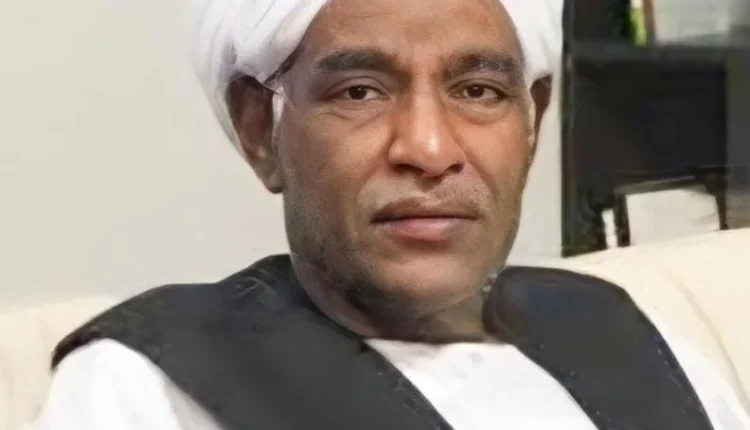
Mahjoub Fadl Badri
Paul Craig, Assistant Secretary of the US Treasury during the administration of former US President Ronald Reagan, wrote an article entitled “The Hidden American Policy: An Alliance of Ideology and Money in the Destruction of States… The Conspiracy to Destroy Sudan!!” In it, he presented a study published by the Washington-based Institute of Peace in late 1992, which warned of Sudan’s efforts to move into the ranks of oil-exporting countries, with production that could reach up to one million barrels per day.
The study stated that Sudan, under an Islamic system of governance, would—if it acquired economic capacity—pose a potential threat to the political balance that safeguards American interests in the region. This, it argued, was a source of concern. The study focused on the necessity of exploiting the regime’s radical Islamic orientation in order to isolate and weaken Sudan.
The author says that the reason for American concern over economic development in a poor country thousands of miles away lies in the fact that this state—deemed in need of “taming”—occupies a strategic position between Arabised Africa in the north and Black Africa in the south. Since ancient times, the country has sought to export its various revolutions to the regional neighbourhood: from the era of the ancient Pharaohs, when its cavalry battered the gates of Egypt as far as Rafah; to the Mahdist revolution, which dispatched armies to Egypt and Ethiopia; and up to the recent past, when Washington’s close allies in Egypt and the Gulf sensed danger from the revolutionary tide rising in Khartoum. It is a country of ambition, located at the decisive religious fault line between Muslim North Africa and Christian and animist Africa to the south. It is an inevitable gateway for both religions northwards and southwards, and a major magnet for tribes from West and East Africa that have long adopted it as an alternative homeland. This made it an important corridor for Islamisation and Arabisation in Africa—hence its perceived danger in long-term geopolitical calculations.
Accordingly, it was hardly surprising that this study was followed by the adoption of a more stringent policy aimed at bottling the genie before it became impossible to control. American administrations grew even more alarmed when Sudan actually achieved economic growth rates that heightened US concern: in one year, GDP growth reached 11 per cent—outperforming even China. As a result, US policy across successive administrations lay in wait for opportunities to inflict economic and political damage on Sudan.
Economic sanctions—renewed annually—were imposed starting in 1993, subjecting the country to some of the harshest forms of economic pressure, aspects of which were often astonishing. The author notes that it was striking how the US Treasury Secretariat went into far greater detail in explaining the scope of financial sanctions on Sudan than it did for any other country, including Iran itself.
At the same time, the US administration pushed towards ending the civil war between the Christian south and the Muslim north through a popular referendum that would result in the secession of the south—where most of the oil fields are located. Simultaneously, its crafty fingers quietly fanned the flames of another war in Darfur, a region with a largely non-Arab population, composed of ethnic groups some of which had migrated from West and Central Africa. Severing the south with its oil, and igniting an alternative war this time within the more homogeneous Muslim core of the country, constituted the fallback plan of the neoconservatives. To those familiar with the inner workings of the US administration, it was clear that the ultimate objective was to strike Sudan economically and inflict structural damage that would prevent it from ever rising again.
American policy succeeded in its aims. GDP growth fell to below 3 per cent, the local currency weakened severely, foreign investment fled, and living conditions became persistently difficult.
US economic sanctions halted the import of modern medical equipment, devastated the low-cost railway transport sector that benefited small producers, forced higher and technical education out of step with technological development, and obstructed energy projects. This policy had nothing to do with Sudan’s system of governance; the aim was to destroy the state itself and permanently shackle it.
After the secession of the oil-rich south, gold became Sudan’s primary source of foreign currency. This was unsatisfactory to the hawks in the US administration, who wanted the country fully brought to its knees. Their calculations led them to enlist certain organisations and individuals with dubious connections to loudly claim that gold was being used to fuel the civil war.
This is merely a sample of American policy in Africa and the Middle East—a policy that can only be described as unethical. US administrations have offered the world nothing but more examples of this devious, inhumane approach, which destroys the lives of ordinary people who bear no guilt, in pursuit of foolish hidden objectives that have little to do with the interests of most Americans. End.
Thus, it becomes clear that the “MBZ mini-state” is playing a double game: in addition to its expansionist ambitions, it is also acting as an agent for its masters.
They plot, and God plots—and God is the best of plotters.
Shortlink: https://sudanhorizon.com/?p=10262