

Sudan: The Absence of Justice – Rampant Corruption: A Commentary on Heba Mahmoud’s Article (Part 2 of 2)
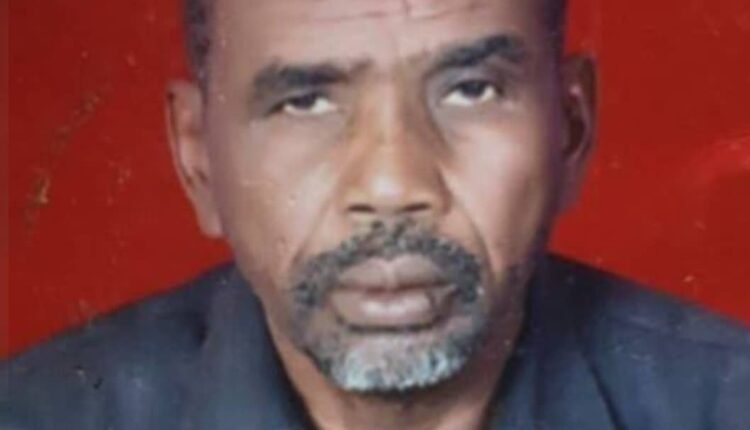
Ali Ahmed Daqash
On Thursday, May 14, 2026, Sudanhorizon published the third and final part of a series of articles by Professor Heba Mahmoud Sadiq Farid, an expert in public policy and strategic planning, on:
Social Justice: The Missing Obligation – The Path to Peace and Reconstruction.
I was impressed by the articles and commented on the first one, but my comments were mainly limited to the definition of terms and the author’s documentation. I stated that, following the methodology of hadith scholars in verifying narrators, Professor Heba is a trusted expert whose opinion carries significant weight.
Through these three articles, Heba sought to address the question of social justice in Sudan, starting from a fundamental premise: that Sudan’s crisis is not merely a war or a passing political conflict, but rather a deep structural crisis linked to the very nature of the Sudanese state and the foundations upon which power, wealth, development, and social relations have been managed since the establishment of the modern state.
In the first part, she sought to establish the concept of social justice as a necessary prerequisite for rebuilding the state and achieving peace. In the second part, she addressed the practical methods for translating justice into public policies, plans, institutions, and implementation mechanisms. According to her, this is directly linked to the nature of the public policies adopted by the state and its capacity to redistribute opportunities and resources equitably.
She stated that policies supporting social justice include, for example, adopting progressive tax systems that reduce economic disparities, expanding spending on education, health, and social protection, ensuring the equitable distribution of services and infrastructure across regions, and implementing policies for financial inclusion, financing, employment, and the empowerment of youth, women, and economically and socially marginalized groups. These policies also include enhancing transparency and accountability, and supporting community participation in decision-making to build a more inclusive and equitable development model.
In her view, the more public policies are linked to the actual needs of citizens and aimed at reducing social and geographical gaps, the more capable the state becomes of achieving stability and strengthening national cohesion. Heba presented social justice as a comprehensive and multidimensional concept that transcends the narrow confines of resource redistribution or economic solutions, encompassing political, developmental, cultural, and spatial justice, along with equitable access to knowledge, opportunities, and basic services.
Through her approach, Heba argues that the transition from “justice as an idea” to “justice as a practice” remains contingent upon understanding the structural challenges that have historically hindered reform efforts and contributed to the perpetuation of the same imbalances, even during periods marked by reformist slogans or serious attempts at change.
In short, the three articles aimed to offer a critical reading that fosters a deeper understanding of the roots of the crisis and opens the door to considering potential solutions. The third and final part focused on presenting the structural challenges and obstacles that prevent the establishment of a more equitable governance model. Six of these challenges were identified:
Challenges of the planning gap (criticizing the state’s planning approach);
Challenges of political and social culture and the perpetuation of exclusion (manifested in discussions of historical privileges – the 1956 state – and marginalization);
Challenges of weak institutional efficiency and effectiveness.
(The absence of parliamentary oversight and the prevailing focus on winning the war exacerbated this.)
Challenges of corruption and the undermining of the justice system (The article presented a broader definition of corruption, not limited to the squandering of public funds and harming development, but also encompassing the undermining of the principle of justice and the distribution of resources according to networks of influence and interests, not according to merit.)
Challenges of state centralization and developmental imbalance (The centralized control of power is a driving force behind many protests and rebellions.)
Challenges of the fragility of the social contract
When I finished reading the main ideas conveyed in the articles, I felt satisfied that they covered all aspects of the topic and that they perfectly expressed my own views. Had I sat down to write about the subject, I wouldn’t have been able to articulate it as clearly as the writer did. However, I was overcome with mixed feelings. On the one hand, I feel that if those in positions of power in the Sudanese state read them carefully, they would find in them what could be translated into practical programs that contribute to answering the question of justice. On the other hand, I felt fear and apprehension—fear that the ideas would be trivialized and distorted when attempting to translate them into practical programs, as the decision-maker might stray far from the intended goals. In recent days, the Chairman of the Sovereignty Council issued a decree appointing Police Lieutenant General Abdeen Al-Tahir as head of the Integrity and Transparency Commission. This decision, in essence, aims to combat corruption, one of the challenges raised in the third part of Professor Heba ‘s articles. However, despite its importance, the decision faces concerns that it will be reduced to mere formalities without offering genuine solutions. We await the Integrity and Transparency Commission’s presentation of its vision for addressing corruption and the imbalance of social justice. The Sudanese people will respond strongly to this vision, as evidenced by the increased discussion about corruption and the necessity of combating it to achieve justice.
We expect the Commission to convince the public that it will seriously pursue integrity and probity in public performance. This requires adherence to the three pillars proposed by Socrates:
Rationality (addressing facts and evidence with precise scientific methodology);
Credibility (ensuring the Commission is sincere in its endeavors); and
Emotion (moving the Sudanese people’s feelings to engage with the Commission’s proposals, so that every individual becomes a member of this body, monitoring and offering feedback). Once again, I commend the article and invite thinkers and specialists to contribute to translating the ideas into practical programs.
Shortlink: https://sudanhorizon.com/?p=14008