

Sudan: Disassembly and Reassembly!!
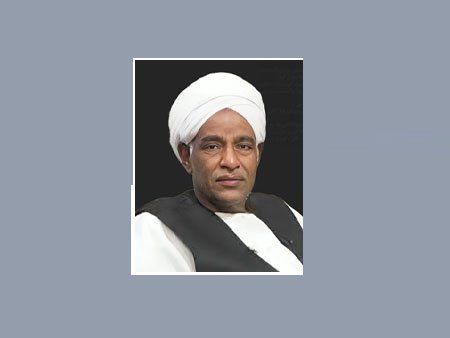
Mahjoub Fadl Badri
As we follow the news of our country—through the media and social platforms—we are overwhelmed by confusion: conflicting reports, divergent opinions, and the theatrics of self-styled analysts.
My old comrade-in-arms said to me, as we sipped our coffee:
“Sudan is fortunate that most of its citizens are either soldiers or sons of soldiers—whether in the army, police, intelligence, Popular Defence, community policing, national service, or volunteer forces. All of them have received basic rifle training, beginning with the very first lesson: disassembly and reassembly.
At first, a recruit may find it strange when the instructor opens the lesson by saying: ‘Ground suitable for formation, tarpaulins laid out, rifles according to numbers.’ Any questions?
No one asks. Some may even quietly scoff at what seems like simplicity. But if we apply these three elements to our country, we find something quite revealing:
‘Ground suitable for formation’ = Sudan itself
‘Tarpaulins’ = preparation for agriculture
‘Rifles’ = tools of industry and development
‘Numbers’ = all citizens
In essence, Sudan’s land urgently needs the hands of its people—to build it through agriculture and industry, with discipline and organisation akin to the military.”
I told him: “That’s a beautiful idea, but I doubt the designers of those lessons ever imagined it that way.”
He replied: “There is a difference between artistic interpretation and direct instruction—though the purpose may be the same. Let me give you another example from rifle training: in disassembly and reassembly, we learn both sequence and reverse sequence. We dismantle parts in order, lay them out carefully, and then reassemble them in reverse order.
Now apply this to post-war reconstruction. Instead of rebuilding cities with their towering structures—costly and slow to yield returns—we should begin with the countryside. Villages are the foundation from which cities emerged, and today our villages lie in ruin, even as they have absorbed displaced populations with generosity and simplicity.
In the countryside, we already have agriculture—both crop and livestock—which requires relatively modest investment to contribute to food security and ultimately self-sufficiency. By introducing modern techniques, productivity can multiply: yields per acre can increase dramatically, livestock numbers can grow through improved breeding and artificial insemination, and farmers can be trained in modern methods to boost dairy, meat, and poultry production.
We can also promote fish farming and introduce simple equipment for milking, storage, and slaughterhouses—maximising the value of animal resources, including by-products such as hides, horns, and even waste, which can often exceed the value of the meat itself. All this can be achieved without massive capital-intensive projects, through the establishment of numerous small-scale farms.”
He continued, growing more animated:
“The war has dismantled the cities. To rebuild them, we must start from the countryside. What we spend on constructing a single multi-storey building could finance a modern farm—creating jobs, generating income, and meeting local food needs: meat, milk, poultry, eggs, and fish—while increasing the added value of our exports.”
I reflected on his words, my thoughts drifting to the “Zadna” projects—once a tangible dream on the ground, later disrupted for trivial reasons, and now attempting to rise again, though still threatened by the storms of politics.
I said to him: “Your coffee has gone cold.”
He replied: “Yes, it’s cold—but all the ingredients are still there. Nothing is lost. I can heat it again, or drink it as it is. Coffee is still coffee.”
He took a sip of the cold coffee and went on:
“Back to disassembly and reassembly. The disassembly has already happened—that’s a fact. But reassembly requires proper sequencing.
Take, for instance, rebuilding the Presidential Palace and federal ministries. Their importance is largely symbolic. Governance has continued from Port Sudan and could do so for another two or three years.
Did you know that in Germany, there are still ruins from the Second World War that were never rebuilt? Instead, they focused on rural development and building smaller cities with populations under one million.
Our real problem lies in people’s livelihoods—in the madness of prices and scarcity. Consider this example: a ten-acre farm with ten head of cattle, ten goats, ten sheep, a poultry unit, a fish pond, and a small dairy processing facility. The total cost would not exceed twenty thousand dollars—roughly the cost of maintaining a single building in Khartoum.
Yet this model could generate income, create employment, and sustain communities. If we continue concentrating development in cities, we will merely reproduce the same cycle: urban overcrowding, rural neglect, and economic imbalance.”
He finished his coffee in one gulp. Fearing he might continue the full curriculum of rifle lessons, I said:
“All of this is well and good—but we need a government capable of implementing such a vision. The transitional period will likely continue for several years before elections can be held.”
His face lit up:
“The current situation is actually the best opportunity to break the vicious cycle we’ve been trapped in: party government, then military coup, then popular uprising, then transitional period—only to return again to party government, and so on.”
I went to my bookshelf and picked out a volume titled Sudan: From Repeated Failure to Real Change by Lt. Gen. (Police) Mahjoub Hassan Saad. I handed it to him and said:
“You’ll find in this book ideas that will enrich your vision for restoring the nation and enabling it to rebuild itself through the efforts of its own people.”
We agreed to meet again in a week, after he had finished reading and reflecting on it.
Before he left, I reminded him of the verse written clearly above the bookshelf:
“O you who borrow my book,
know that lending books is a disgrace.
For my beloved in this world is my book—
have you ever seen a beloved lent away?”
He smiled.
“Any questions?”
Shortlink: https://sudanhorizon.com/?p=12539