

Sudan After the War: Towards a New National Compact
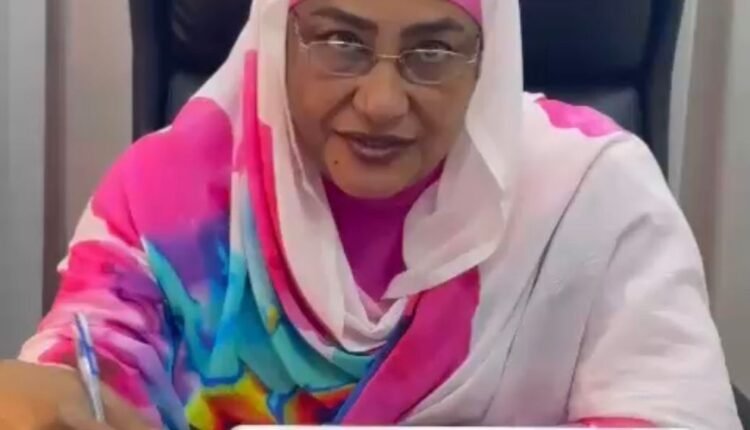
Huwaida Shabbo
There are moments in the history of nations when profound existential questions become more pressing than the gunfire on the battlefield. Sudan today is living through one such moment.
Since April 2023, Sudan has ceased to be merely a state in crisis; it has become an open arena for questions long deferred by its people: Who are we? On what foundations should our state be built? And can a society of such rich diversity live under a social contract that safeguards the dignity of all?
These are not intellectual luxuries in times of war. They are precisely the questions that thoughtful minds must engage with as they begin to shape the contours of what comes next. States that have emerged from the devastation of war to build stable systems did not merely silence their guns; they committed themselves to crafting a deep national vision, drawing upon the most enduring human wisdom and the most authentic moral values. Sudan will not be an exception—if it seeks a future worthy of itself.
Roots of the Crisis: When Justice Is Absent
To understand Sudan’s present condition, one must confront its history with honesty and courage—without embellishment or denial.
Since independence in 1956, the country has scarcely experienced genuine stability. Coups have alternated with fragile civilian rule; civil wars have spread across the South, West, East, and North; and state institutions have remained captive to narrow elites who have managed power and wealth largely in isolation from popular will. This was not accidental; at times, it was systematic and deliberate.
In The Republic, Plato warns that a state which loses justice as a foundational principle does not merely become corrupt—it becomes an organised mechanism serving the interests of a minority at the expense of the majority. The decline follows a clear logic: when loyalty replaces merit, and force replaces legitimacy, society inevitably descends into disorder. This pattern has recurred in Sudan for decades.
Aristotle, in Politics, distinguishes between two indispensable forms of justice: distributive justice, concerned with the fair allocation of wealth and positions, and corrective justice, which addresses wrongdoing and harm. In Sudan, both have been absent. Wealth has been concentrated in Khartoum and among elites, while impunity has become a deeply embedded structural feature.
The Social Contract: Where Rousseau Meets Shura
In the eighteenth century, Rousseau articulated the concept of the “social contract,” transforming political thought: legitimacy does not derive from lineage or force, but from the consent of society and its collective will. When authority betrays that will, it loses its legitimacy, and the people reclaim their right to sovereignty.
What is striking is that this concept—often seen as a product of the European Enlightenment—has deeper antecedents within Islamic tradition. The Qur’anic principle of shura—“their affairs are conducted by mutual consultation” (42:38)—is not merely a procedural mechanism, but a foundational principle of governance, obliging rulers to involve society in decision-making and establishing the community as the true source of legitimacy.
The thinker Dr Fahmi Huwaidi goes further, arguing that the state in Islam is not inherently theocratic, but a civil state founded on equal citizenship, free from sectarian exclusion or ethnic domination. John Locke complements this perspective by defining the state’s primary role as protecting natural rights—life, liberty, and security. When the state fails in this duty, or becomes itself a source of threat, it forfeits its justification.
This aligns with the higher objectives of Islamic law (maqasid al-shari‘a), articulated by al-Ghazali and developed by al-Shatibi: the preservation of life, intellect, lineage, property, and faith—together forming a comprehensive vision of a state grounded in welfare, protection, and justice.
In practical Sudanese terms, this means one thing: any future national compact must bear the signature of all components of Sudanese society, not emerge from closed negotiations among limited elites. It must genuinely include women, youth, marginalised regions, tribal communities, diverse political forces, and civil society. True consultation and genuine collective will both demand inclusivity without exception.
Lessons from Sudan’s Wounds: Agreements Born to Fail
Sudan’s recent history offers ample evidence that partial settlements do not produce lasting peace; rather, they often sow the seeds of future conflict.
The 1977 Reconciliation: The Illusion of Completion
When President Nimeiri announced national reconciliation, it appeared at first as a historic moment of consensus. In reality, it amounted to a redistribution of power among existing elites, without altering the underlying structures that had generated the crisis. Marginalised regions remained neglected, democratic institutions remained superficial, and decision-making stayed confined to closed circles. The result was a brief illusion of stability, followed by renewed crisis, culminating in April 1985.
As Rousseau warned, the general will cannot be claimed—it must be expressed through genuine participation. Otherwise, reconciliation becomes merely a tool to legitimise the continuation of elite dominance.
Peace with the South: When Agreements Are Not Enough
From Addis Ababa (1972) to Naivasha (2005), agreements focused on sharing power and wealth between the two parties, without addressing the deeper grievances embedded in the South’s collective memory. The sudden death of John Garang exposed the fragility of an agreement lacking a shared national spirit, reducing it to a procedural path towards secession.
The lesson is profound: sustainable peace requires more than arrangements—it requires a national vision in which all citizens see themselves as equal stakeholders. Ibn Khaldun captured this in his concept of asabiyyah (social cohesion): states endure only when their people feel genuine belonging, not mere legal compliance.
Darfur: The Incomplete Equation of Peace
From Abuja (2006) to Juba (2020), the pattern persisted: elite-level settlements without structural transformation. Hundreds of thousands perished; millions remain displaced; and accountability has been absent. This systematic impunity is not merely a legal issue—it is a festering wound that undermines any attempt at unity.
Beyond the Illusion of Superficial Reconciliation
Easy settlements often tempt war-weary political actors: ceasefires, ministerial quotas, and symbolic reconciliations. Yet such arrangements resemble painkillers that mask symptoms without curing the disease—often worsening it.
Transitional justice is not a luxury; it is a prerequisite for lasting peace. It entails three inseparable dimensions: truth without suppression, accountability for major crimes regardless of status, and meaningful redress for victims.
“Make peace between them with justice and act equitably; indeed, God loves those who are just” (49:9). Genuine reconciliation must be rooted in justice, not achieved at its expense.
John Rawls offers a powerful test: a just society is one whose rules every rational person would accept, regardless of their position within it. Would any Sudanese accept the current system without knowing whether they belonged to the centre or the periphery? The honest answer reveals the gap between reality and justice.
The Post-War Equation: Towards a Comprehensive Vision
Successful post-conflict transitions—from South Africa to Rwanda—share key elements:
- A genuine and comprehensive cessation of hostilities.
- An inclusive foundational process involving all sectors of society.
- Comprehensive transitional justice mechanisms.
- Institutional reconstruction—professional armed forces, independent judiciary, free media, and education rooted in citizenship.
- Balanced development and reconstruction, recognising that social and psychological rebuilding precedes physical reconstruction.
The Deeper Challenge: Freedom and Diversity in One State
A central philosophical question emerges: how can a state protect individual rights without erasing diversity?
Locke answers that the state must safeguard freedoms, not suppress them. Aristotle advocates moderation—the successful state manages complexity rather than denying it.
Sudan must embrace its diversity as a source of strength, not division. This requires a profound cultural shift—from exclusion to inclusion, from domination to consensus.
At the Crossroads
Sudan stands before two paths:
One leads to continued fragmentation—familiar, cyclical, and destructive.
The other demands a foundational transformation—difficult, but enduring.
As Ibn Khaldun warned, states that lose internal cohesion collapse from within before falling from external pressures.
Building cohesion in Sudan today does not mean returning to tribalism, but forging a unifying national identity that transcends—without erasing—diversity.
Sudan’s Appointment with History
Sudan’s crisis is not one of ideas, but of foundations, vision, and collective will. Previous agreements failed because they were built on political bargains rather than justice and inclusion.
The true challenge is not ending the war—but building the peace.
Peace will not be built by arms, but by justice, wisdom, and collective resolve. And that remains the enduring message of all who have struggled for a better Sudan—past and present alike.
Shortlink: https://sudanhorizon.com/?p=12301