

Seven Questions on Sudan, Diplomacy, and Trump for Cameron Hudson
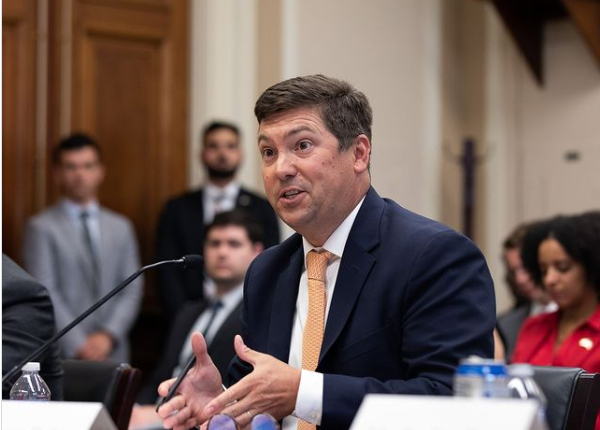
“I see Trump pushing a ceasefire and calling it peace, but not actually addressing Sudan’s many complicated internal fissures that would enable actual long-term peace.”
Alex Thurston
Dec 04, 2025
With U.S. President Donald Trump pledging that his administration will push for a ceasefire in Sudan, I asked Cameron Hudson – a longtime Sudan watcher based in Washington – some questions about the diplomatic and political developments underway. Hudson has held positions at the Center for Strategic and International Studies, the Atlantic Council, and the United States Holocaust Memorial Museum. He also served in several capacities in the U.S. government, including as a CIA analyst, Director for African Affairs at the National Security Council (during the second term of President George W. Bush), and as Chief of Staff in the office of Special Envoy to Sudan (during the first term of President Barack Obama). In the interview that follows, he shares his thoughts on some of the thorniest issues surrounding the negotiations over Sudan’s future.
AT: The Quad, as readers may be aware, comprises the United States, Egypt, Saudi Arabia, and the United Arab Emirates (UAE), and is a structure for attempting to broker a negotiated settlement to Sudan’s conflict. What do you see as the key dynamics – and fault lines – within the Quad?
CH: The Quad emerged from an acknowledgement by the United States that powerful regional states were driving much of the war in Sudan and that their competition for influence was destabilizing to the region and undermining any chance for a peace process to take hold. There was some rumor that the Quad originated because Egypt and/or Saudi Arabia quietly asked Washington to offer its good offices to help them and the parties pursue a ceasefire and larger mediated peace settlement. Inside the Quad, Egypt and Saudi Arabia continue to support a victory for the Sudan Armed Forces (SAF) over the Rapid Support Forces (RSF) militia, which is being supported exclusively by the United Arab Emirates.
All three states agree, at least rhetorically, that the former Islamist regime of Omar al-Bashir, Sudan’s longtime dictator who supported terror plots across the region for much of his rule, should be prevented from returning to power. However, it is the UAE more than the others that sees the return of Islamists as a direct threat to their own national security and has gone to the greatest lengths to prevent it through their overwhelming support to the RSF. Both Egypt and Saudi Arabia appear to take a more nuanced view of Sudan’s Islamists, acknowledging their negative history, but also seeing them as controllable under a military or strong civilian ruler, perhaps akin to Egypt’s own power structure.
While the Quad has publicly said that neither belligerent should play an active role in Sudan’s post-war governance, it appears that Egypt and Saudi Arabia see the SAF as a bridge to any transition and don’t make secret the national security threats they see posed by a Sudan under RSF rule. Egypt and Saudi Arabia both share a border with Sudan, the former on land and the latter on the Red Sea, and view the civilian displacements that accompany RSF territorial takeovers as destabilizing to their internal politics and economies. They similarly fear the destabilizing cross-border effects from RSF illicit money-making, from human trafficking to drug and weapons smuggling, that the believe will accompany RSF rule; not to mention the risks of how UAE could choose to instrumentalize a Sudanese client state in pursuit of its own regional ambitions. For these reasons, Washington stands alone as an arbiter more so between the Quad members than between Sudan’s belligerents.
AT: General Abdel Fattah al-Burhan, head of the Sudanese Armed Forces (SAF), recently rejected the Quad’s ceasefire proposal, specifically calling out the UAE for its backing of the other main armed actor in Sudan’s civil war, the Rapid Support Forces (RSF). Al-Burhan and his supporters also criticized President Donald Trump’s Africa advisor, Massad Boulos. Do al-Burhan’s charges that the Quad is biased have merit?
CH: It should be noted that one of Sudan’s most tried and true tactics in its outside negotiations is declaring a bias among international mediators as part of its own effort to gain an upper hand and avoid making any painful concessions. Going back decades, it has used the bias charge to declare persona non grata, among others, UN Resident Representatives from Jan Pronk (2006) to Volker Perthes (2023). Similarly, Sudan declared Kenyan President William Ruto biased when he attempted to lead an IGAD effort to mediate a ceasefire at the start of the war, asserting his closeness to both the RSF and UAE. Former AU Commission Chairperson, Moussa Faki, was also declared biased, owing to his Chadian nationality and close ties to the UAE, and was prevented from establishing a mediation role for the African Union.
Despite this history, Sudan’s charges of bias by the Quad are not without some basis. First, it is important to understand that from the perspective of the SAF, the UAE is an active party to the conflict. As the chief sponsor of the RSF, the army believes that there would be no war if not for the UAE. As such, it rejects the notion that the UAE can concurrently serve as an active belligerent and a neutral mediator as part of the Quad, hence the bias charge. Further underscoring this claim are the visuals of Massad Boulos recently traveling to Abu Dhabi and presenting a unified front with the UAE, along with several key UAE demands making it into Quad documents. The call to reject any role for the military in a future government, along with accusations of Muslim Brotherhood influence over the military, reflect in particular UAE concerns. The United States has recently begun to echo many of these concerns around the potential role of Islamists in Sudan and in September sanctioned Finance Minister Gebreil Ibrahim, along with an Islamist brigade fighting alongside the SAF. This sanction was rumored to have come, in part, from UAE urging. This is in large part why Burhan lobbied Saudi Crown Prince bin Salman to request Trump’s personal involvement in mediating, rather than working through the Quad, because it believes it will get a less-biased outcome that is more in the Army’s favor.
AT: Do you think there is a different ceasefire package that al-Burhan might accept? Or is he committed to the military defeat of the RSF?
CH: Gen. Burhan appears to have no intention to negotiate directly with the RSF, for both tactical as well as political reasons. Even if he was inclined to negotiate with the RSF because of recent tactical losses, Burhan would invite popular disapproval, not to mention a potential violent backlash from more hardline and Islamists elements within his ranks that he cannot risk. Burhan has recently suggested that if the RSF would withdraw from the cities and territories it controls, gather in disarmament points and demobilize its fighters—sending the majority back to their country of origin—that this would serve as the basis for a process that would see the remaining RSF fighters either demobilized or integrated into the army. In his view, direct political talks under the current dispensation of forces, as the Quad is advocating for, would only elevate and legitimize the RSF and open the door for them to carve out a post-war political identity for themselves. This is anathema to the army’s core belief that the RSF can only be disbanded for the war to end and for the country to begin an eventual reconstruction and transition process. However, the likelihood of the SAF’s maximalist position being accepted by the RSF, and their UAE backers, remains quite small.
Rather, the SAF seem to privately recognize that a precursor to any effort to demobilize the RSF first requires some sort of negotiated settlement between the army and the UAE. Those discussions, which General Burhan has asked US officials repeatedly to organize and which he finally succeeded in getting Saudi Crown Prince Mohamed bin Salman to raise with President Trump, would likely include provisions for ending Abu Dhabi’s external support, demobilizing, and reintegrating the RSF into the army, and agreeing to some form of financial reparations for the destruction caused. In exchange, the army could be amenable to the UAE obtaining rights to operate Sudan’s main port along with mineral and agricultural concessions that Abu Dhabi has long sought. However, given the extreme war of words currently being waged by both UAE and the SAF, any negotiation between them would need to happen away from the media and offer both sides a face-saving way to de-escalate. This is likely the role that Trump was asked to play, but has not yet pursued.
AT: In October, Amgad Fareid Eltayeb argued in an op-ed for Al Jazeera that “A particularly insidious practice within the Blob [i.e., the Washington, DC foreign policy establishment] is the invocation of moral and rhetorical equivalence, portraying the Rapid Support Forces (RSF) and the Sudanese armed forces (SAF) as comparable adversaries.” Do you agree with his characterization of the discourse in Washington?
CH: Much of Washington regards this war with a lack of nuance. Even those of us in the self-described ‘Sudan-watcher’ community come to this conflict with our own biases, most of which were formed by our respective experiences dealing with the Government of Sudan under former dictator Omar al-Bashir for over 20 years. Many of those with that long relationship with Sudan continue to view the SAF as the principal organ of state corruption, repression, and Islamism, though I believe that the Army’s role has always been more complicated than that and has certainly evolved since Bashir was expelled in 2019. However, Washington’s own hardliners argue that the RSF is simply a creation of the SAF and therefore the Army shares in the responsibility for the sins of the monster it created. Similarly, they point to the 2021 coup against the civilian transitional government, carried out jointly by the SAF and the RSF, which set in motion a series of disputes between them leading to the present conflict. For that reason, Washington under both Biden and Trump have tended to frame the parties as equally culpable for the war and its many transgressions.
But this line of analysis has always struck me as reductive. It’s no wonder that General Burhan speaks often about maintaining the Army’s unity and that the SAF’s break-up and palace coup warnings are a near constant source of speculation. The SAF is a complicated entity and is filled with many competing archetypes—from hardliners and committed Islamists to professional soldiers carrying out a constitutional mandate. The Army’s fighting coalition adds to its complexity as it includes Darfuri rebels, Islamist brigades with parallel command structures, and newly formed citizen soldier units. Painting the SAF with broad strokes is lazy analysis. Importantly, there are no reliable or quantifiable measures of the political and ideological divides within the army or the balance of power between these various internal camps. Those who contend, many with total certainty, that the Army is entirely controlled by Islamist and hardline forces are either just speculating or are driven by their own Bashir-era PTSD.
But to be clear, both sides have committed horrific abuses in the war, including war crimes. But here too, I tend to take a more nuanced view of those transgressions and, importantly, the public’s view of each sides’ conduct. In my view, this is where the comparisons end. Several attempts to quantify the levels of violence by both sides tend to attribute somewhere around two-thirds of violence against civilians to the RSF, with the SAF responsible for around one-fifth of civilian casualties. In my view, that’s hardly comparable. Similarly, both sides are accused of using food as a weapon of war and denying access to humanitarian aid. This is all true, but when you look at areas with the most severe humanitarian indicators and access constraints, those areas tend to be more under RSF control. For sure, the SAF is also responsible for denying access to RSF controlled areas, a tactic it has used repeatedly going back to the North-South civil war, but unlike the army, the RSF has systematically targeted hospitals, humanitarian convoys, and various relief operations to worsen an already dire humanitarian picture.
In addition, when arguing culpability—from a political, not legal perspective—I think you have to examine the nature of the crimes being committed, not only their scale. The army has committed reprisal killings, mass detentions and even targeted first responders like the country’s Emergency Response Rooms, but the majority of the Army’s offenses come from the indiscriminate targeting of civilian areas with armed drones. That the RSF has repeatedly sought cover inside these civilian areas is no excuse for the civilian deaths, but it is an explanation. On the other side, Sudan is replete with stories and videos of RSF soldiers carrying out massacres, torture, rapes, sexual enslavement, ethnic cleansing, and kidnapping on a massive retail scale at every single area under its control. Their crimes go house by house, street by street, and person by person. So much so that the Biden Administration termed the RSF’s actions alone genocide.
Lastly, when assigning responsibility, I think we have to look at the reaction of the Sudanese themselves to the back-and-forth of territorial control throughout the war and listen to their stories about life under both RSF and SAF control. Once again, I don’t think you can credibly argue that they are comparable. My sense is that most average Sudanese see the army as the only entity at all interested in their protection, notwithstanding the abuses it has committed against perceived opponents. One need only witness the scenes of jubilation of average Sudanese pouring into the streets, sometimes for the first time in months, when the SAF has succeeded in liberating their towns from RSF control. The Sudanese have voted with their feet and we should not be blind to their preferences, even if only temporary. Again, I suspect most Sudanese do not wish to live under military rule for one day longer than necessary, but if given the choice today between the SAF and the RSF, their choice seems clear and our policies should in some way acknowledge that.
CH: It has actually seemed to me that official Washington (meaning, foreign policy professionals inside and outside government) largely display a preference, sometimes stated and sometimes unstated but nevertheless discernible, for the SAF and al-Burhan over the RSF. On the one hand, the outgoing administration of President Joe Biden sanctioned both al-Burhan and the RSF’s leader Mohammad Hamdan Dagalo “Hemedti.” On the other hand, then-Special Envoy Tom Perriello met al-Burhan when visiting Sudan last November. Do you think the Biden administration would have preferred al-Burhan over Hemedti? What about the DC foreign policy establishment more broadly?
CH: I think it is hard to argue that Washington has a preference for either side. I actually think that this is what has made Washington’s diplomacy so ineffective since the start of the war. Because we view both sides as bad actors, we have not been capable of driving toward a clear outcome. While there is no question that neither Democrats nor Republicans can stomach the prospect of an RSF-led Sudan, no one can take seriously the RSF’s rhetoric around fighting Islamists, restoring civilian rule, or even agreeing to a ceasefire. Their crimes are too many, their tactics too brutal, and their history too well-known for anyone in Washington to be able to accept an RSF victory.
Despite that, the SAF are hard to love. Whether because of their own history and reputation for Islamism and abuse, their alleged use of chemical weapons and other war crimes in the current conflict, or their on-again, off-again dalliances with malign competitors like Russia and Iran, Washington has yet to find a way or a reason to work with the SAF to end this conflict. Here too, I think history is a burden. For more than thirty years, U.S. officials, advocates, and media have seen Sudan, and the military by extension, as responsible for hosting Osama bin Laden, sponsoring terror attacks across the region, carrying out genocide in South Sudan and Darfur, and implementing a harsh version of sharia law that saw Christians persecuted and women abused. Washington’s hangover with the rulers of Sudan remains strong and overcoming that, even when the other choice is a genocidal militia, has proven difficult.
AT: You told CNN recently that “[Trump is] made for the moment of striking an elite deal among big men. What he’s not made for is rolling up his sleeves and getting involved in the nitty gritty of Sudanese politics.” Do you expect that a lack of interest in the details will undermine his administration’s capacity to make peace?
CH: I think like all things with Trump, Washington’s capacity to make peace in Sudan depends on its time horizon. I believe that Trump is interested in the near-term headline that peace has been achieved—and Sudan serving as another bullet point on his Nobel application. But there’s a difference between a ceasefire and a peace; just as there is a difference between dealmaking and peacemaking. Sudan’s belligerents are hoping to live to fight another day, just as the outside regional actors will continue to seek ways to shape Sudan’s future in ways that advance their own strategic and national security interests well after any ceasefire is signed. A ceasefire enables all sides to continue to pursue their strategic interests through other means than militarily. However, a genuine peace process appears to be in no one’s interest, save for the Sudanese people themselves. Genuine peace will necessarily involve addressing the deficiencies of “the 1956 state,” including the role of religion and the military, establishing a national identity, and reforming and rebuilding state institutions. This is a years-long and intensive process that Washington pejoratively refers to as nation-building, which we have neither the stomach nor the patience for anymore. It’s for those reasons that I see Trump pushing a ceasefire and calling it peace, but not actually addressing Sudan’s many complicated internal fissures that would enable actual long-term peace that could live on past his term in office.
AT: Testifying to the House Foreign Affairs Committee in May, you concluded by saying, “The people of Sudan deserve to see their democratic aspirations supported and the promise of their popular revolution fulfilled.” What would need to happen for there to be a civilian-ruled, democratic Sudan? What steps would the U.S. need to take to support that path?
CH: This is a question as old as the country itself. Many today, like the UAE, seem to believe that the only way to put Sudan on a path of civilian, democratic rule is to burn the state and its institutions to the ground and start anew. That is essentially what the RSF has been doing—destroying institutions, archives, antiquities, and administrative records—most of which have been lost for eternity and some of which have appeared for sale on eBay (literally).
As with most questions in Sudan, I struggle between idealism and realism. Ideally the United States and its partners would be devoting time and resources to creating spaces for Sudan’s main political and civil society actors to organize and develop their own plans for what Sudan’s post-war power dispensation looks like. A Quad statement from September has called for a nine-month transition to civilian rule, but this seems overly ambitious in the absence of a coordinated plan or any sustained outside support. We would also be taking steps to inhibit either belligerent from being able to secure their long-term hold on power, either through a coordinated diplomatic engagement or bilateral sanctions. And of course, all of these actions would be framed in a U.S. strategy towards the country and the region, that defined long-term U.S. interests, and was led by a senior level team with credibility across the region and access to senior decisionmakers in Washington. My bias is that I was involved in U.S.-Sudan policy in the period of the early 2000s when just such a course of action was followed and we were able to achieve a modicum of success in quelling the conflicts that then plagued the country. But this is also not dissimilar to processes that Trump has employed in the Gaza conflict, only there the U.S. national security imperative is more apparent than it is in Sudan.
Similarly, in a post-USAID world, where the State Department itself has also been hollowed out of expertise and the current lead U.S. mediator was selling used trucks in Lagos a year ago, we have to be realistic about what can be achieved and how we define success. First, a near-term end to the fighting, a nationwide resumption of humanitarian aid, and the ability of people to return home and begin rebuilding in peace would be no small achievement. I believe that is obtainable. Where I remain skeptical is in questioning how the Sudanese achieve some degree of the “freedom, peace and justice” that their popular revolution called for. Sudan has been trapped in a cycle of coups, civil wars, and democratic transitions since its independence. My sense is that elite-level dealmaking from the Trump administration has the potential to end this current war and put the country back on a path toward democratic transition, but will do nothing to ultimately break the larger cycle that leads the country back to a new coup and civil war sometime in the future. That looks like it will be for the Sudanese to do themselves, likely with very little U.S. support.
Shortlink: https://sudanhorizon.com/?p=9389