

Professor Hassan Makki: Washington Sanctions on Sudanese Muslim Brotherhood is a Blank Shot
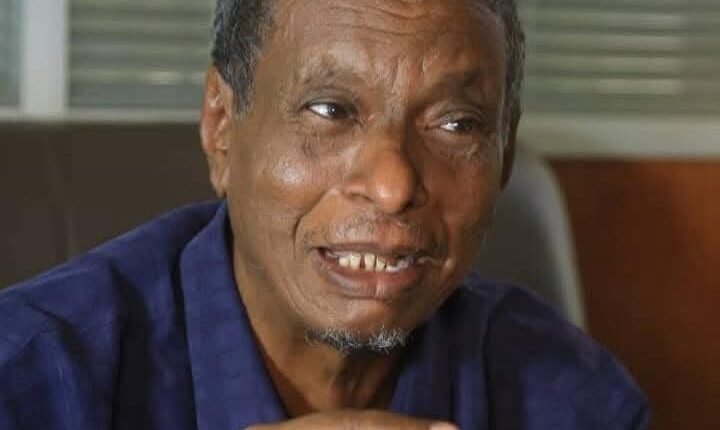
Cairo – Sudanhorizon – Sabah Moussa
Islamic thinker and African expert Professor Hassan Makki has stressed that the US State Department’s statement regarding the designation of Sudan’s Muslim Brotherhood was based on a “lie.”
Professor Makki added, in an exclusive statement to Sudanhorizon news website, that this lie may be minor and not as significant as the lie about weapons of mass destruction in Iraq that led to wars, still it is unbecoming of the US State Department.
He explained that the statement was based on the accusation that the Al-Baraa bin Malik group hanged prisoners and carried out indiscriminate killings, but the Administration has turned a blind eye to Rapid Support Forces (RSF) who killed, looted, and displaced citizens and those who have no regard for the law.
Makki explained that the delay in designating the Islamist movement in Sudan as a terrorist organization, compared to the initial designation of the Muslim Brotherhood in Jordan, Egypt, and Lebanon, stemmed from the United States’ pursuit of the truce announced by the Quartet.
He said they believed that remaining silent on the Brotherhood’s terrorist designation would facilitate the passage of the Quartet’s initiative, which is based on the framework agreement as a reference point, and portray US President Donald Trump as a man of peace.
He added that the US Administration was surprised to find themselves embroiled in the war with Iran, drawing the Gulf states into this confrontation, despite these being peaceful countries in need of protection, and thus becoming victims in this war.
Makki argued that the international community has partially forgotten about Sudan, noting that the US State Department had previously announced sanctions on several leaders of the Rapid Support Forces (RSF), including its second-in-command, Abdul Rahim Dagalo.
He described the recent US decision as merely symbolic and ineffective, adding that the United States lacks a clear definition of the Muslim Brotherhood in Sudan. He pointed out that entities like the Popular Congress Party might not fall under this classification, along with dozens of other movements, while also suggesting that the sanctions might be targeting specific individuals.
Makki also mentioned the US bombardment of locations in Nigeria under the pretext of halting persecution of Christians there, arguing that this was also a lie, as Boko Haram operates in Muslim areas. He added that they bombed Sokoto, the historical capital of Usman dan Fodio’s caliphate, an Islamic region with no Christian population, concluding that these actions reflect “religious fanaticism and obsession.”
Professor Makki asserted that the US State Department’s sanctions would not contribute to achieving peace in Sudan nor change the nature of the situation, deeming it baseless.
He stated that it came after the liberation of Bara and the advance of Sudanese Armed Forces’ (SAF) to clear the areas of Al-Khuwai, Al-Nuhud, and the rest of Kordofan.
He called for unity, accusing the US State Department of widening the scope of accusations and criminalizing the mujahideen who defend Sudanese society from injustice and support SAF forces. He described the American announcement as a “blank shot,” indicating that the US State Department had failed to present an objective, gradual, and effective plan for Sudan.
The veteran politician and academic has affirmed that the Sudanese state is now recovering and that the most important pillar of peace is the situation on the ground. He said that this situation is currently tilting in favour of the government of Sudan against the RSF militias and that the only thing that mars the prevalence of peace and security has been the drone attacks that targeted Kosti and other areas, some of which originate from the border with Ethiopia.
He advised that it was important for the Sudan to work to strengthen its relations with Arab countries and the international community, which would help to undermine the Rapid Support Forces militia.
Shortlink: https://sudanhorizon.com/?p=11992